Contents
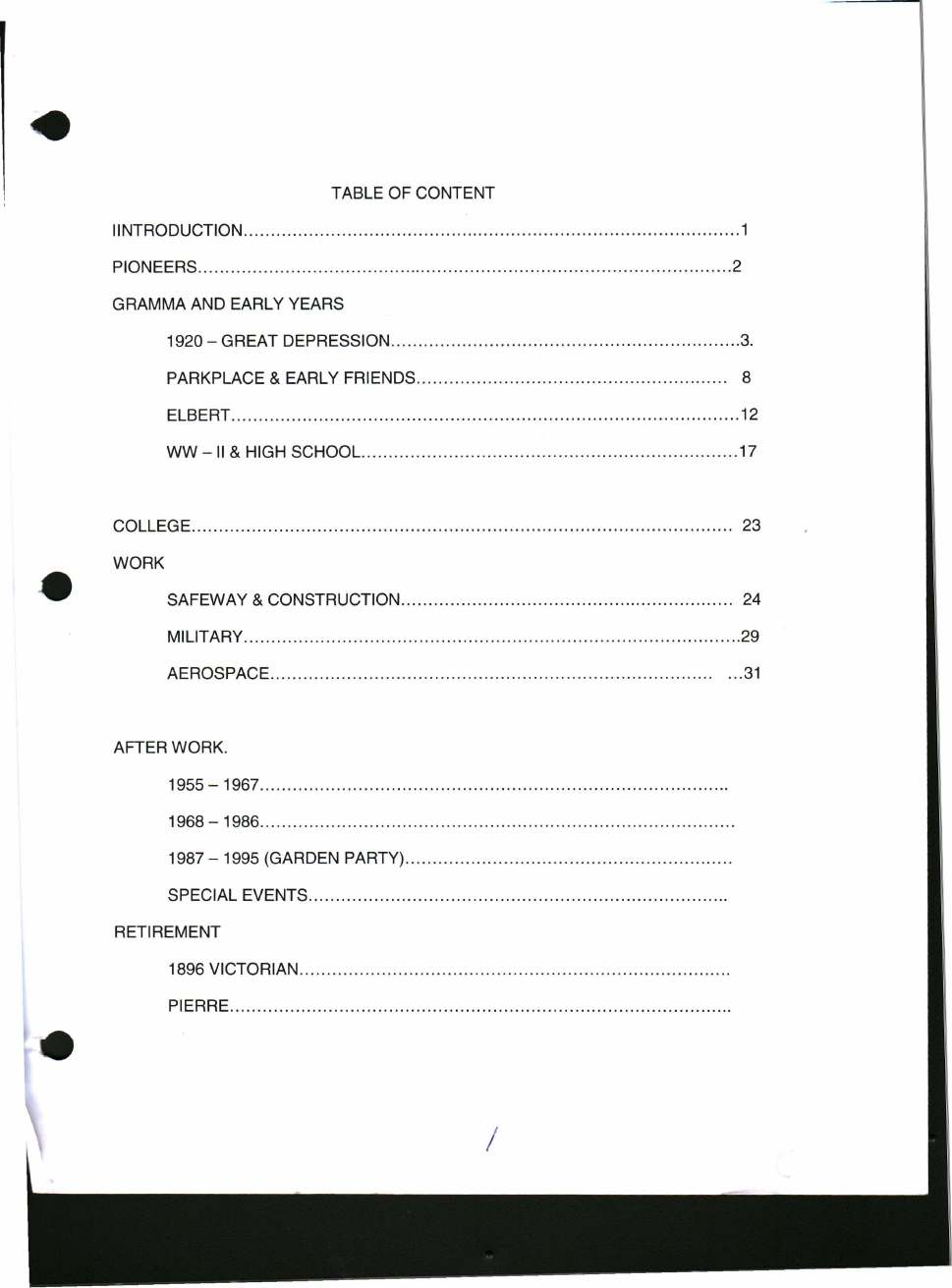
- Beginnings
- Introduction
- Pioneers
- Gramma and the Little House
- Growing Up in Park Place
- Growing Up with Gramma
- Uncle Elbert
- Uncle Delbert (Deb)
- Park Place During the War
- Junior High, High School and First Jobs
- College and Work
- College
- Work: Safeway and Construction
- Aerospace
- Special Events
- Special Events
- 1948 — One Night in Antelope
- 1951 — Hitchhiking to Las Vegas
- 1962 — Presentations in New York and Hawaii
- 1965 — Mt. St. Helens
- 1966 — Mt. Rainier
- 1972 — First Marathon
- 1973 — The Great Northern Loop and the Wonderland Trail
- 1974 — The Pacific Crest Trail Trek
- 1977 — Bit by Bit
- The Garden Party Years
- The Garden Party
- 1995 — The Voyage from Seattle to Portland
- Retirement
- Retirement (1995–2016)
- Pierre (November 16, 1995 – January 25, 2008)
- Conclusion and Appendix
- Conclusion
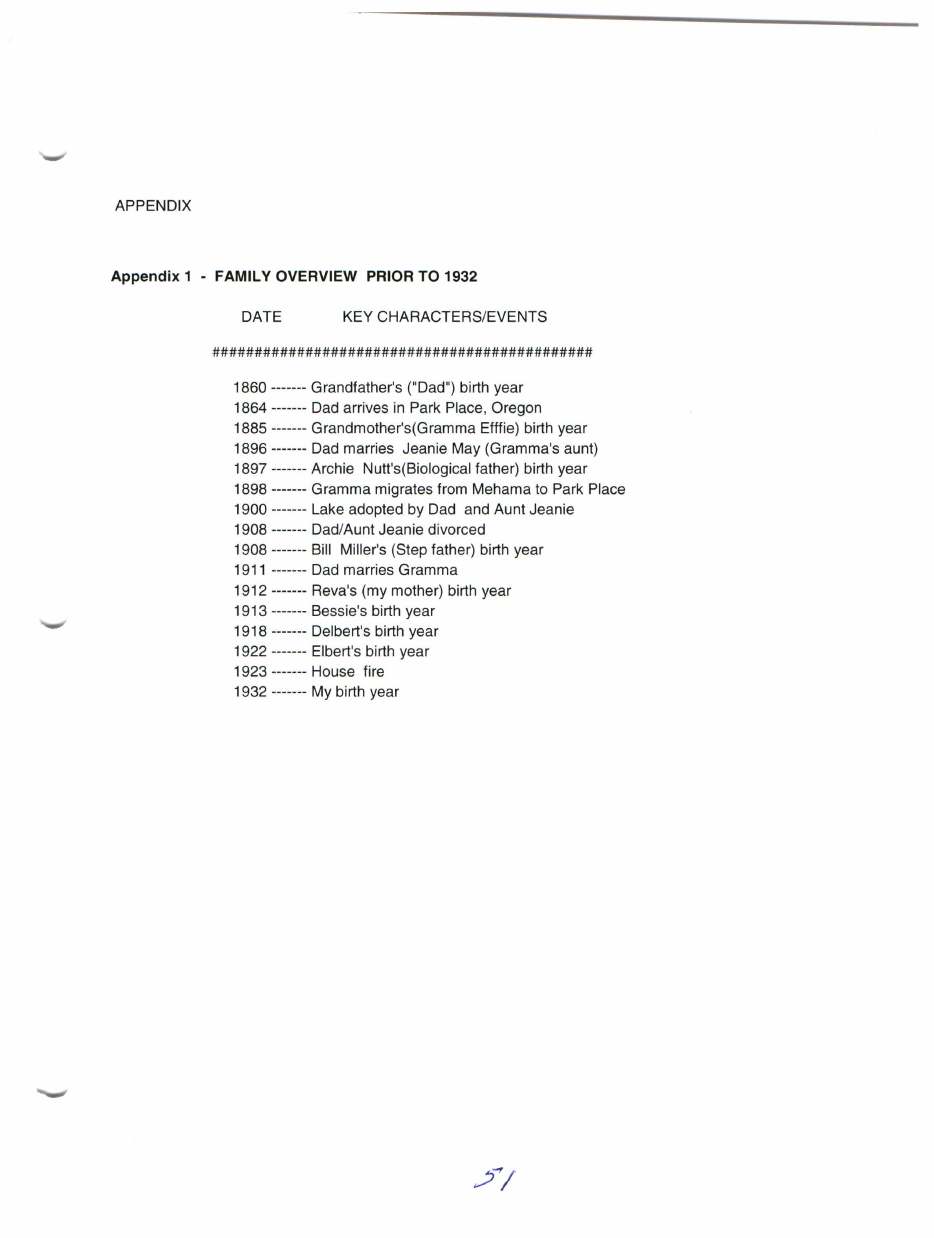
- Appendix 1 — Family Overview Before 1932
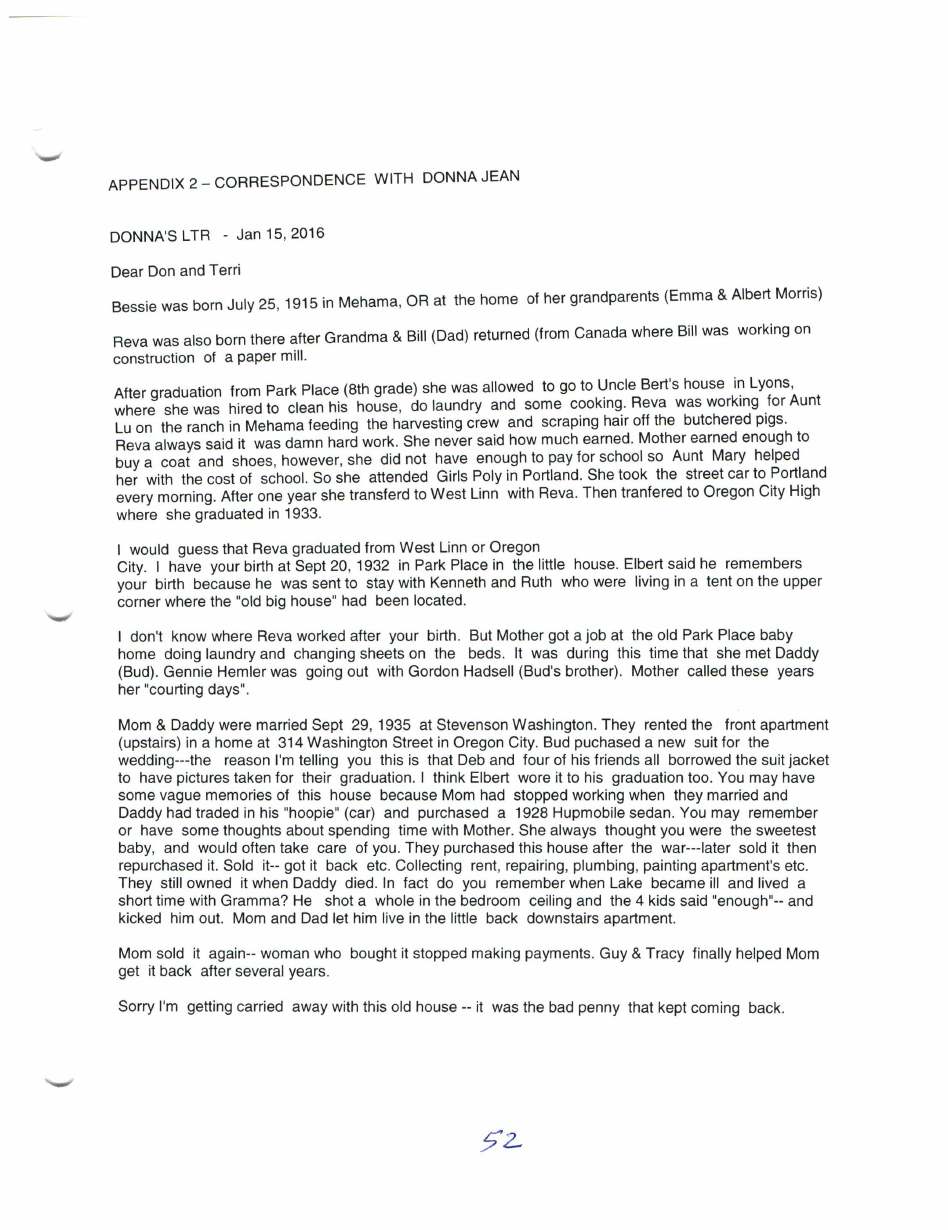
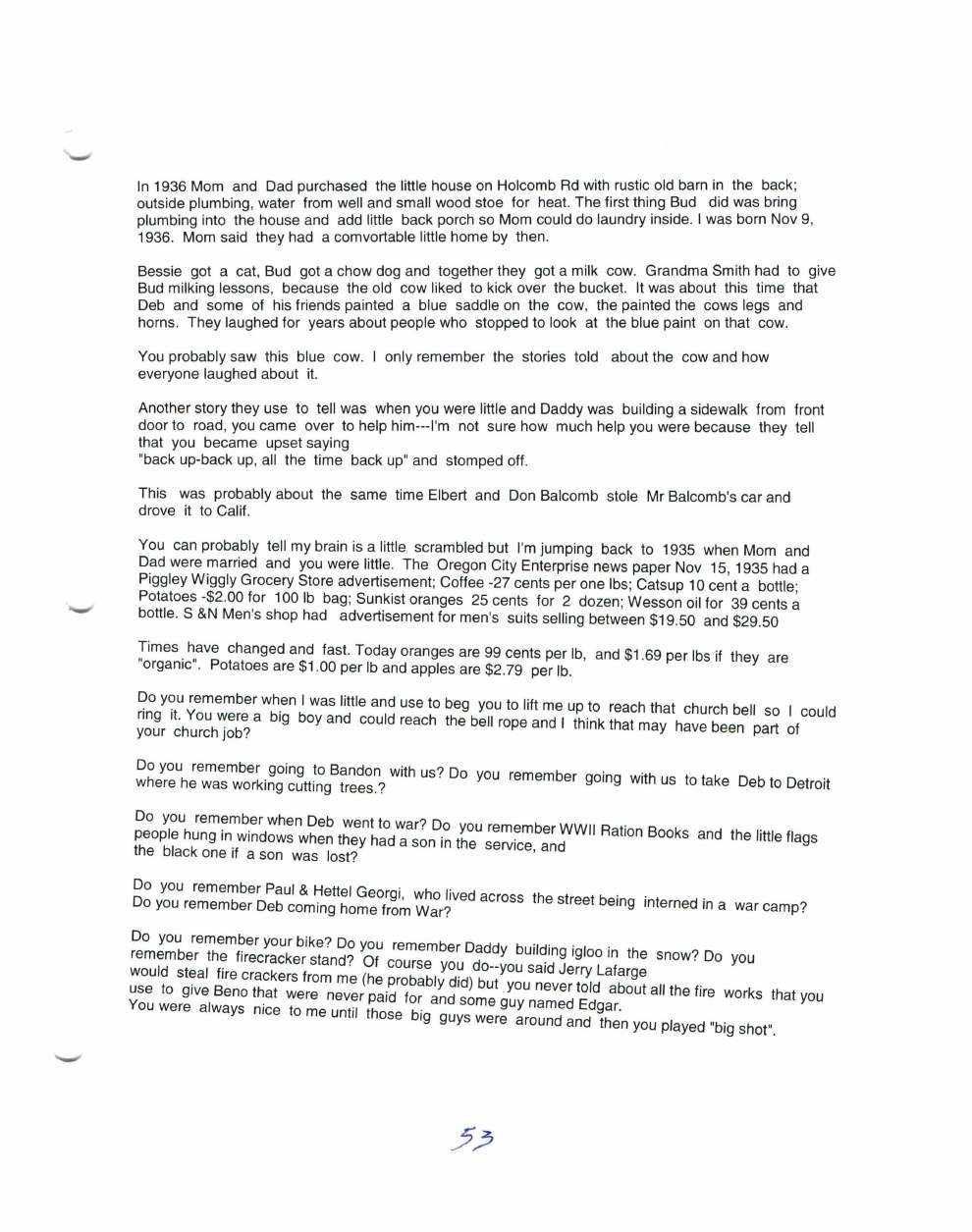
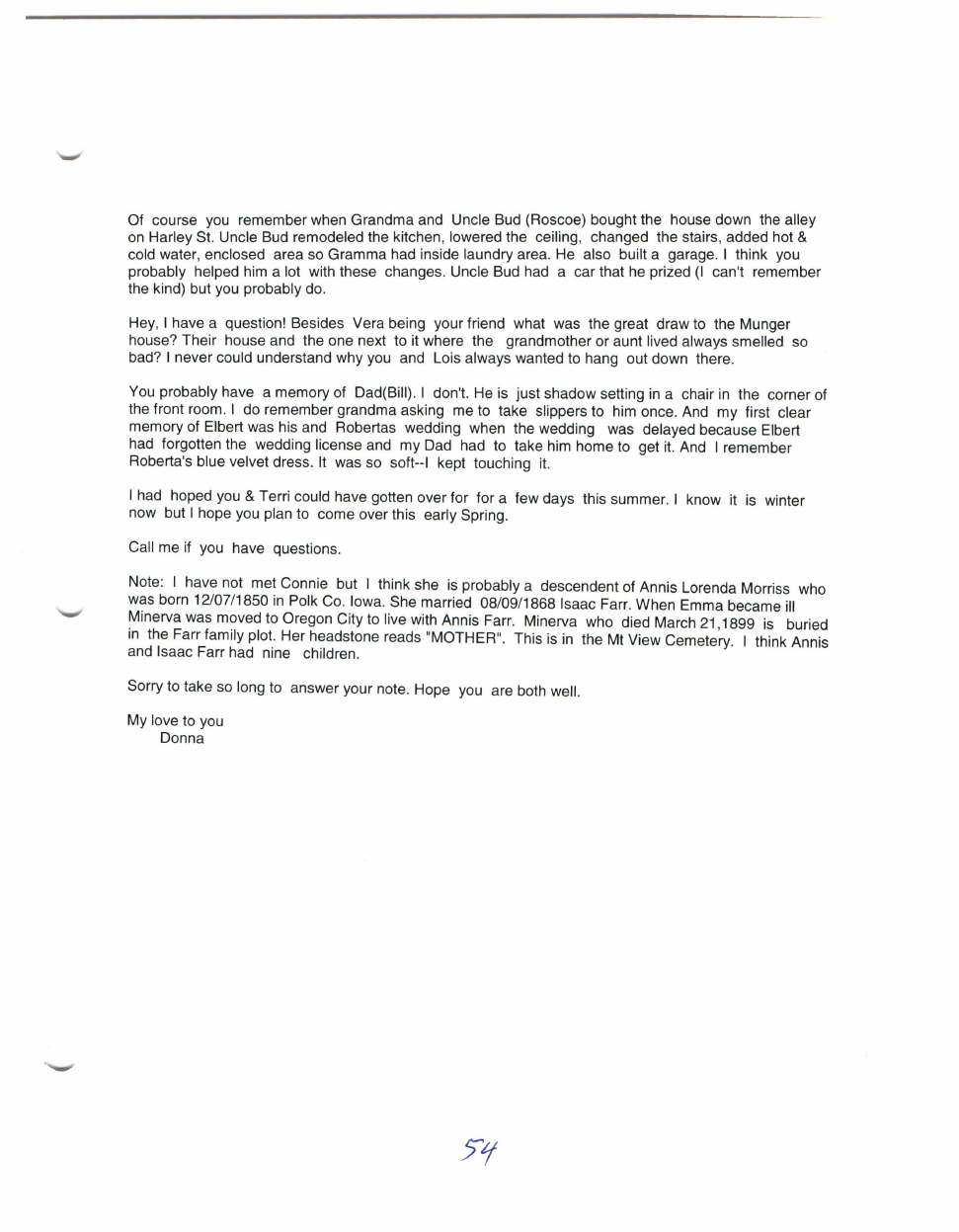
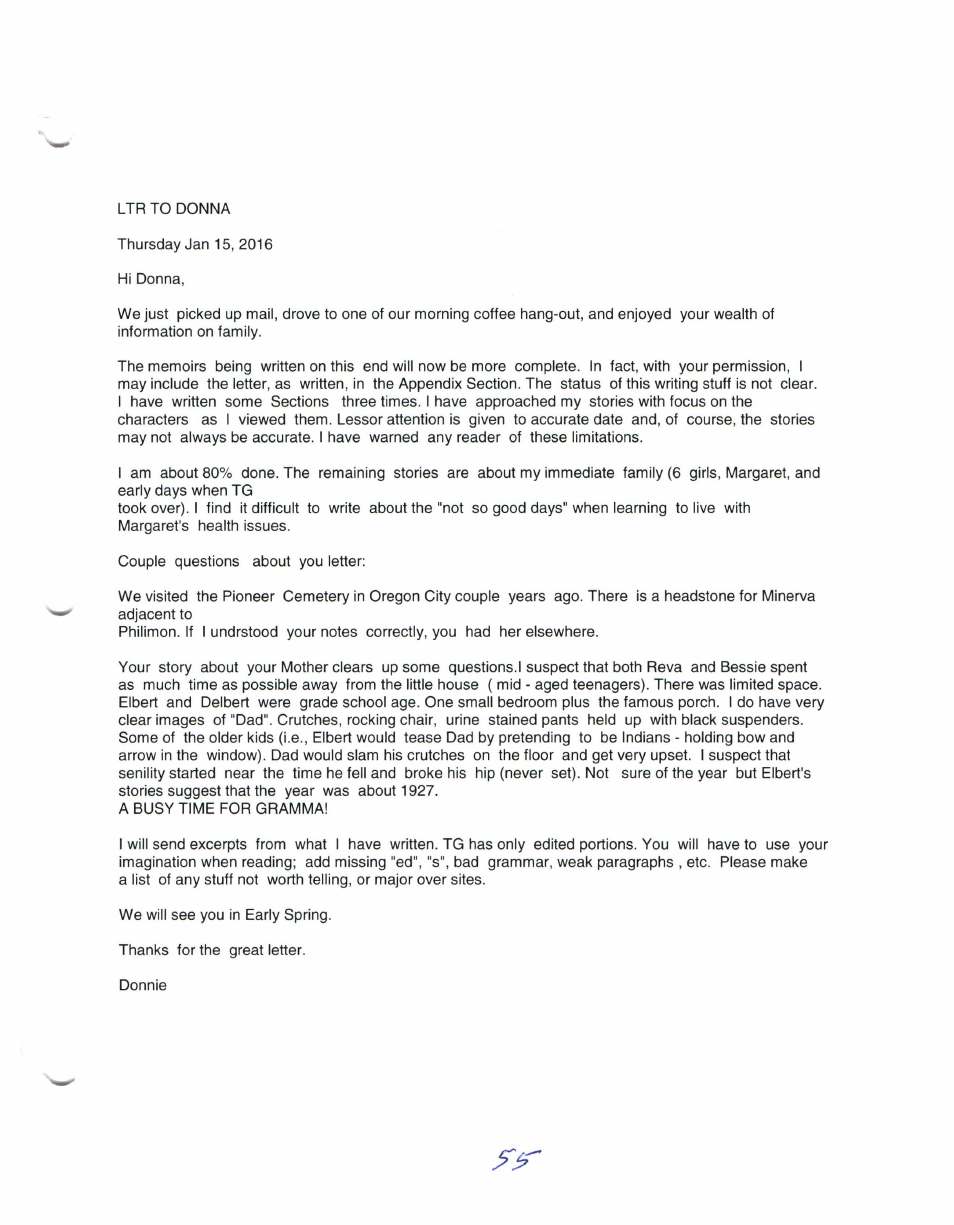
- Appendix 2 — Correspondence with Donna Jean
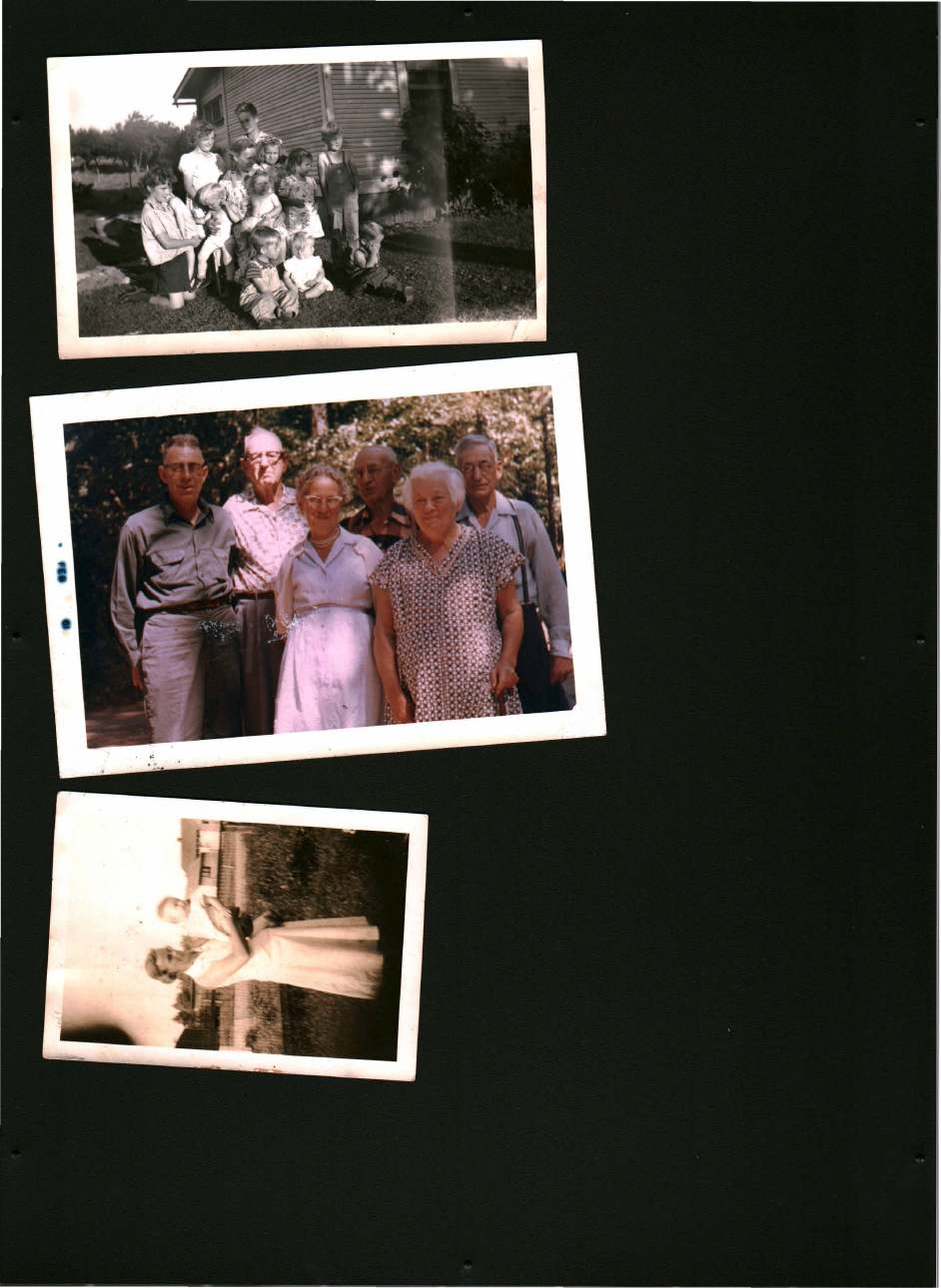
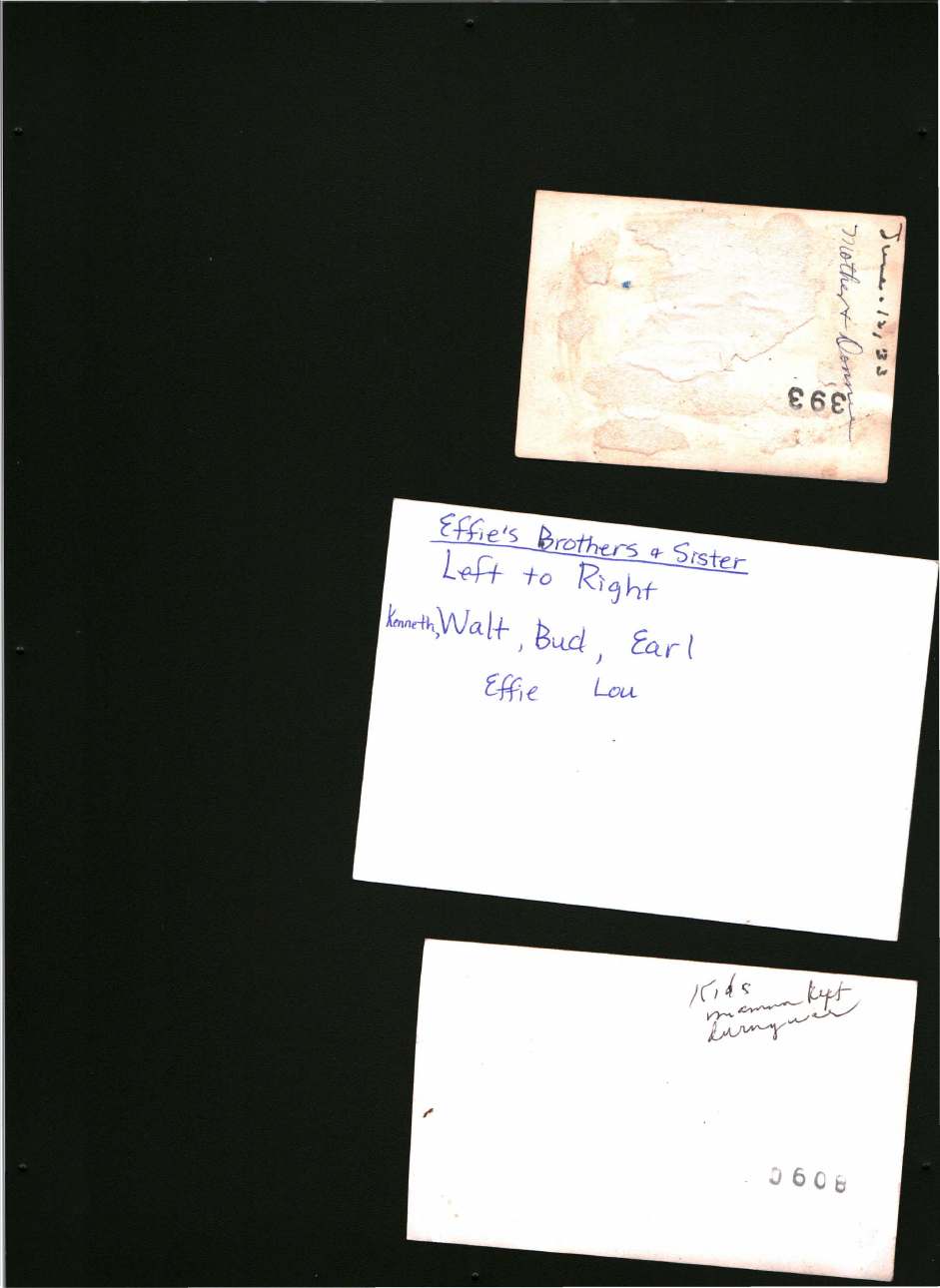
- Photos and Documents
- About This Edition
- Reference
- The Original Scans
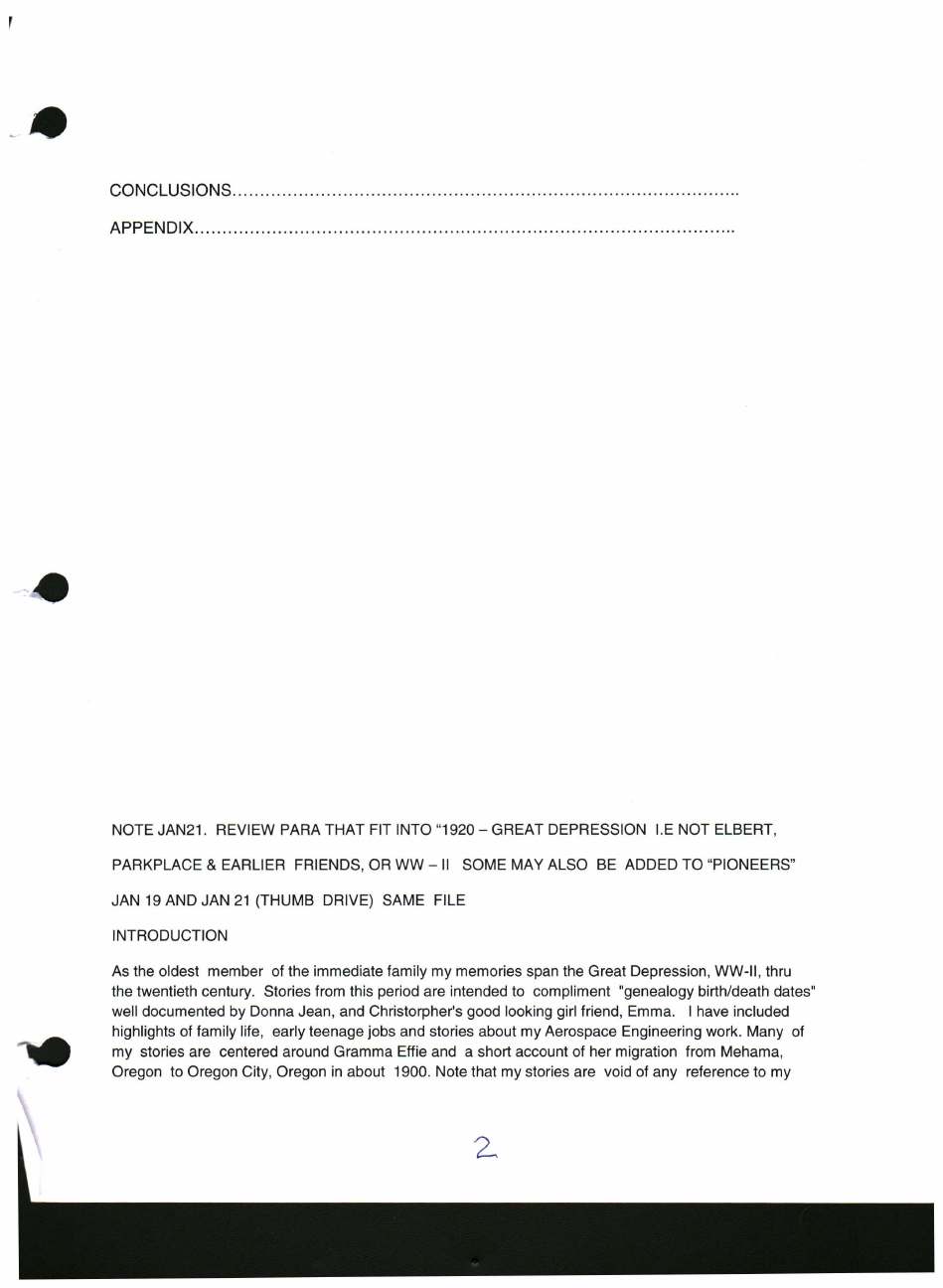
Introduction
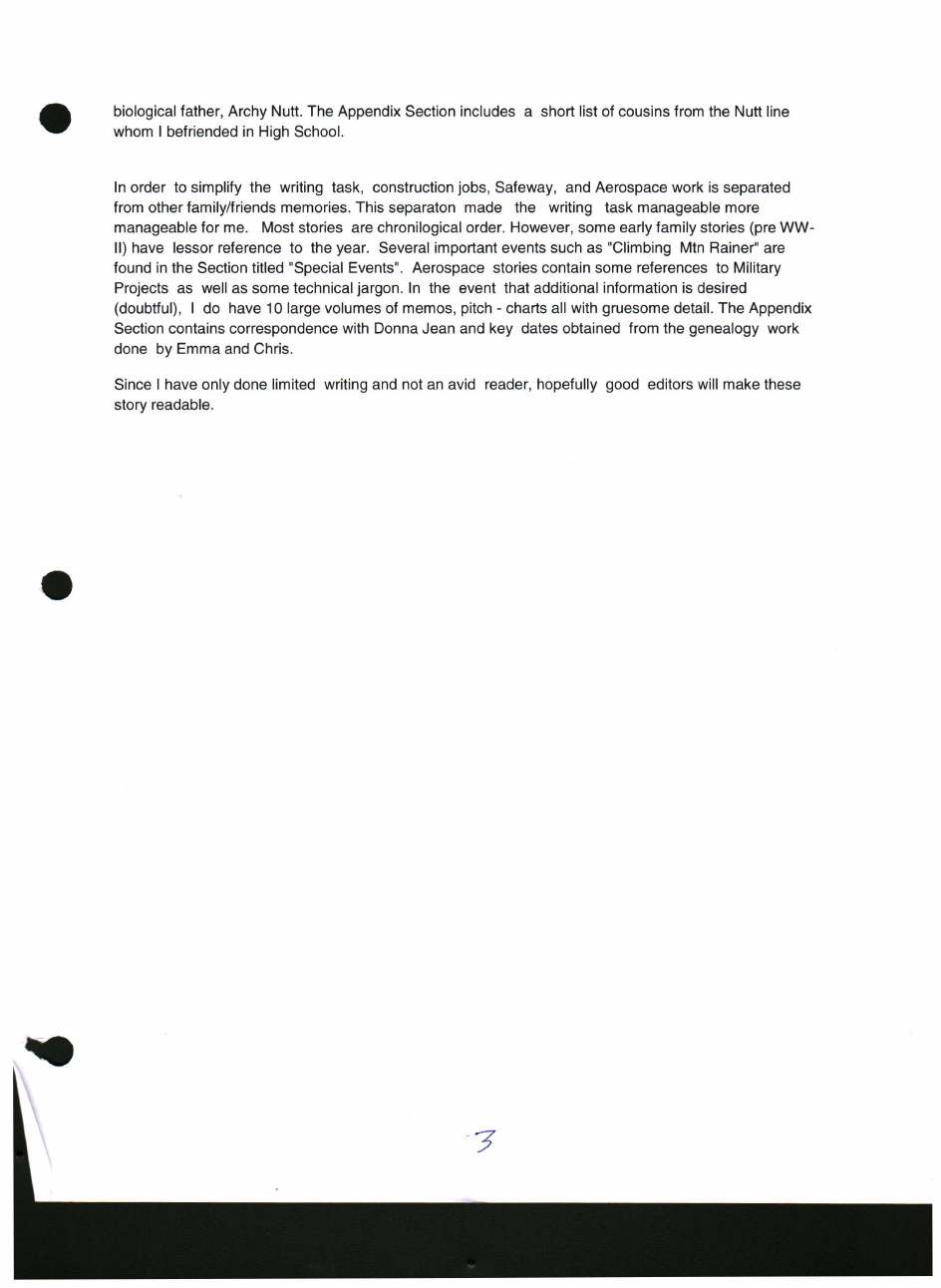
As the oldest member of the immediate family, my memories span the Great Depression, World War II and the rest of the twentieth century. These stories are meant to complement the genealogy birth and death dates so well documented by Donna Jean and by Christopher's good-looking girlfriend, Emma. I have included highlights of family life, my early teenage jobs and stories about my aerospace engineering work. Many of my stories are centered on Gramma Effie, along with a short account of her family's migration from Mehama, Oregon to Oregon City around 1900. Note that my stories make no reference to my biological father, Archy Nutt.
To make the writing manageable for me, the construction jobs, Safeway and aerospace work are kept separate from the family and friends memories. Most stories are in chronological order, although some of the early family stories (before World War II) are less precise about the year. Several important events, such as climbing Mt. Rainier, are found in the section titled "Special Events." The aerospace stories contain some references to military projects as well as some technical jargon. In the event that more information is desired (doubtful), I do have ten large volumes of memos and pitch charts, all in gruesome detail. The appendix contains my correspondence with Donna Jean and key dates from the genealogy work done by Emma and Chris.
Since I have done only limited writing and am not an avid reader, hopefully good editors will make these stories readable.
At the outset of writing these memoirs I recognized that the earlier generations had passed, and that my stories would be crucial to our family history. Only I would be responsible for the story. Memories from before 1937 are at the mercy of hand-me-down stories — some from Gramma, but most from her four children, all deceased now. I have given less attention to exact dates than the genealogy work does; rather, I have tried to tell the stories that I either remember or that were handed down to me.
Editor's note: the last paragraph comes from the opening of a second draft of "Gramma and Early Years" (scan p. 17).
Pioneers
My grandparents on my mother's side both came from pioneer families.
The Morris family
Gramma Effie's grandfather, Philemon Morriss, came to Oregon by covered wagon from Illinois with his new wife Minerva and five children in 1853. He homesteaded near Stayton (some versions of my notes say Sublimity), east of Salem. Gramma's father, Albert Morris, was the oldest of the five children. Albert married Emma May and settled in Mehama, some 30 miles east of Salem. They had eight children: Walt, Bert, Earl, Roscoe, Lou, Effie, Oren and Kenneth — one sister for Gramma and six brothers.
Life for this large family in Mehama in the late 19th century was not easy. The nearest larger town, Stayton, was a five-hour walk, and the story is that it was common to make that walk. Walt, Earl, Roscoe and Effie left Mehama for an easier life in and around Oregon City; by 1900 five of the Morris family had made the move. The boys were carpenters, and Gramma became a schoolteacher. Lou and Bert stayed in Mehama: Bert was a cabinetmaker and Lou ran a large sheep ranch. Kenneth, the youngest, was a jack-of-all-trades who spent his early adult life in Mehama and later moved to Prineville. Earl, a logger, worked in Vernonia and Sandy and accumulated some wealth. Walt and Roscoe were carpenters. Oren (a shady character) remained in the Stayton area. After her father passed, Gramma's mother also left Mehama and moved to Oregon City.
I have memories of all of Gramma's brothers and of Aunt Lou. During World War II, Gramma and I made annual trips with Bessie or Aunt Mary (Earl's wife) to visit family in Mehama.
Bill Smith — "Dad"
My grandfather, Bill Smith, was also an Oregon Trail pioneer. At age six he made the 2,000-mile covered wagon trek from Missouri to Oregon with his father, arriving in about 1865. His mother was accidentally killed by a loaded gun early in the trip. When the wagon train reached The Dalles, winter weather made the final leg around Mt. Hood (the Barlow Trail) too difficult, and young Bill was left at The Dalles until the following spring. He was raised by his uncle, Cap Smith, who was well established with a large, upscale home in Park Place. Little is known about Bill's father other than that he settled in Washington. Bill stayed in Park Place and Oregon City.
Bill worked as a carpenter foreman building fish ladders on the Clackamas River and, as a part-time county deputy, patrolled the local rivers for illegal fishing. There are also stories of him working at the State Capitol in Salem. Perhaps the most interesting story is his campaign for sheriff. The campaign was financed mostly by Gramma's brother, Uncle Earl. Bill lost the election, and Gramma in turn gave several acres of her property to Uncle Earl to repay him.
Gramma comes to Park Place — and the plot thickens
Gramma's mother, Emma May, had a younger sister, Jeanie May. Aunt Jeanie married Bill Smith, and around 1900 they adopted a baby boy named Lake (Lois's dad). Now the story gets convoluted. Hang on! At about age 13, Gramma followed her older brothers to Oregon City and lived with Aunt Jeanie, Uncle Bill and baby Lake in Park Place — the community where I was raised. She attended Park Place High School and then two years at the Barkley Normal School, which gave her a teaching certificate. She taught elementary school for several years (about 1908–1912) in nearby communities, including Barlow and Redland.
Aunt Jeanie and Bill divorced. Aunt Jeanie spent time in San Francisco, then returned to Oregon City and remarried (a Mr. Vanderbuilt). In 1912, when Gramma was about 26, she married Bill — her uncle by marriage. Lake stayed close to both of his adoptive parents and to Gramma, and probably bounced between Aunt Jeanie's house and the newly married couple; by about age 12 he was living part time with Bill and Gramma. While teaching, Gramma had accumulated property in Park Place (somewhere between 10 and 20 acres); it was sold off during the hard years that followed.
Gramma and Bill had four children: Reva (my mother, born 1912/1913), Bessie, Delbert and Elbert. Gramma, a community leader, was a charter member of the Abernethy Grange and chairman of the Park Place School Board (District 48, now part of Oregon City Schools). This was a busy lady! My family memories are, for the most part, about Gramma, Dad and their four children. My own earliest memories begin around 1936, when I was four; the stories before that are hand-me-downs.
Editor's notes: Don's drafts spell the family name both Morris and Morriss, Philemon as Philimon/Philemon, and Aunt Jeanie as Jeanie, Jeannie and Eugenie; Donna's letter spells her "Gennie." The marriage year is given as 1912 in the text and 1911 in the Appendix timeline, and Reva's birth year as 1912 and 1913.
Gramma and the Little House
Fire!
FIRE, FIRE, FIRE… Gramma Effie grabs baby Elbert, herds Dad out the door and flees the roaring blaze. Bessie, about nine years old and clutching Gramma's old doll, sprints down Cleveland Street with Lake, Deb and Reva. One hundred yards from the burning house, the family regrouped in what was called the old "chicken house." Gramma, Bill and the children had lived in a house one block east; after the fire, the old chicken house became our "little house." Uncle Earl, who lived nearby, provided the family with furniture, including a kitchen table with eight chairs and a valuable bookcase with curved glass. The bookcase has survived the last ninety years and is in my house on Apperson Blvd. today.
Editor's note: the drafts date the fire to about 1920 and the Appendix to 1923; one draft says Elbert was born in 1922, after the fire, while the opening scene has Gramma carrying "baby Elbert." The corner is given as Cleveland & Harley and as Cleveland & Melinda.
The little house
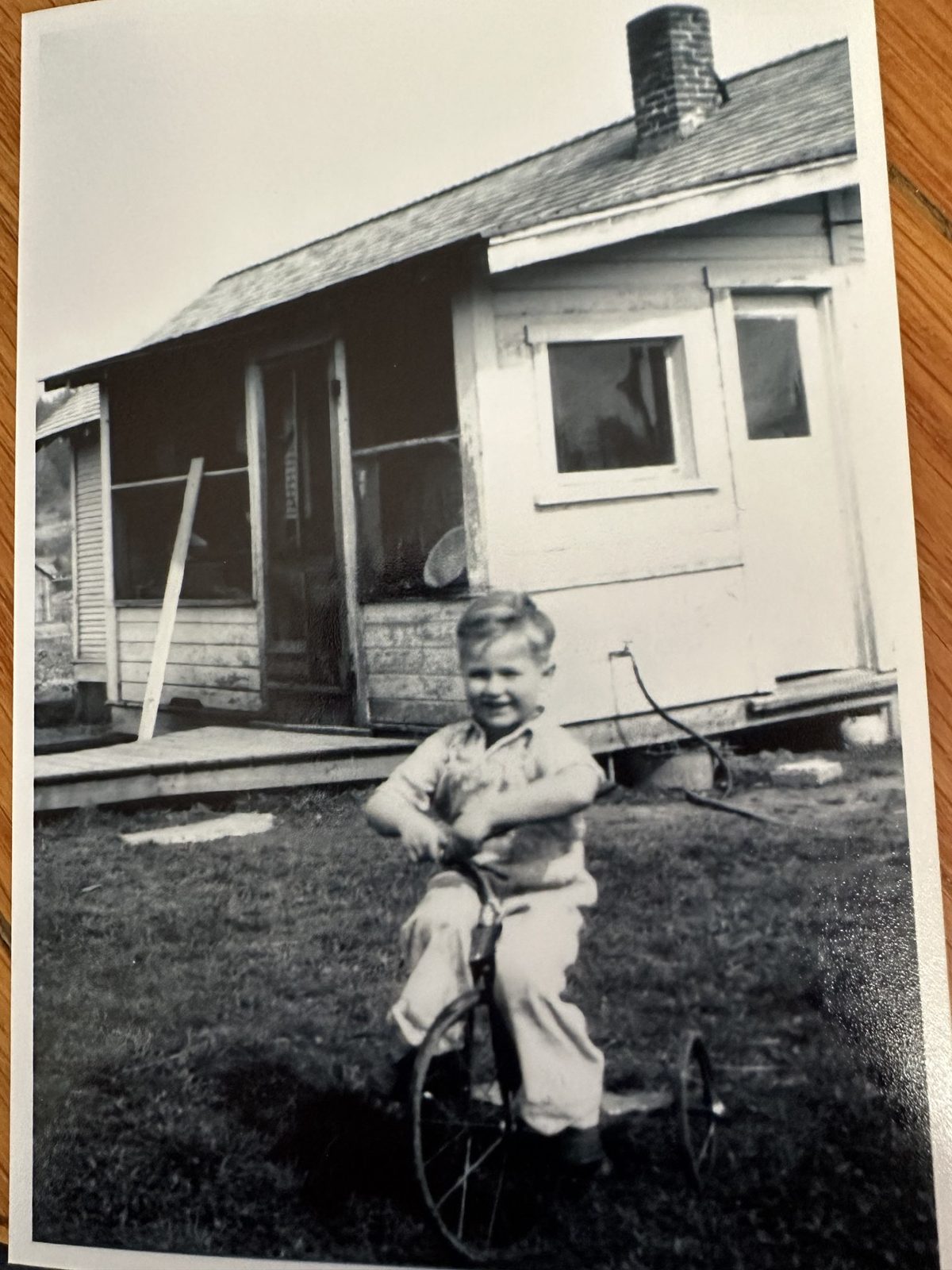
The small house with few luxuries still stands today. By 1932 (my birth year) it had gained a well for drinking water, raised mud-free walkways across a large lawn, a woodshed and a small barn. Electric lights and running water turned the old chicken house into a memorable childhood home — though some improvements were never finished. The kitchen and bathroom had sinks with faucets, but running water was limited to the back porch. Fortunately, the toilet worked fine; teenage Elbert used fresh water from the toilet tank to comb his hair, since the sink did not work. There were two wood stoves: one in the kitchen with coils and a tank for hot water and cooking, and one in the living room for heat.
Bathing was infrequent. Hot water was drawn from the single faucet on the porch, heated, and poured into a tub set near the heating stove. I don't remember the teenagers using the tub, but cousin Donna Jean and I took many winter tub baths. Since I was older (and bigger than Donna), I got the clean hot water first. She got seconds — there was never enough hot water for two baths. Elbert told the bathing story best: early summer was welcome, because a quick swim in the Clackamas River (with soap) did the trick.
One way to picture this family is to stop the clock in 1919, when Reva was 7, Bessie 5 and Delbert 2. The accommodations included an outhouse, limited power, well water, no telephone, no refrigerator, and no shower or modern bathtub. Then let the clock tick to 1922: Elbert arrives. By 1927 the inn was full: Reva 14, Bessie 12, Delbert 9 and Elbert 4, plus Lake when he wasn't at Aunt Jeanie's. The woodshed had a partially finished loft, and I am certain that Lake slept there. Reva and Bessie shared a bed in what had to be the smallest bedroom in Park Place — about two feet wider than the bed. Delbert and Elbert slept on the screened front porch. Elbert's World War II story captures the crowding: he claimed the Army barracks were a luxury. None of these sleeping quarters had heat; only the kitchen, living room and the one larger bedroom (twin beds for Dad and Gramma, with a closet and room for a dresser) were warmer than outdoors, and winters in Park Place in the '20s and '30s were cold. To ease the crowding, the girls spent summers with Gramma's family — Reva with Aunt Lou in Mehama and Bessie with Uncle Bert in Mill City — and as young teenagers they worked at an orphanage (the "baby home") about a mile away, often spending the night there. More room.
Park Place in the '20s and '30s
Park Place was not an upscale community. A couple hundred low-income homes dominated the Clackamas Heights/Park Place landscape, and fewer than a dozen families had any wealth. Most of the small houses sat on large lots, many an acre — enough for big gardens and a little livestock. In our case it was a cow and sometimes one pig. Electric power and public water arrived several years after the big house burned. My mother told of a neighbor who had a generator: the flip of a switch for lights was a big deal for young teenagers who had only known kerosene lamps. Each house had a well and, of course, an outhouse. Hot water was hand-pumped from the well and heated on a busy kitchen stove.
I suspect the Great Depression had little extra impact on this family, because there was very little money to begin with. In Oregon City there were two classes of people: those with jobs at the paper mill and those without. None of our family worked at the mill in the '30s (Lake and Bud Hadsell did in the '40s). We did have over an acre of land for a very large garden and grazing for the cow — an important part of survival: lots of raw milk, butter and cottage cheese. Be reminded that many of the limitations of my childhood came with the time. Many other families in Park Place had slim pickings during the Depression. We always had food, heat and a place to sleep. Buying "things" that required money was a rare event for most families.
Dad
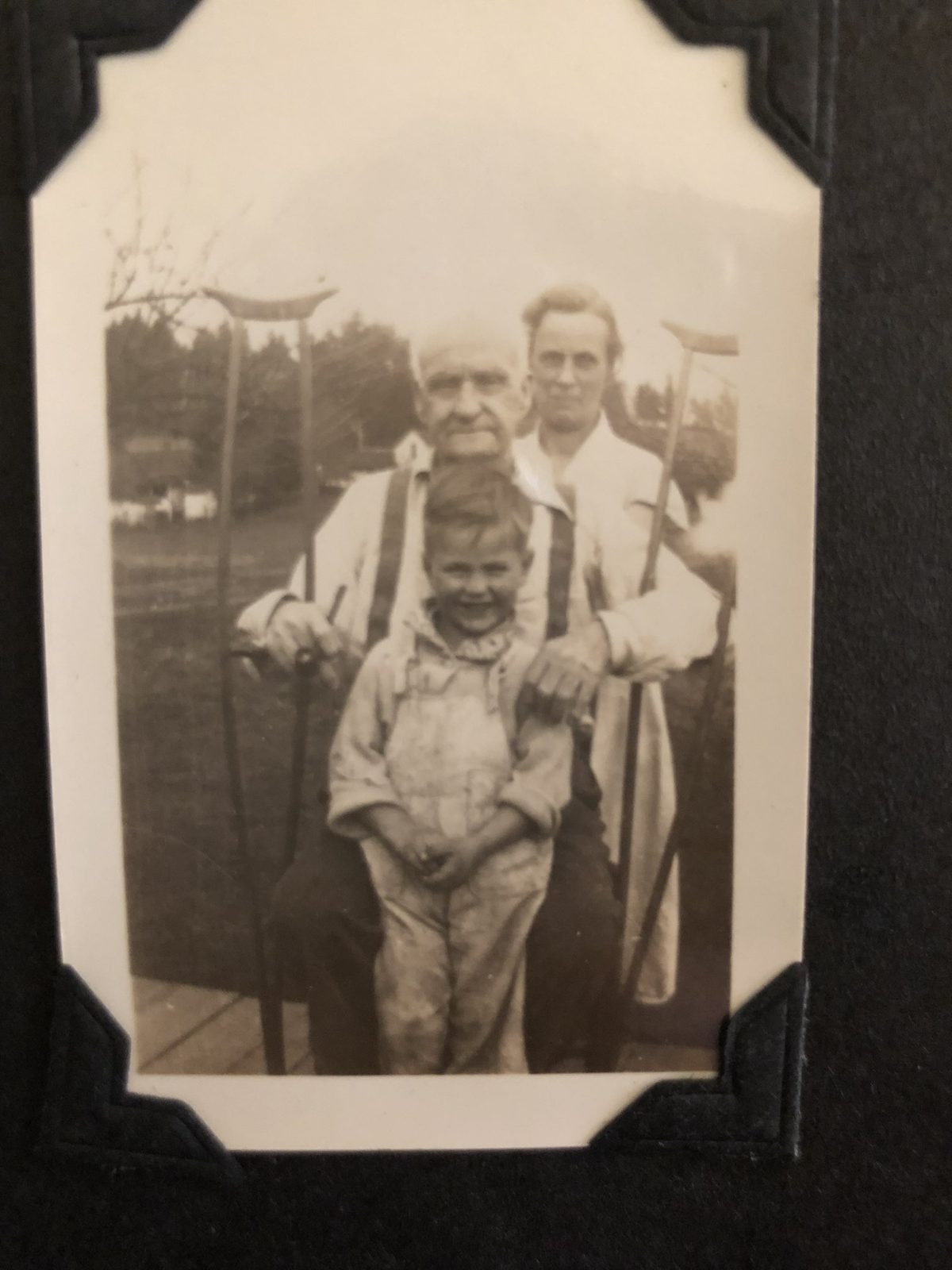
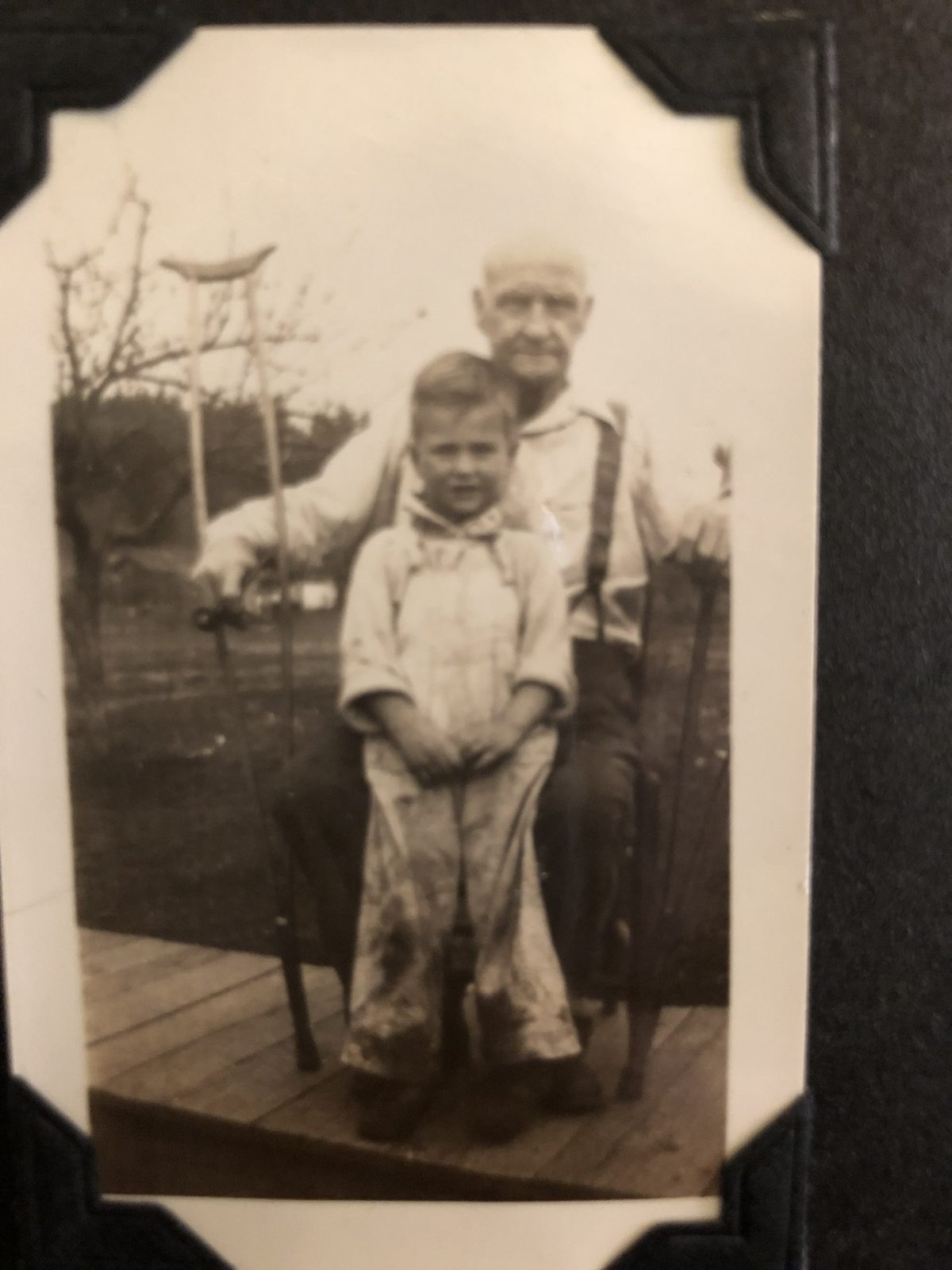
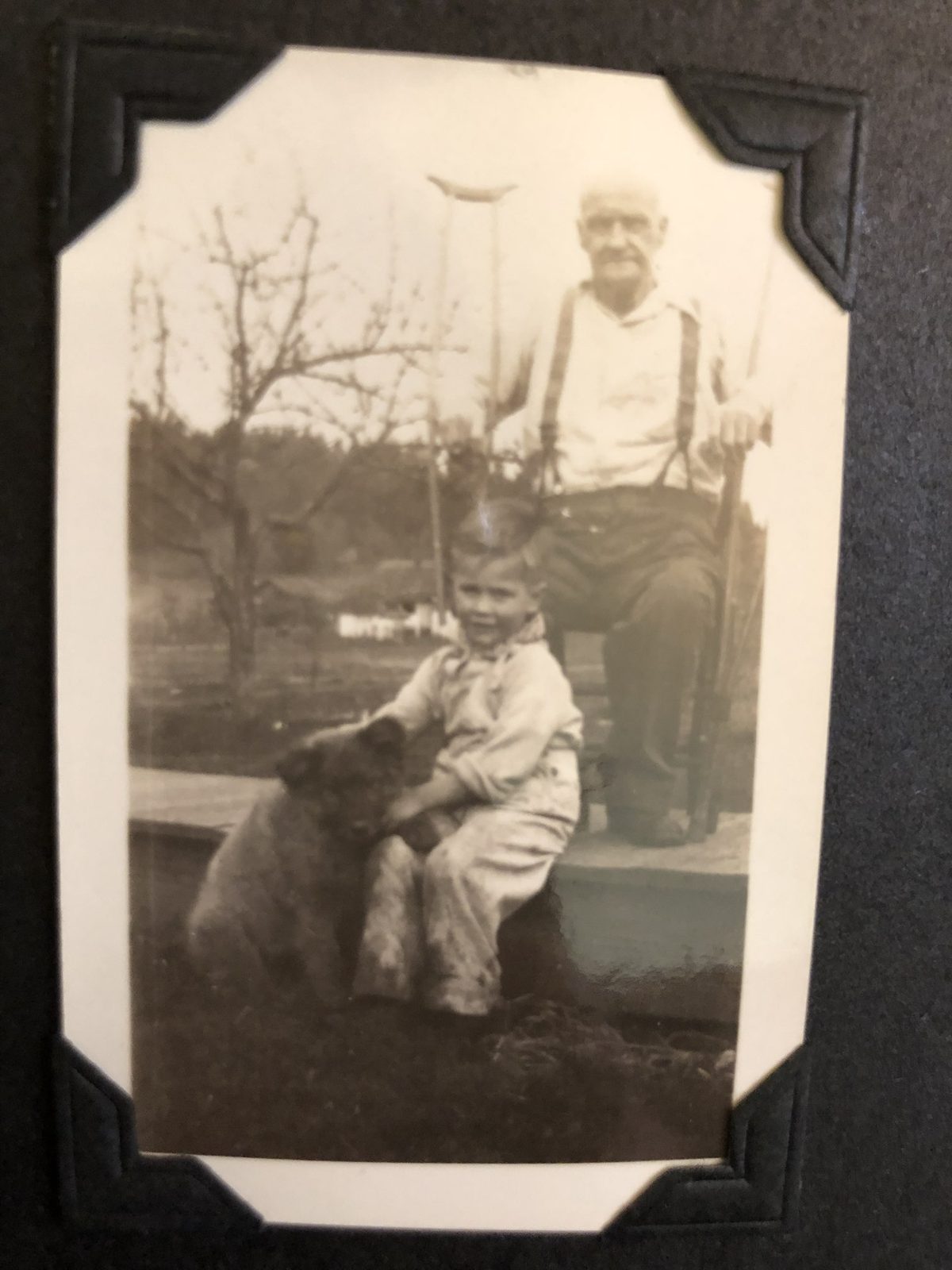
Since I lived with my grandmother and grandfather, I picked up on calling him "Dad" rather than Grandpa. Dad was about 25 years older than Gramma and was 72 when I was born. In about 1926, shortly after the fire, he fell and broke his hip. It was never set — the story is that money was scarce for the procedure — and he spent the remaining sixteen years of his life on crutches. He also became senile some years before 1932, and he had a temper. I have clear images of Dad: crutches, a rocking chair, and pants held up by black suspenders. The older kids teased him; Elbert would pretend to be an Indian, holding a bow and arrow up in the window, and Dad would slam his crutches on the floor and get very upset.
Although disgruntled with most kids, he was pleased to have me near him, and he was most contented when I was with him. Stories were passed down of Dad following me as a toddler, on crutches, around the large lawn. In fact, Reva claimed one reason I lived with Gramma was to keep Dad from wandering off. There may be some truth in that. Dad died in 1942. Gramma's problems in those years were, of course, compounded by an ailing, senile husband on crutches.
Editor's note: Don gives Dad's age at death as 84; with the 1860 birth year in the Appendix it would be about 82.
Donnie arrives
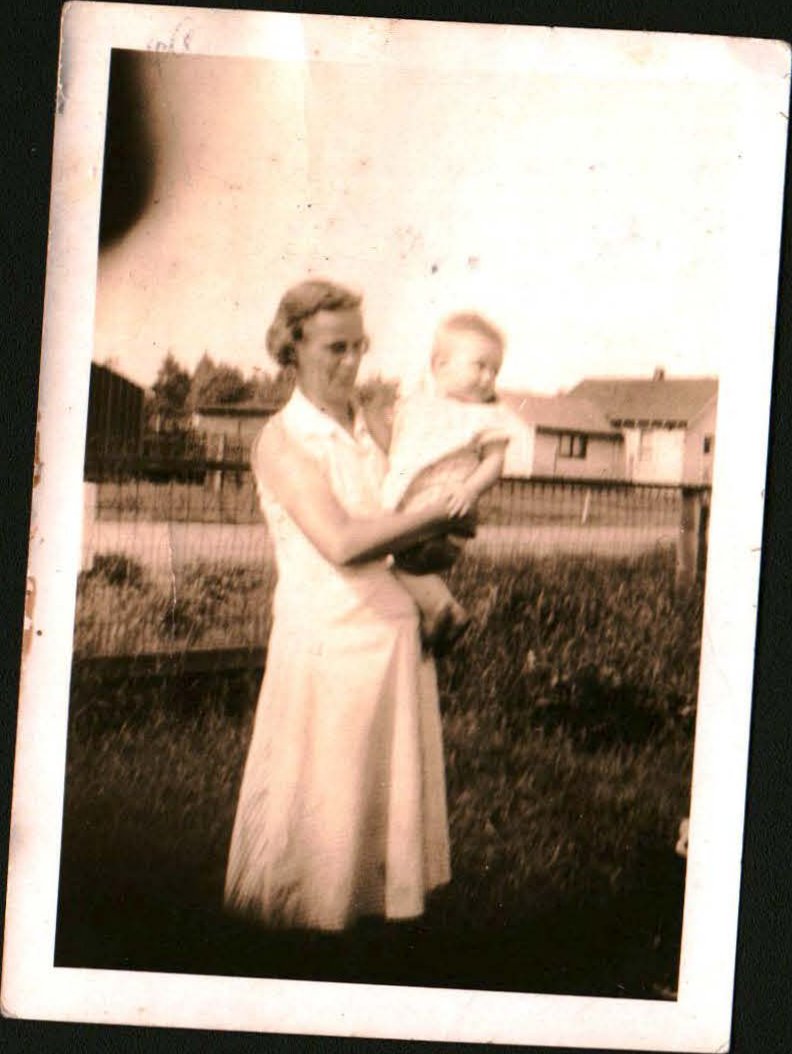
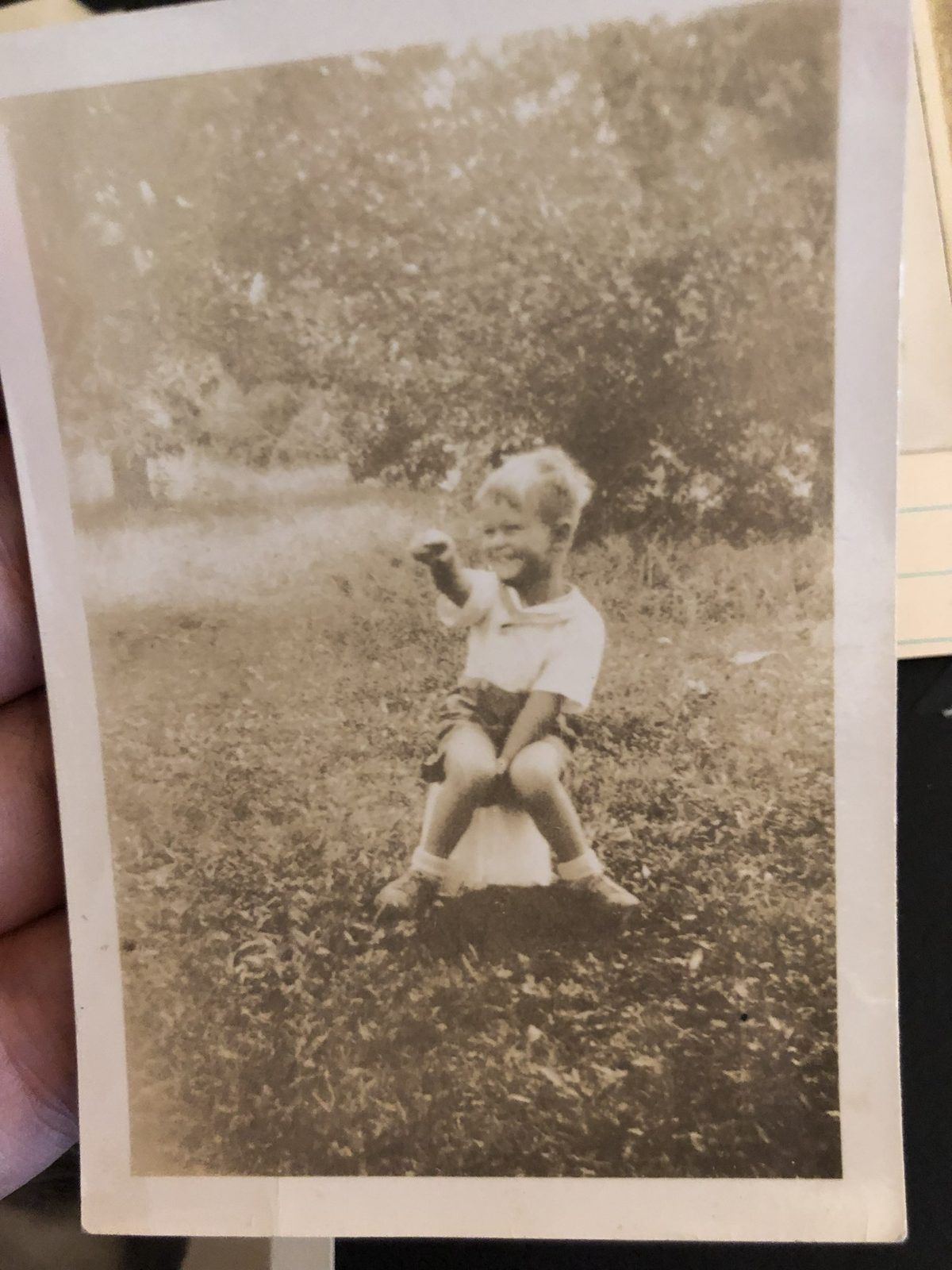
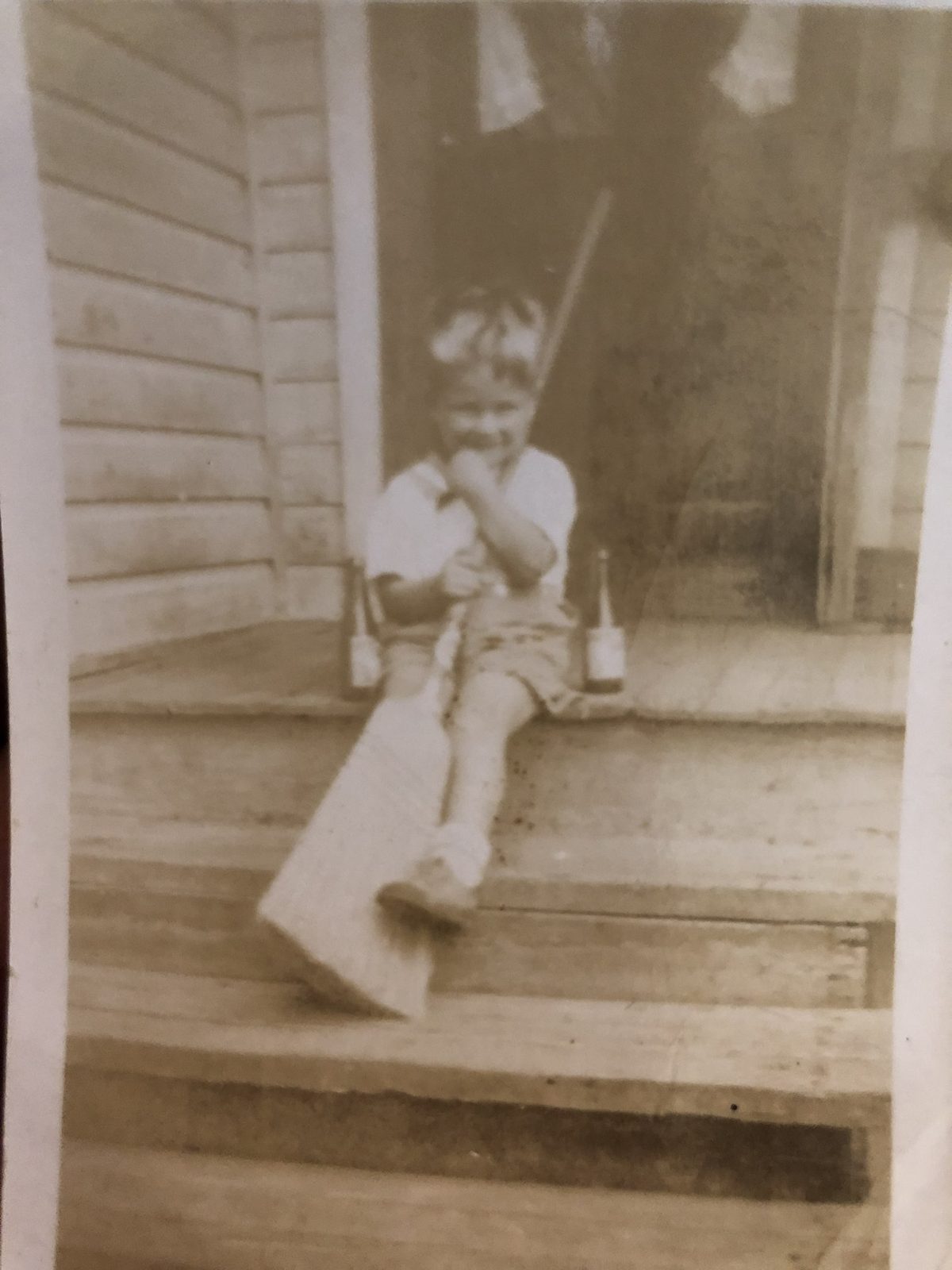
I am not sure who came first, me or the cow. Let's put the cow in the small barn and focus on September 20, 1932. I was the first, and likely the last, baby born in the little house. (Elbert remembered my birth because he was sent to stay with Uncle Kenneth and Aunt Ruth, who were living in a tent on the upper corner where the "old big house" had been.) On September 19, 1932, another baby arrived two blocks north: my special friend Vera Monger. Lake had married Pearl, and their first baby, Lois, was nine months old. The three of us dominated Park Place for the next decade.
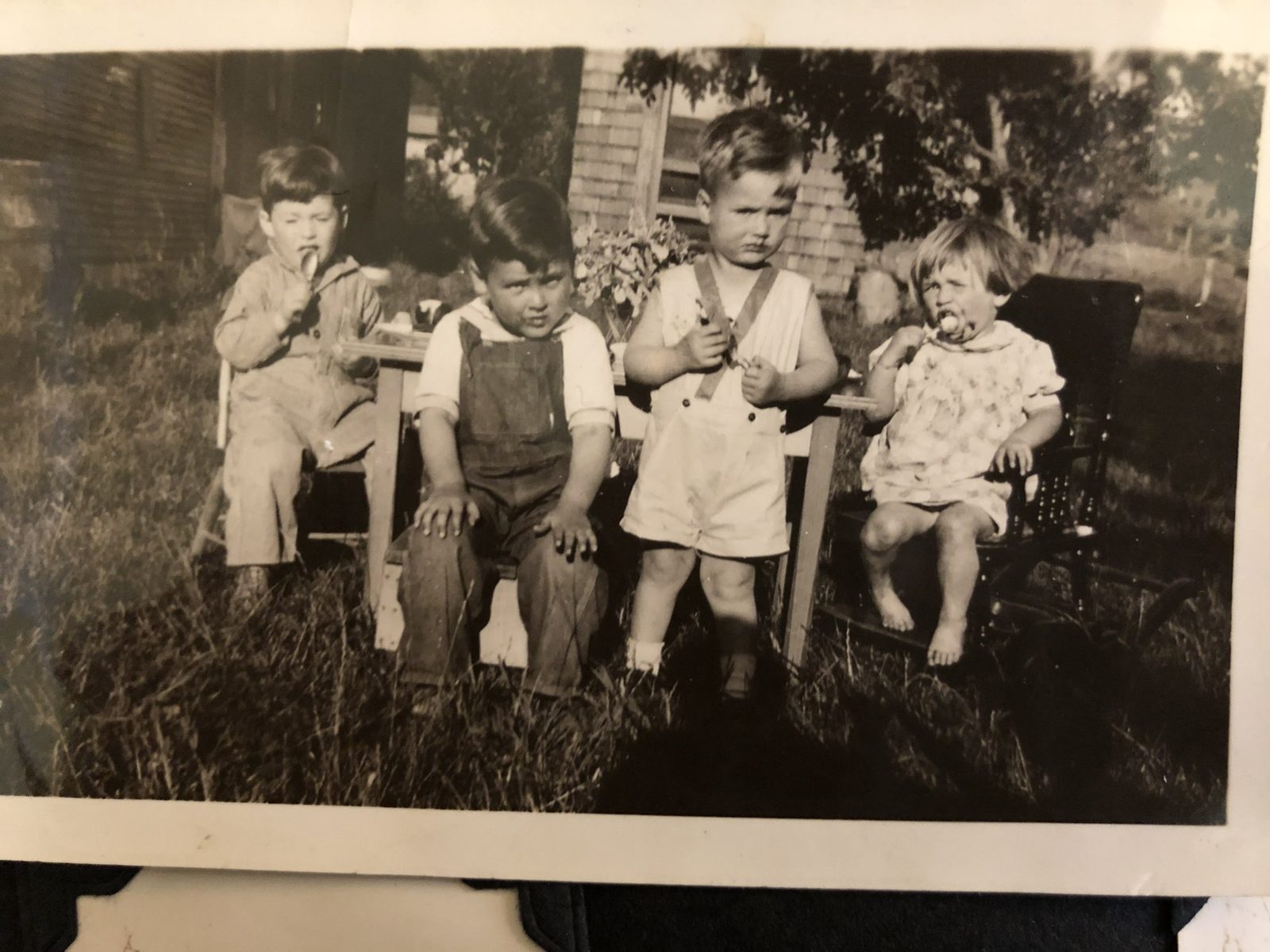
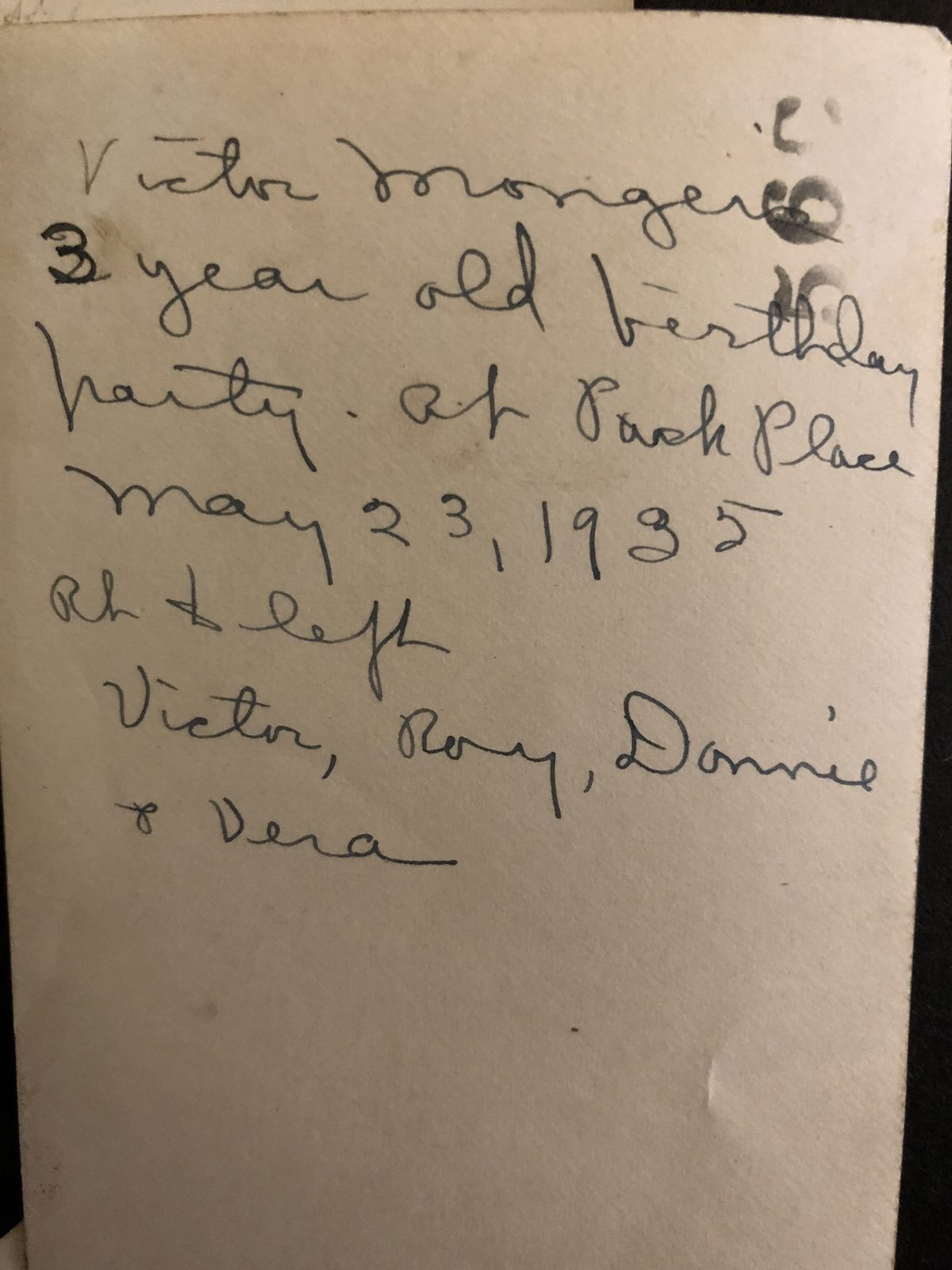
In 1932 Reva had graduated from high school the year before, Delbert was 14 and Elbert 10. Busy Gramma, now past 50, was about to become busier: on top of a senile husband, two teenage daughters and two sons in school, a new grandson named Donnie arrived. It is fair to say the attention I got was left over from caring for Dad, putting final touches on two teenage daughters, and pushing her two sons through high school. Even so, Gramma was the focal point of my life, serving as mother, provider, father and sheriff.
My mother, Reva
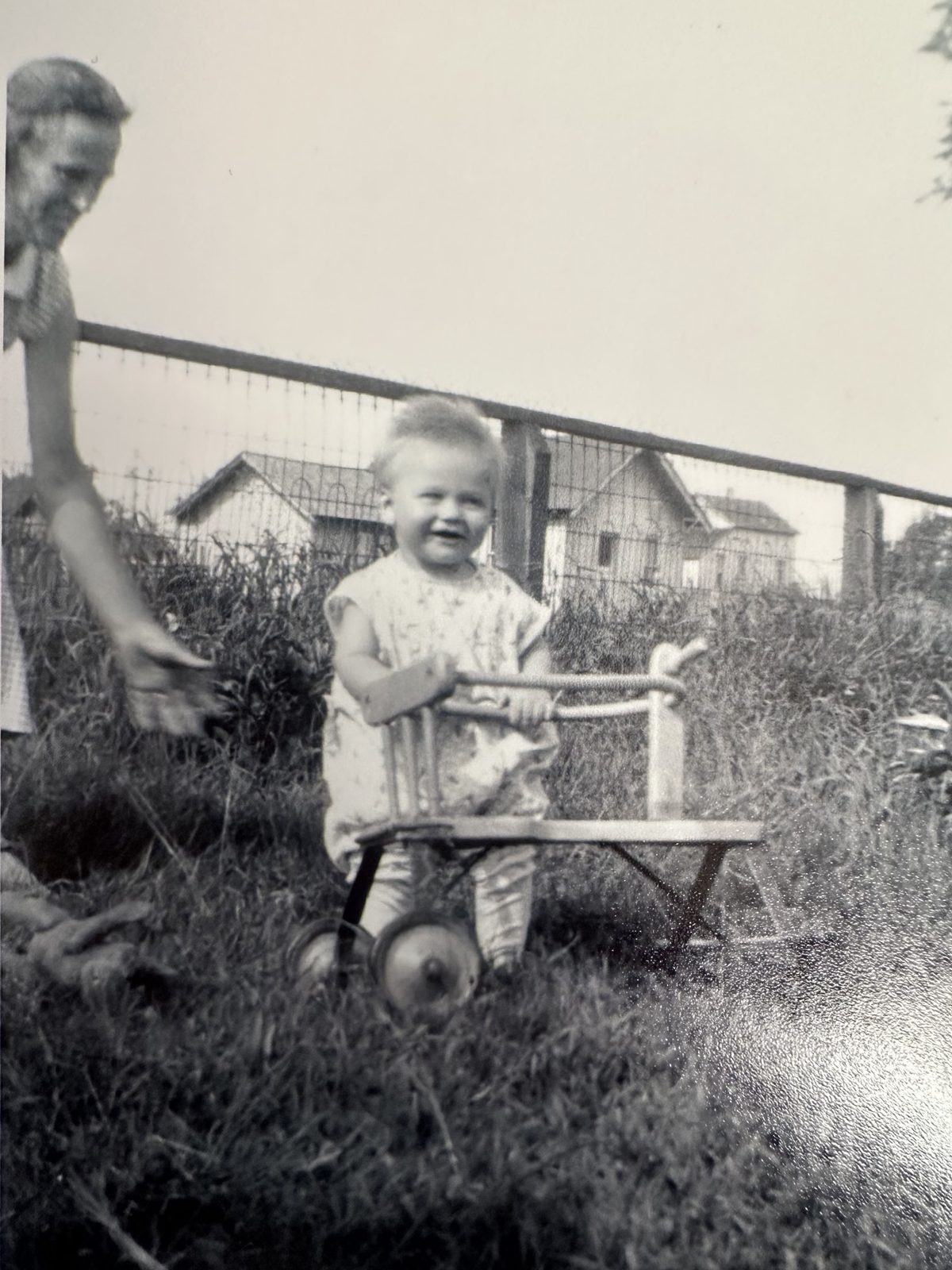
I have no memories of Reva or Bessie living in the little house. Reva graduated from West Linn High School in 1931; Aunt Mary paid for Bessie to attend business school. Reva and my biological father were married and divorced in practically the same ceremony; they never lived together. Reva lived away from home (I'm not sure where) and did tavern and waitress work around Oregon City. She never missed a weekly $5 payment to Gramma for my keep throughout the '30s and '40s, and I remember annual trips with her to the shoe store. Bessie married Bud Hadsell in 1935 (I do remember Bud carrying Bessie and new baby Donna Jean from the car into their house on Holcomb). I had virtually no relationship with my mother until about 1945, six years after she married Bill Miller in 1939.
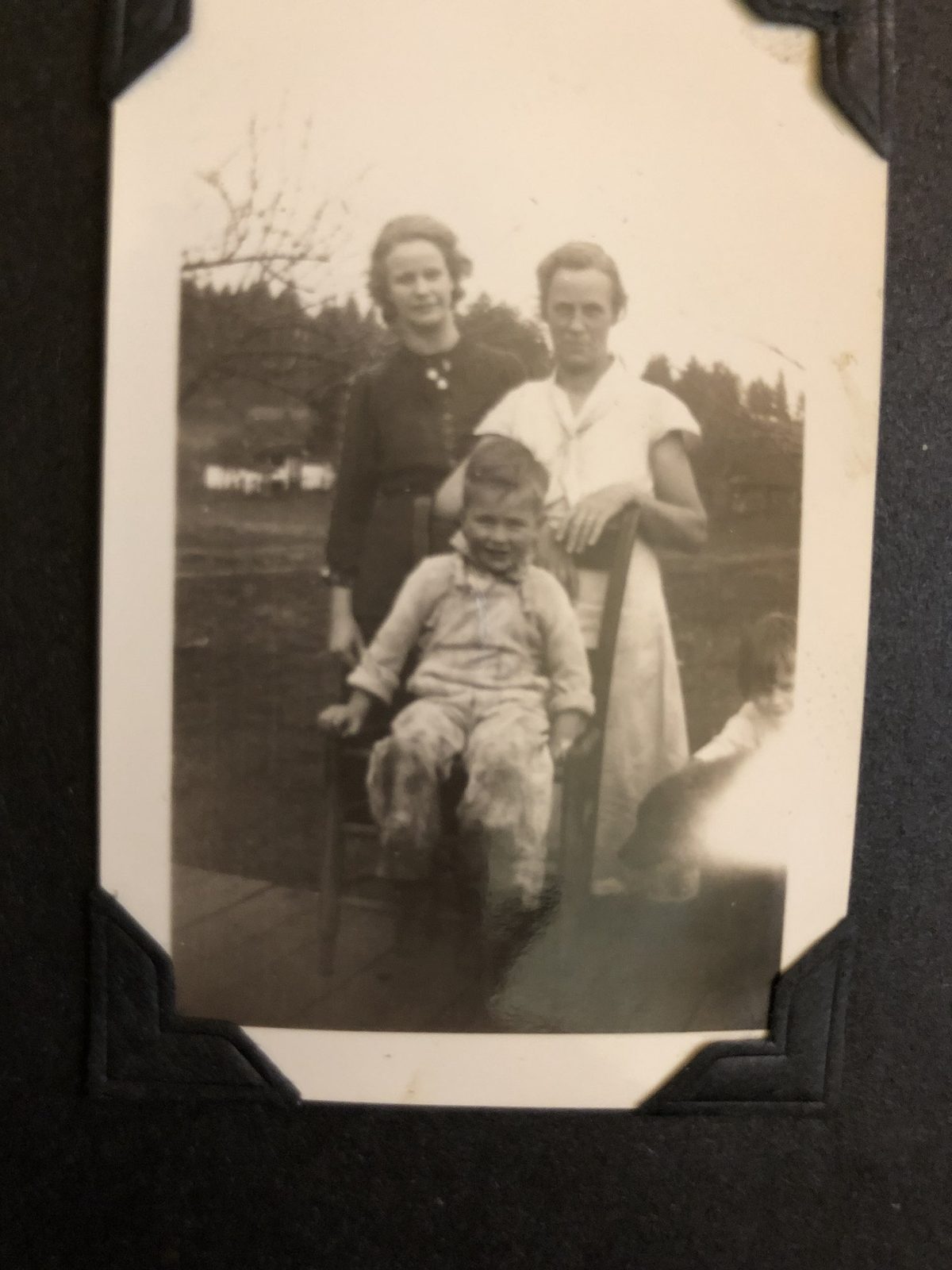
In 1948 Reva and Bill moved from a very small one-bedroom house into a new, somewhat modern home, and one bedroom was earmarked for me. From ages 16 to 21 I had two homes: one with Gramma in Park Place, the other with Reva and Bill about five miles south of Oregon City. As I reflect on those years, I still hang on to the eternal bond with Gramma Effie. She patched my scratches, held my head when I was sick, and shared her love in a motherly way. Although I did grow closer to Reva by 1953 (when I was drafted during the Korean War), our relationship fell short of a typical mother-son bond.
The close bond between Gramma and me showed again in 1958–1959. I was alone in Los Angeles with Carolyn and Julie while their mother, Margaret, was hospitalized for over a year. Gramma promptly came to Los Angeles and managed my young family. And in the early '60s, on my frequent trips from Seattle to California, I always stopped in Portland to spend the night with Gramma before scurrying to PDX for an early flight to Los Angeles.
Growing Up with Gramma
As a young child (under five) there were few, if any, rules in Gramma's house. However, when Gramma told me to do something, I did not question her command. One job I had was filling the wood box: Elbert cut the wood, and I carried it from the woodshed to the wood box on the back porch. I do recall being punished for not filling it. Gramma ordered me to bring her a kindling stick. If I brought it quickly, I got only five whacks; if I hesitated, I got seven. What a clear memory that is. Most readers will remember Gramma at age 75 or 80 — but at 50 she swung a wicked kindling stick!
Gramma was well known in the community and active in the school. Before my first year of school, she managed the school cafeteria; I went with her and got to sit in with the first graders. Grade school (first through sixth) was in an old, large, historic wooden building, the Park Place Grade School — said to have been the first high school in Oregon. Some teachers are never forgotten: Miss Paulson, Mrs. Yoder, Mr. Hostetter, Mr. Johnson and Mrs. Wilson. During my six years there I often got special favors from the teachers. Gramma was chairman of the school board, and living with Gramma Effie had its perks.
Gramma kept me busy. I was a member of the Grange and the 4-H Club, and I spent each summer in the fields picking every berry known to man. Gramma also had several housecleaning jobs. One was in Gladstone, for a music teacher who offered me free piano lessons. So I bought a piano. I took classical lessons for over a year, learned to read sheet music, and played most of the popular songs of the day. My left hand never worked as well as my right, so I finally gave up the piano.
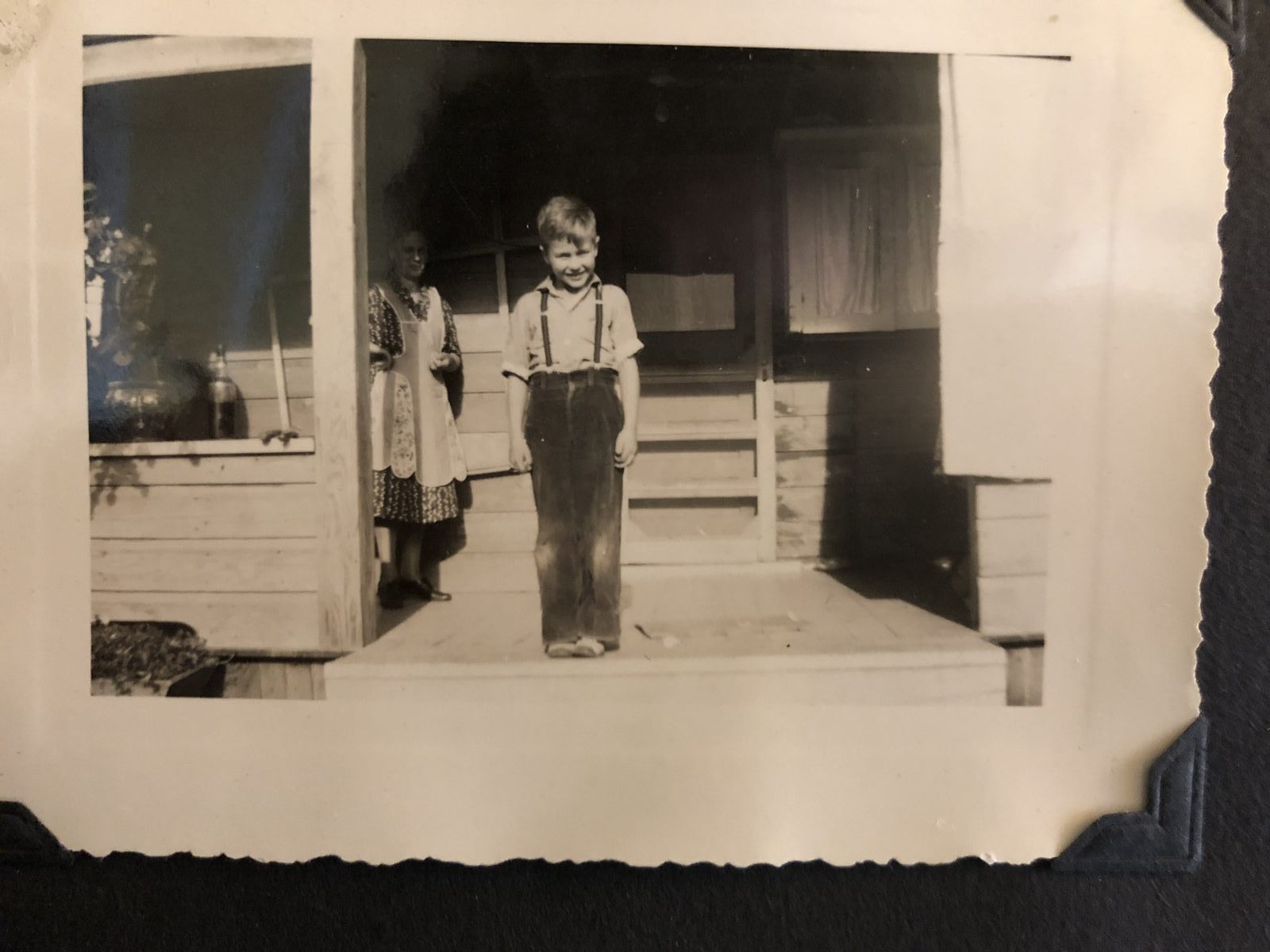
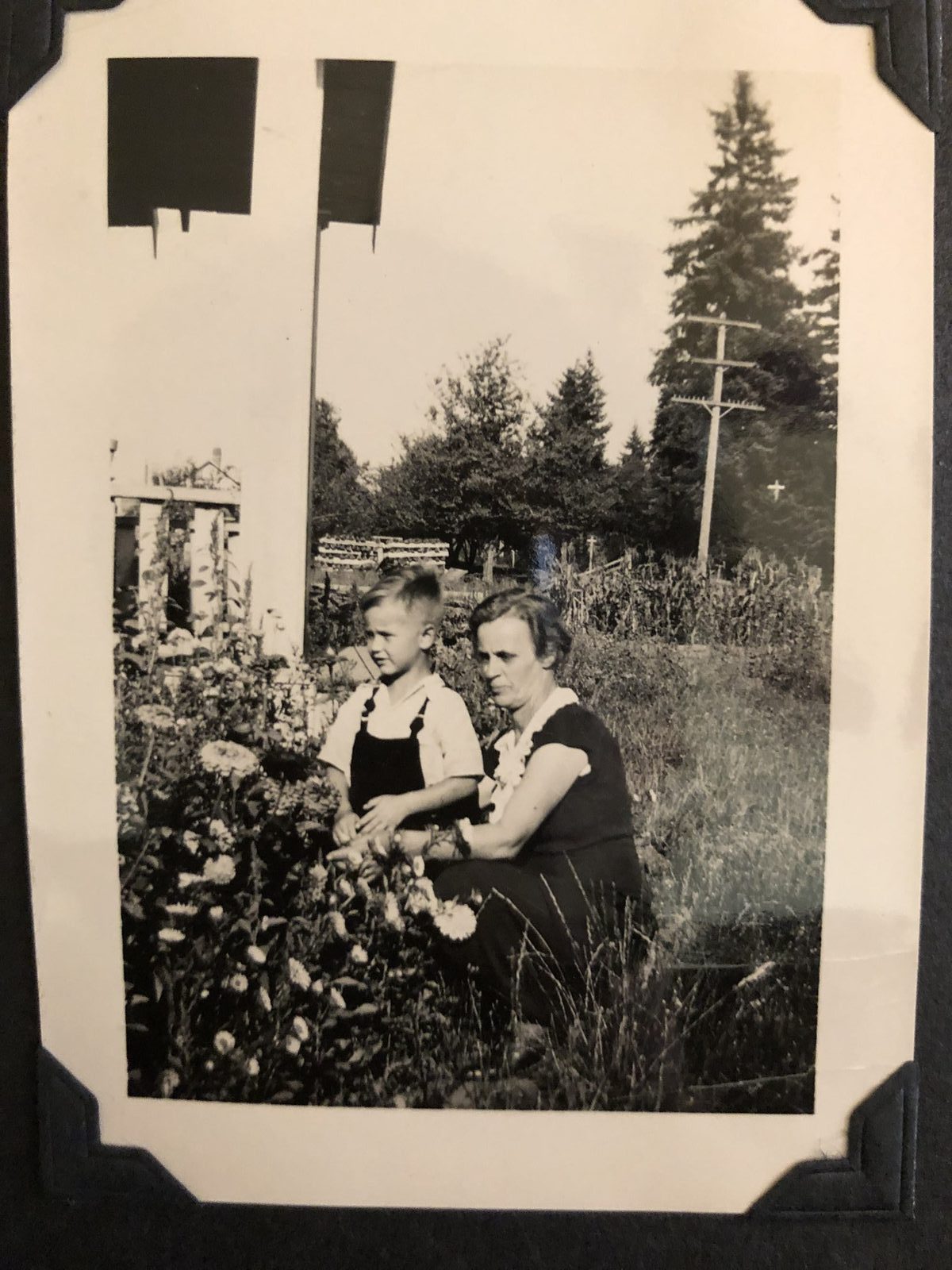
The church
Gramma was the leading administrator of our local community church, and kids from ages 4 to 13 found themselves attending the weekly service. Since I lived under the same roof as the church boss, I got the job of building the fire in the big wood stove each Sunday morning. I was also to ring the bell promptly at 9:00 a.m. (in one version, twice: once at 8:30 and again at 9:00). Ringing the bell was simple: a large rope came down from the tower. But if you pulled too hard — not good. The bell would stick in an upside-down position, and someone had to climb the tower to free it. After I had stuck the bell several times, Gramma said, "Next time, you will lose your monthly $1.50." Crossing her was not a good idea. While the church warmed up I had time to play the organ: "On a hill far away stood an old rugged cross…"
The Grange
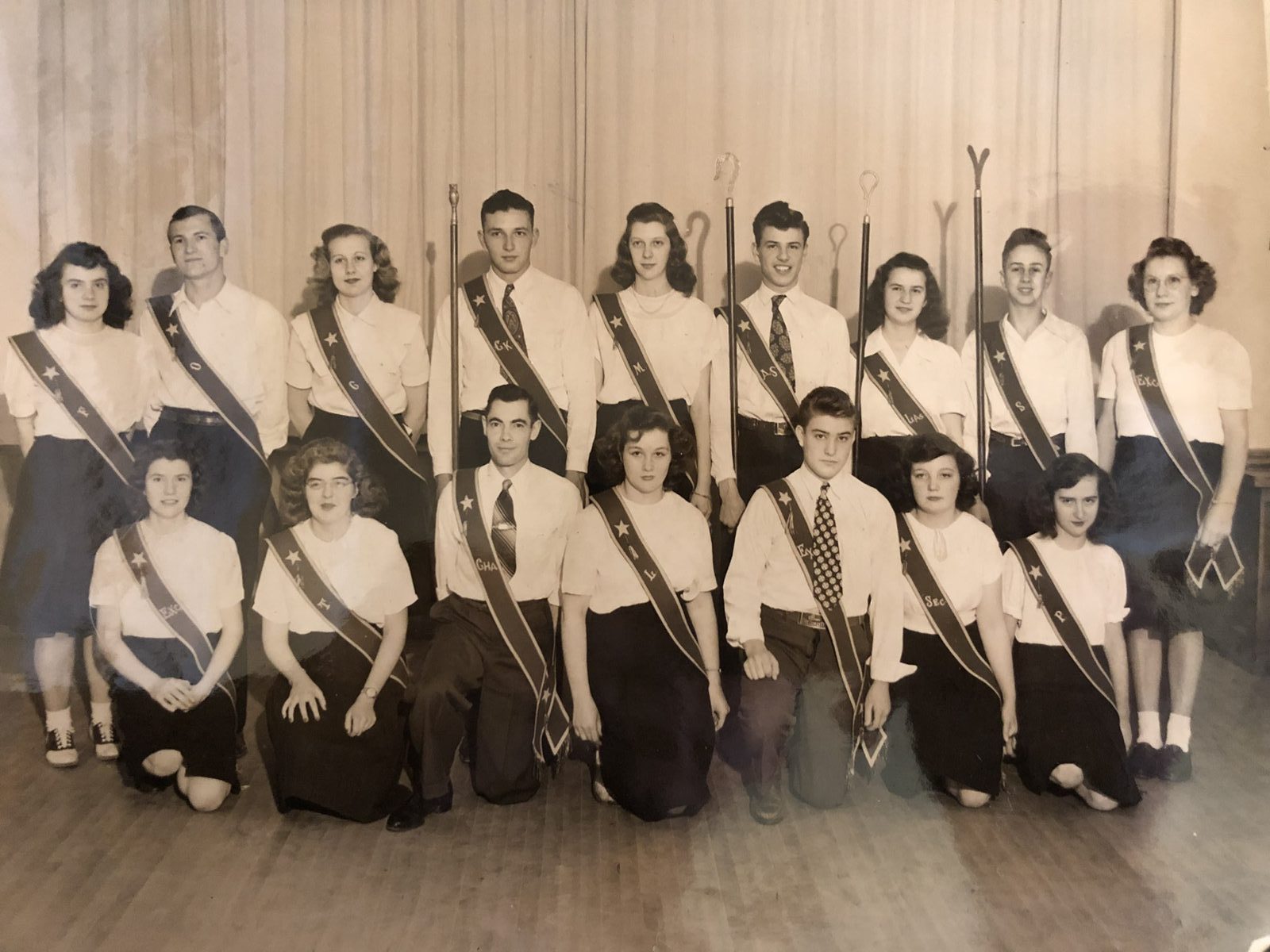
At age 14, Gramma pointed me (and Lois) toward the Abernethy Grange. Gramma was a charter member (probably around the turn of the century) and active for many years. Each Grange in Clackamas County had a Youth Degree Team of about ten young Grangers, each with a station. I was the Steward; Ed McKee was the gatekeeper. Our team competed against other Granges and did well, though as I recall Springwater (near Estacada) did better. As it turned out, our group was active in 1946, when both the State and National Grange were available for us to receive the higher degrees. So remember: I am not only a Granger but a National Degree member. I am sure this elated Gramma; not many Grangers at the time had the opportunity. The Abernethy Grange still exists, in a different location (the same area as the old wooden Park Place Grade School).
Uncle Elbert
Teenage Elbert, crippled and senile Dad, and the blessed Gramma Effie are clearly the main characters in my earliest memories, and a wealth of Elbert/Donnie drama comes to mind. I will preface these stories with a reminder that after I retired in 1995, TG, Chris and I became part of Elbert and Roberta's Christmas Eve celebration, following their family's sit-down five-course meal. This annual event continued for over ten years. Elbert made our holiday season a special time of the year. Much of my close bond with Elbert came after I moved from Seattle to the historic house on Apperson Blvd.
The one drawer
When I arrived in 1932, Delbert and Elbert each gave up a little space, and Elbert was down to one drawer — and often growled at me for ransacking it. When he was out and about, I could not resist fishing through his stuff, which included a box of old radio and telephone junk. One day when Lois and I were digging through Elbert's treasury, we could not resist his headphones. We took turns wearing them: first me, then Lois. Lois, sitting in one of the old oak chairs, looked like Jack Armstrong with Elbert's headphones covering both ears. I suggested we plug the two terminals into the wall-mounted 110 outlet. Lois agreed. This would be so real!
BANG BANG!! Lois hit the floor, slightly dazed. The headphones flew across the room, blackened with smoke. No permanent injuries. Elbert soon found out. He was not happy with the two curious, mischievous five-year-old brats.
Elbert's bike
In addition to his one drawer, Elbert had a bike — his prize possession. Long handlebars (without hand grips), narrow brakes, balloon tires and no chain guard. Elbert kept it polished and rode it during his courtship of Roberta, who lived in Gladstone. At every opportunity I mounted the bike. I must have been a slow learner: I crashed every time, and the pipe-like handlebars would fill with dirt, so Elbert always knew when I had ridden it. As my skills improved (and my speed went up), the crashes got more serious. Once I fell into loose gravel and both the bike and the rider got a good scraping. Elbert was not happy, but little by little I took ownership of Elbert's bike. (I never owned a bicycle of my own. In 1944 I tuned up Elbert's bike and got an Oregonian paper route, delivered at 6 a.m. — the shortest job I ever had: three days. I fell asleep in school, and Gramma ended the paper route.)
Milking the cow
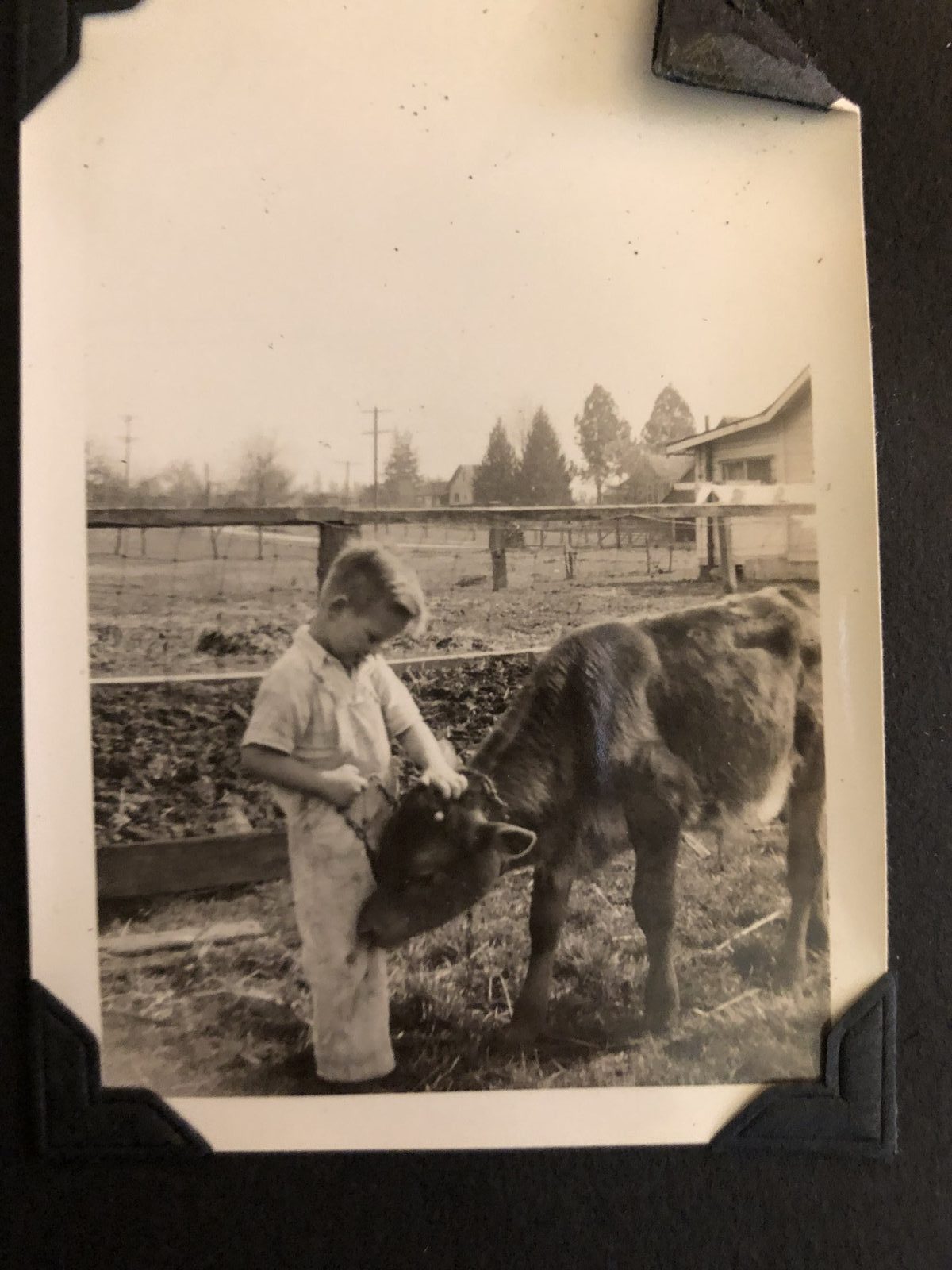
Before the war we had a cow, and for a couple of years Elbert and Gramma managed her (Deb was out and about). Gramma did the morning milking, Elbert the afternoon. A trip to the barn with Elbert was like a trip to Disneyland. First the cow had to be retrieved from her afternoon "staking" — no fences on this farm; a thirty-foot rope gave her plenty of daily grazing on our two acres and sometimes in other fields. To pacify the stanchioned cow during milking, she was served a couple pounds of grain. Elbert washed her teats with a damp cloth, positioned the stool and the bucket, grabbed the front teat, squeezed… but wait! Nature called. "Donnie, get the shovel."
My job was to hold the cow's whip-like tail so Elbert would not get slapped by it. Sometimes my grip failed — Elbert got slapped in the face with the tail, and I got a face full of fresh, warm whole milk. Gramma waited for the gallon-plus of fresh milk. We always had not only fresh milk, but also butter and nasty-tasting cottage cheese.
Tricks on Donnie
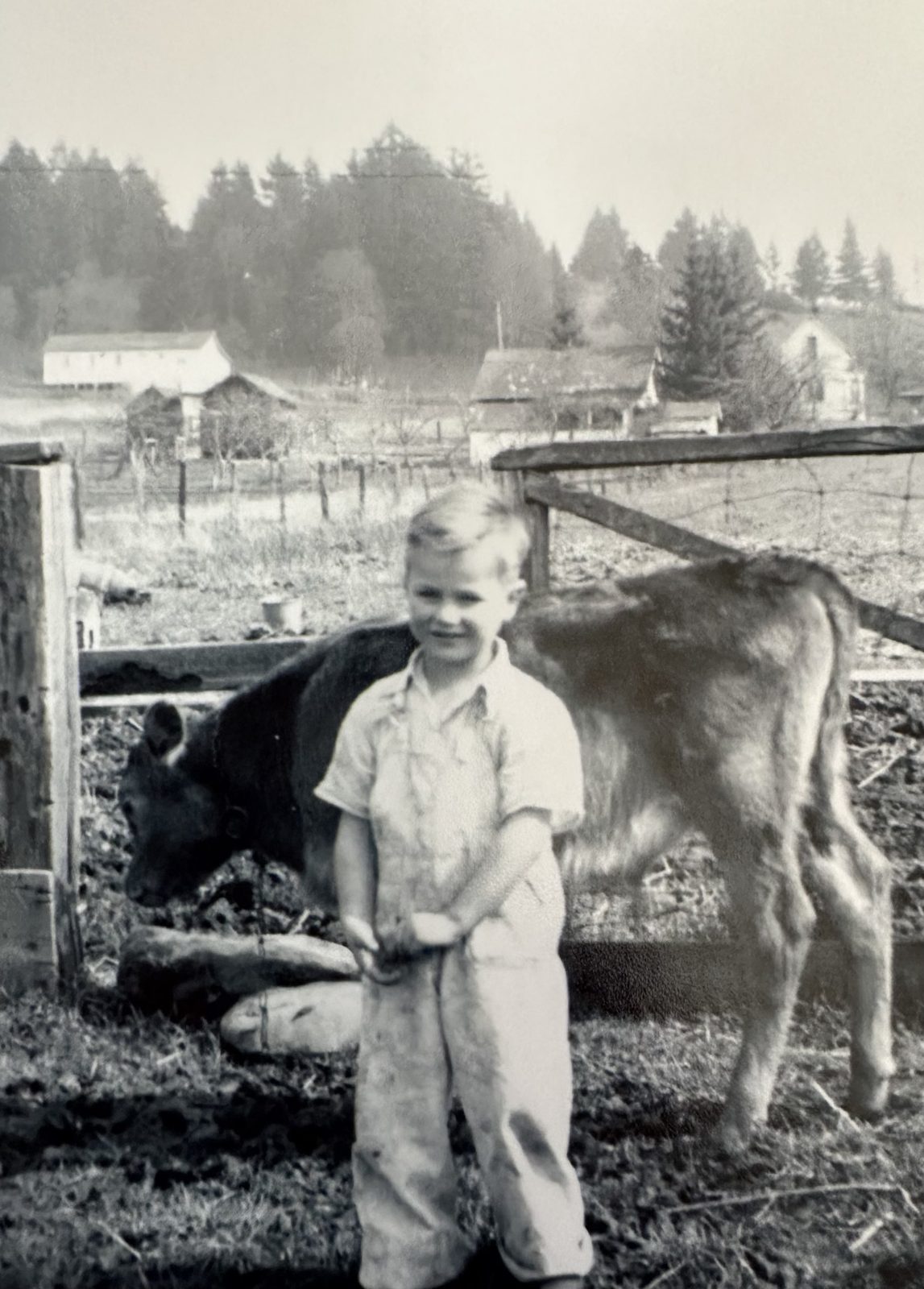
At age five (Elbert was 15), I was often a good candidate for "tricks" — funny for Elbert, sometimes gruesome for me. The best example is the time Elbert asked me to play teeter-totter. A twenty-foot 2x6 on a three-foot fulcrum was carefully placed beside a blackberry patch, and I was selected to ride the end of the board that extended over the thorny vines. Elbert took the other end, and we did the up-and-down routine for several minutes until we suddenly stopped. I was some five feet above the thorns. Not moving. Wondering what was next. Elbert slid off his end. I ended up like Peter Rabbit, thorny vines in all directions. Elbert caught hell from Gramma.
Wood
Elbert was responsible for storing the annual three cords of wood — our woodshed was stuffed — and for chopping it into two sizes: stove wood for the kitchen and kindling. My job was to keep the wood box by the kitchen full. Gramma was not happy when the fire was dying and the wood box was empty.
The casting rod
In about 1943, when I was eleven, Elbert was training with the Army in Florida. He bought a fancy all-metal casting rod with a pricey reel and sent it home for Gramma to keep safe. I found it, and I could not resist a short trip to the popular swimming and fishing hole at High Rocks, near Gladstone, where the water is over 100 feet deep. I stood on High Dornick, the highest rock, and executed a now-famous first cast. I glanced at my right hand. No pole. Only about an inch of cork handle. Today Elbert's pole lies on the bottom. After the war Elbert frowned some over his casting rod, but I was forgiven, and we continued to be close friends.
The ironed shirt
One vivid memory is the hassle Gramma had getting Elbert onto the school bus for high school. The year was about 1939. Boys wore freshly pressed white shirts with the cuffs folded twice (the fad). Gramma spent many hours ironing, but she did not give Elbert an ironed shirt; she handed him one freshly washed and made him iron his own. At the last minute… the bus has rounded the final turn heading down Cleveland. I can still see him at the ironing board, iron hot, making a few last swipes — one arm in the shirt, the other loaded with books — while the neighborhood kids yelled, "Elbert, the bus is coming!" The driver waited, and Elbert made it to school. He was a track guy — high hurdles. I remember his spikes: ten years later I used them in the 880. Three races, three piles of puke. Short track career (see below).
Pets
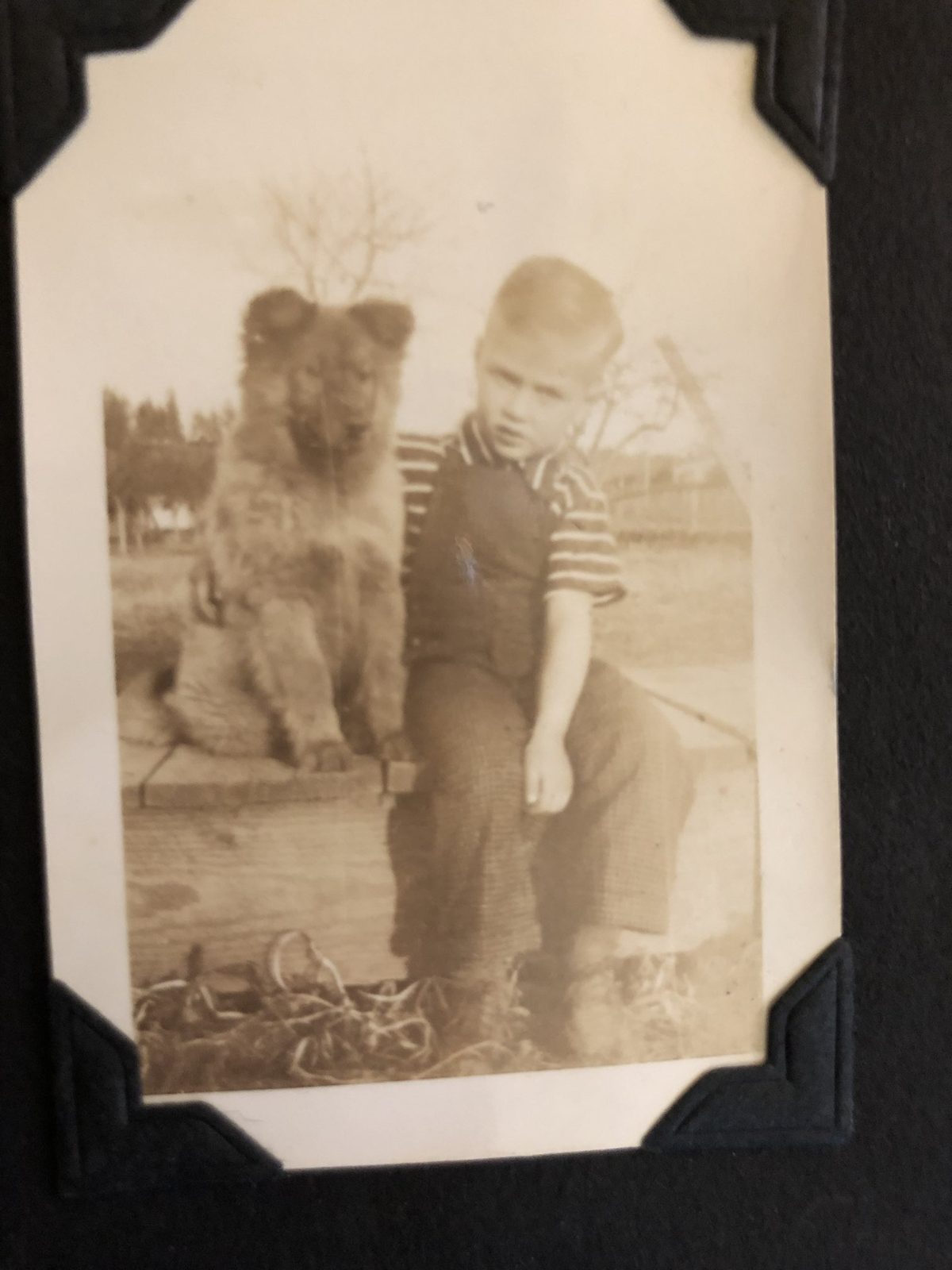
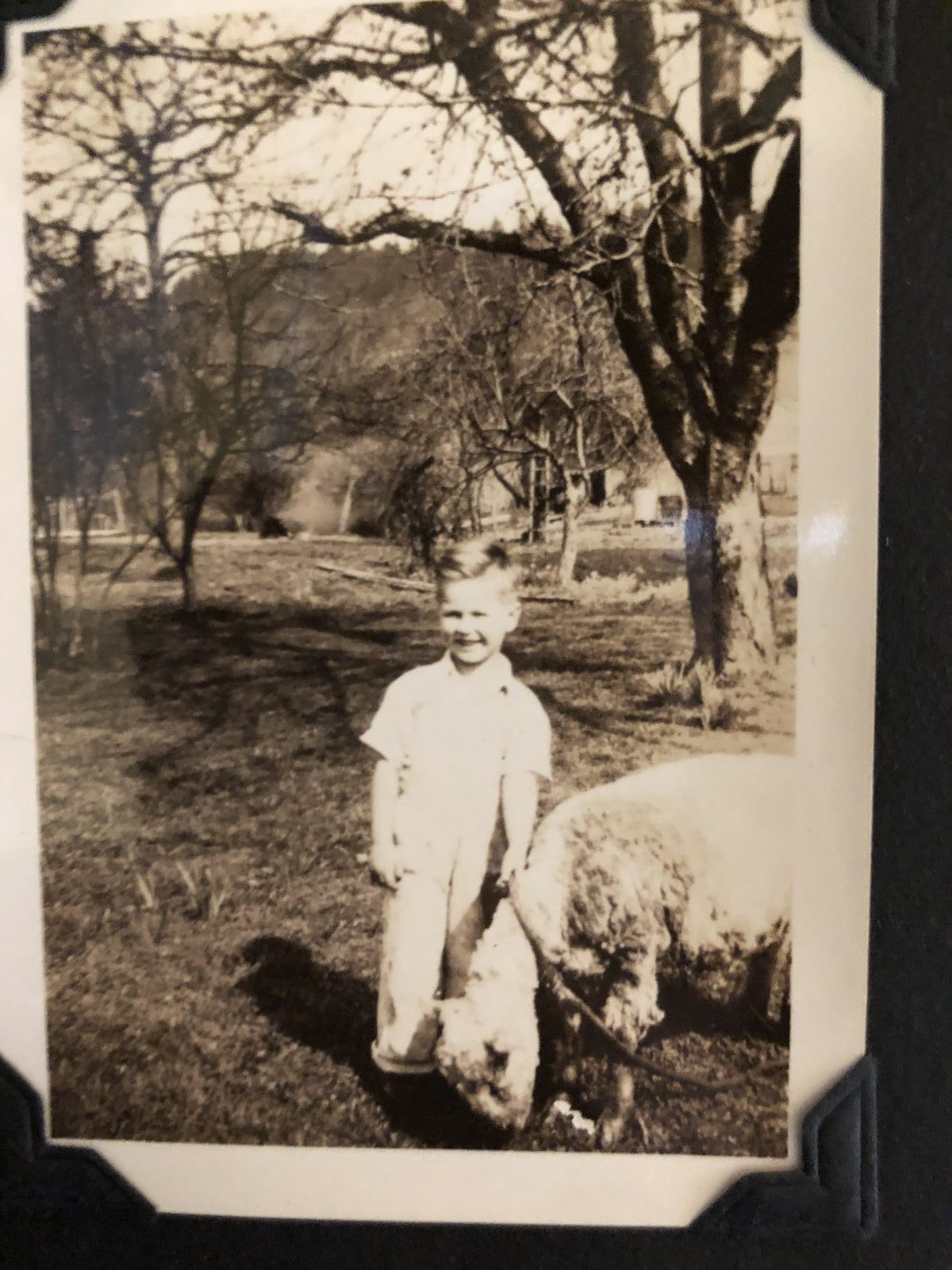
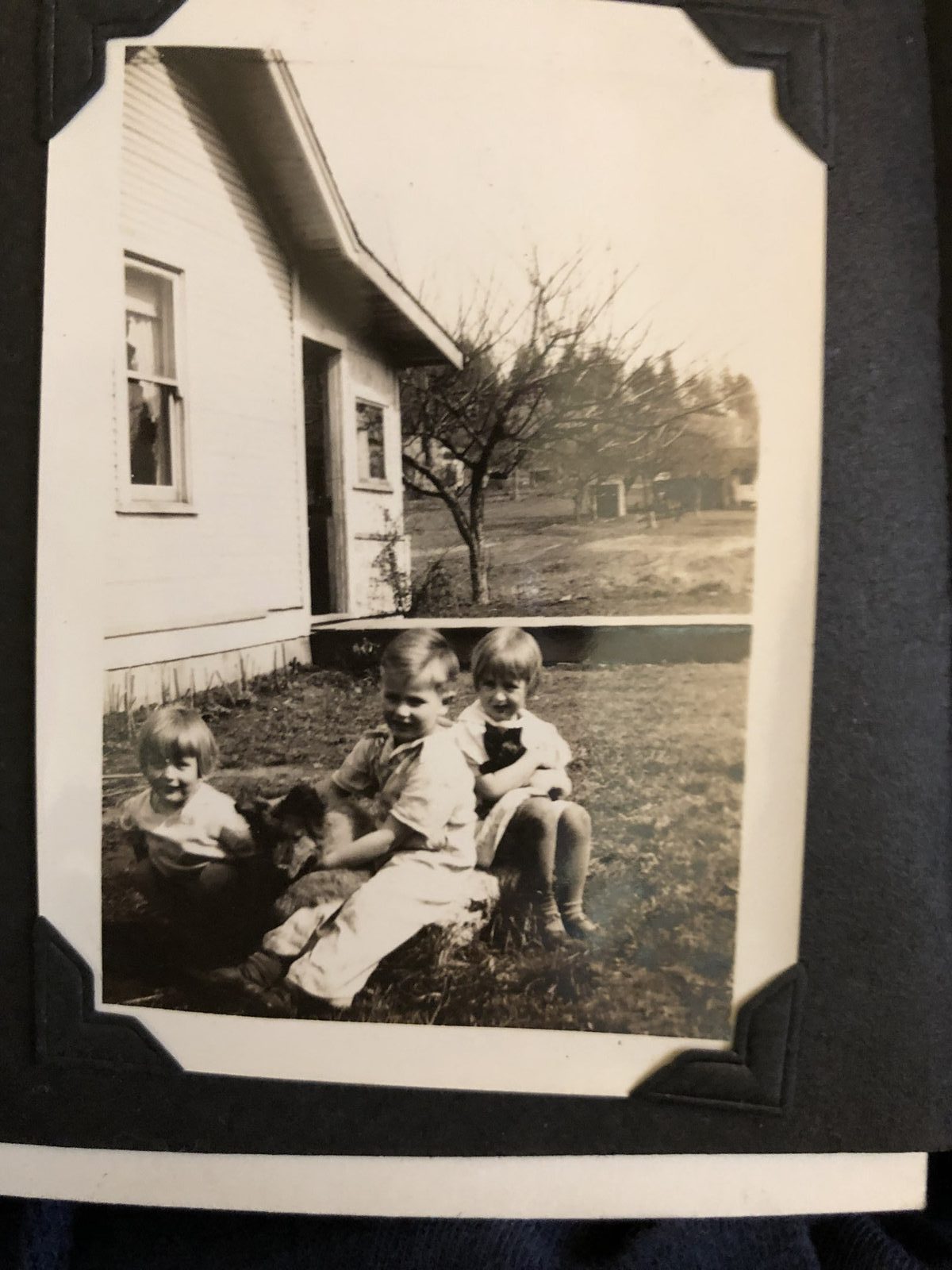
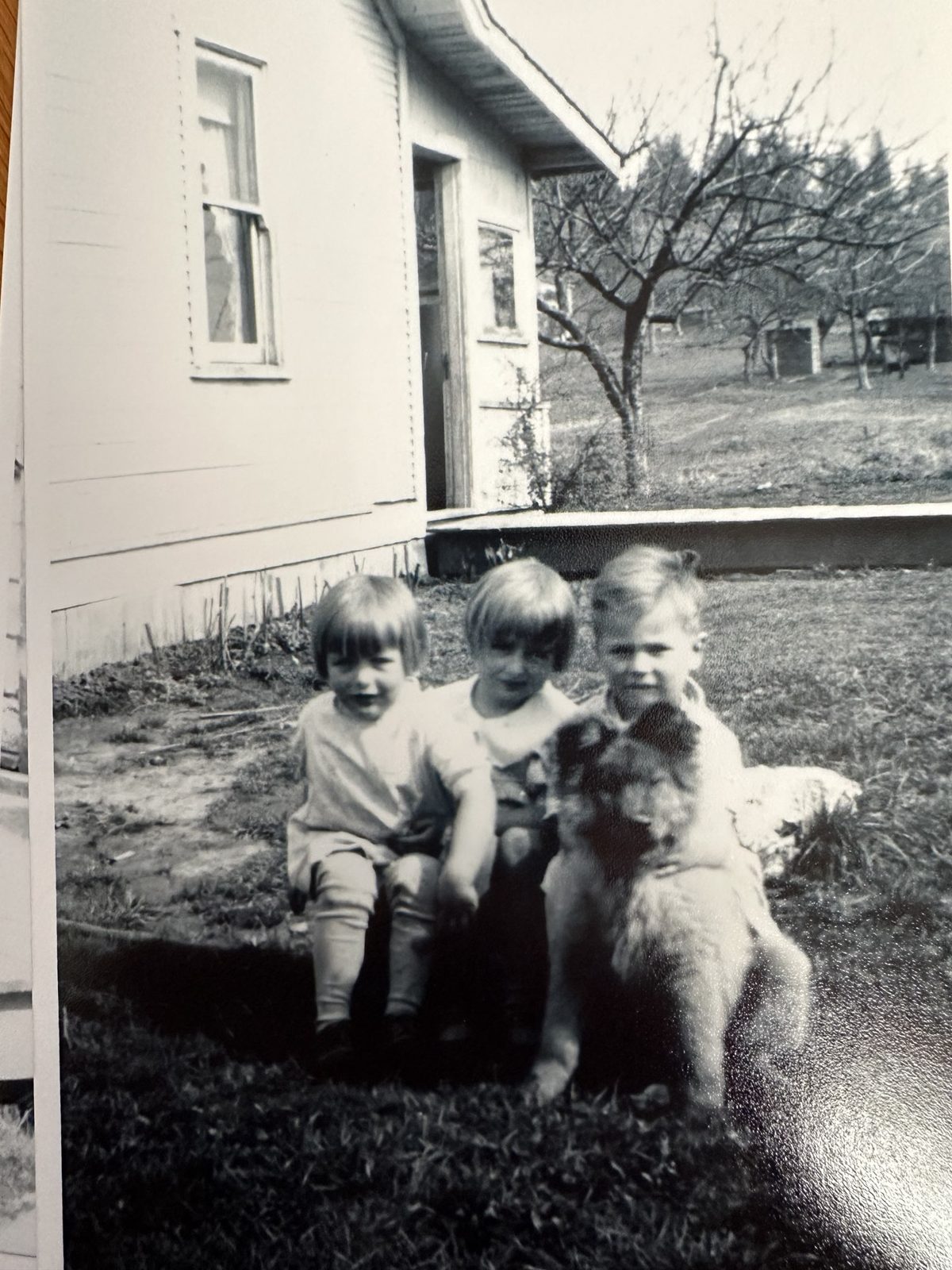
I don't remember any dogs before my first dog, Ching, a red chow, around 1936 (the year of the big snowstorm with three feet of snow). Ching met me every day on my one-mile walk home from school, waiting a few hundred yards from home. One wealthy family in our neighborhood had horses, sheep and goats, and Ching could not resist the sheep. As you might expect, after he was caught killing sheep, Ching did not last long. Gramma had a famously fertile cat named Orval, who lived for 20 years and had dozens of kittens — enough for all of Park Place. Elbert's pets were white rats, caged in our kitchen with prime space next to the kitchen table. They were clean, and it was fun to have them crawl around your neck and shoulders. Gramma did not like the rats.
The trip to San Francisco
One last story about Uncle Elbert. Elbert had a friend named Don Balcom. At about age 17, Don and Elbert decided to make an unannounced trip to San Francisco. They took Don's father's car without permission and headed south. The father was not pleased, so he called the cops. The interesting part is that they made it to San Francisco and back without getting caught. They were about to cross the Golden Gate heading north but changed their route to Highway 99 — and the cops were waiting at the bridge exit. Good navigation job, Elbert!
Elbert, struggling like many teenagers of the Depression, quit high school for a good-paying job in the shipyards and married Roberta. Then the war took him.
Uncle Delbert (Deb)
Delbert graduated from the new Oregon City High School (Jackson Campus) in 1936 and spent much of his time working in logging camps and summer CCC camps, under the protective eye of Uncle Earl, the real family logger. Most of my early memories of Deb are from World War II, when he came home on leave from the Marines. On one leave, after his South Pacific tour, he had an attack of malaria; local doctors found quinine, which led to a quick recovery. Deb was wounded on Tarawa and came home a little heavier, with shrapnel pellets in both arms. He received high honors for taking out a Japanese machine-gun nest.
After the war Deb returned to our little house. Now I was thirteen; Elbert was married and Dad had died. Deb was a good-looking war hero who made the local teenage girls swoon, and he was like a big brother to me 99% of the time. Once he told me to mow the lawn. I had other plans, and he was mad. I hid in a large culvert pipe; he never found me. All went well. Deb worked in a plywood mill and was out and about like any single ex-Marine until he married Aunt Bobby in 1950.
Park Place During the War
My early years were mostly about a dedicated grandmother, an invalid grandfather, and teenage Uncle Elbert. By 1941–42 both boys were off to the war, the grandfather had died, and that left Gramma, me and the cow. During the end of the Depression the cow was almost crucial for survival: two gallons of milk a day, plenty for cottage cheese (large curds only) and butter, and the annual calf provided meat, which Gramma quickly canned — no steaks or hamburger. Our small house was no longer crowded, and before long the barn was empty (I'm not sure what happened to the cow). My responsibilities grew rapidly. I had to process the three cords of wood alone: stack, split, and keep the wood box full.
During the war, shipyard jobs ran seven days on and one day off, with a two-day weekend every seven weeks. Money was not abundant for Gramma, Dad and me. Our little house displayed two banners, one in each south-facing window, each representing a family member serving in the war. Mail from Deb and Elbert was always welcome news.
The walk to school
This world called Park Place had open fields bordered with giant oak trees, and winding trails that led to a historic four-room grade school. No bus rides; rather, a one-mile adventure on foot each way. Sometimes I stopped at my close friend Vera's house on the way. While waiting for her, I watched Mary, Vera's mother, in a soiled cotton print dress, make pancakes, popping each big bubble with a long, dagger-like fork. The walk home was carefree: time for exploring drainage creeks, and always rock throwing at telephone poles. A few hundred yards from home my dog Ching waited. After a few minutes at home, like a broken record, Gramma would remind me in a firm, commanding voice, "Donnie, change your clothes." Today, 75 years later, I never change out of my best Sunday duds after church. However, I am a fine-looking gardener.
Playmates and the Housing Project
There was no shortage of playmates. Lake's two daughters, Lois and Eileen, and my special tomboy girlfriend Vera were always part of play time. In 1942 one hundred new small government homes — the "Housing Project" — were built one block south of us on Cleveland for shipyard workers. Families arrived from distant rural areas, some from the Midwest, to work in the Portland shipyards, and with them came kids: toddlers, preschoolers and teenagers. I knew virtually everyone in the neighborhood, and many of my closest high school friends were raised in the Project. Most precious were Beverly Alvord and Audrey Jones. I could name many others.
The Project created a demand for child care, and since our house was no longer full, Gramma started a day care for kids ages 4 to 10. We were allowed to have eight. My job (when not in school) was to herd the kids onto our large lawn and keep them off the roads.
As kids of 10 to 13 we used the blacktop roads for roller skating. Another popular game was rubber guns: loops of inner tube stretched over a notched board, some three feet long. A good marksman could hit a bad guy at 15 yards. We were allowed to go to the Clackamas River (about a mile away), and another popular play area was the "wooded bluff and lake" (now Home Depot and Highway 213). Weekends were filled with summer swims at the river and winter sledding from Hunter down Cleveland.
Bev
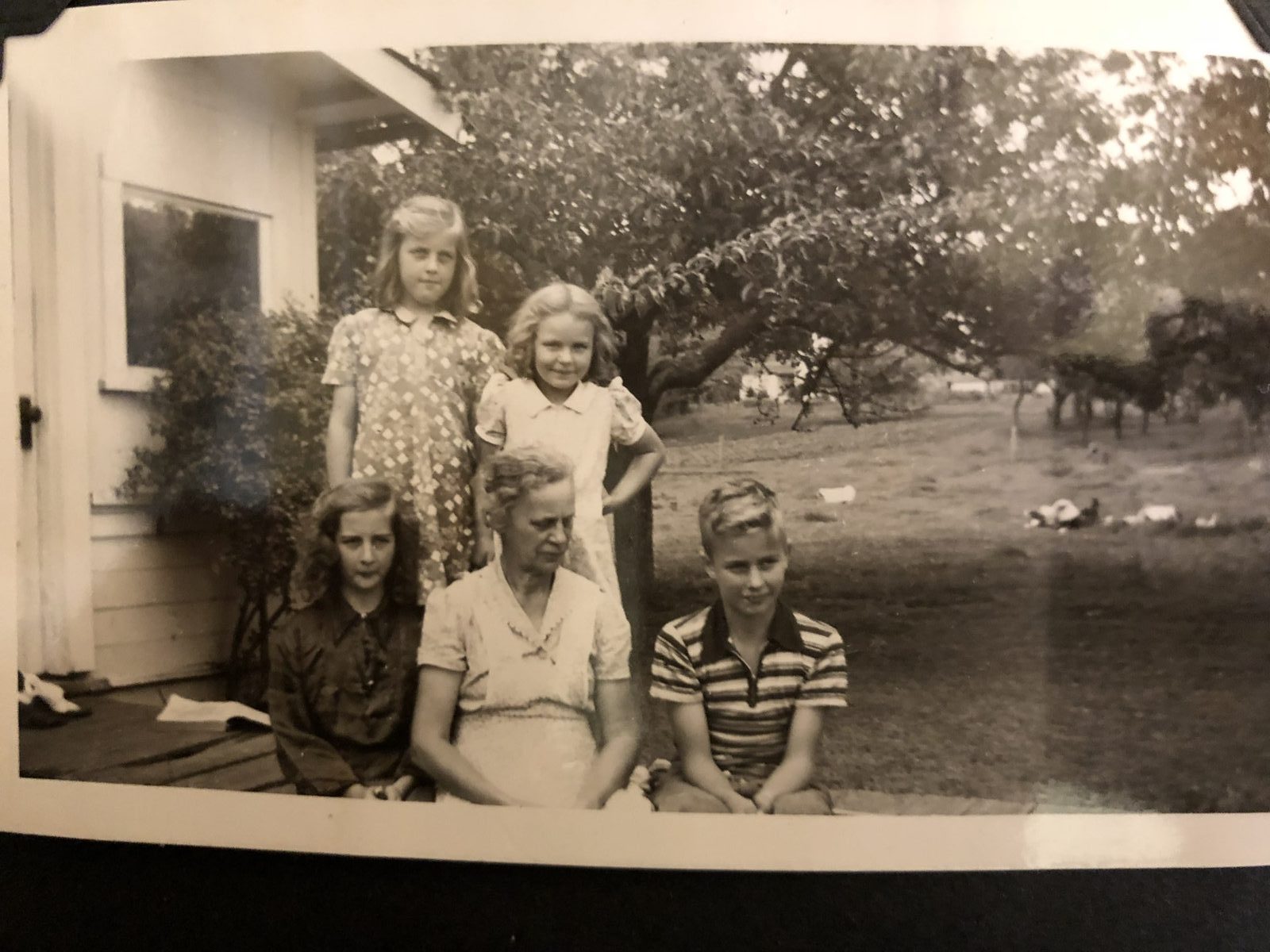
One Project friend was special: Beverly Alvord (later Brian). Bev, a year older, had a wide range of interests — she could be a tomboy, or a young classical pianist. On one occasion Bev and I went to a traveling carnival near the old Kelly Field in Oregon City. The girlie-show barker got our attention. I don't remember paying, but I do remember the onstage sweetie saying to Bev, "Shame on you… you came in here with your clothes on." We joked about that for years.
A second Bev story comes to mind. Bev, her close girlfriend Rose Benton and I were picking berries. A nearby creek was perfect for lunch, and Bev and Rose left for it without me. Curious me decided to follow. Lo and behold, I found Bev and Rose dipping in the creek. They screamed when they noticed me perched on the viewpoint, and I scurried back to the berry field. I don't remember what they said, but they seemed to forgive me for peeking: several days later they invited me to lunch at the same creek spot. The three of us sat down, Bev on my left and Rose on my right. After the first bite of our tasty lunch… all hell broke loose. Two buxom ladies dropped out of the sky — one landed on my legs, the other on my chest. I struggled. As if they were about to seduce me, Rose loosened my belt and yanked off my berry-stained pants. This was not a seduction. Away they went up the hill, pants in hand. Now they were even. Embarrassed, I snuck up the hill, recovered my pants, and finally worked up the nerve to return to the berry patch and face the two sweeties.
The garden
With the boys gone the cow era ended, but the garden grew to over half an acre (at least 60 by 60 feet — lots of clods). There were no power tools, just backbreaking shovel, hoe and rake. Each spring Gramma hired a jolly chap named Whistle (or Enwhistle) to plow, disk and harrow it with his team of two plow horses until the team cried "ENOUGH." The team turned the clay-like dirt into large clods, and after the first warm day our plowed garden was more like a rock quarry. I attacked each clod with a mighty swinging shovel; one or two good smacks turned it into almost manageable soil. Soon I began to understand the work that goes with a large garden.
We planted many different vegetables: near the house, lettuce, cabbage, carrots and special plants such as cantaloupe and tomatoes; corn and potatoes took most of the rest. Canning was the primary way of preserving food. Several dozen quarts of corn and tomatoes were "put up" each fall, and with proper storage the potatoes lasted through the winter. Gramma also canned applesauce, cherries, pears and peaches; several neighbors shared fruit. One part of our woodshed had 12-inch-thick walls filled with sawdust, and this enclosed "cool room" stored the canned food. My favorite was peaches.
Winters and wood
Winters in the late '30s and '40s were severe compared to later years. Once we had over three feet of snow for several weeks. Heating the small house with two wood stoves was a challenge. Before the war the two older boys handled the wood with ease; then the job became mostly mine. Cooking and hot water required a near-constant fire in the kitchen stove. Today I have a fun stove in my kitchen and burn about a cord a year, and when I'm stacking and splitting I often think of the time when the logistics of wood were a serious issue.
The war effort
At age ten in 1942, rationing of items such as butter and gasoline was burdensome but did not affect me directly. Kids my age were taught to recognize low-flying aircraft; if a foreign plane was spotted, we were to alert the police. Every group of five to ten houses had one house with a ladder system accessible to anyone, because the threat of Japanese incendiary bombs on roofs was real. At the beginning of the war, all lighted windows were covered with blinds at sundown. Radio, newspapers and film constantly reminded us to BUY BONDS. Kids bought stamps for 10 cents each; eighteen dollars' worth of stamps could be exchanged for a bond that matured to $25 after several years, helping finance the war.
Fun
Life in Park Place during the war was not all work. Around 4:30 each weekday I snuggled up to our breadbox-sized radio, set the dial to KALE, and listened to my favorite 15-minute serials — including Amos 'n' Andy and The Lone Ranger. And of course, no one missed the weekly Hit Parade. On Saturday mornings Portland had a local talent show called "Stars of Tomorrow"; Jane Powell was perhaps its most famous product.
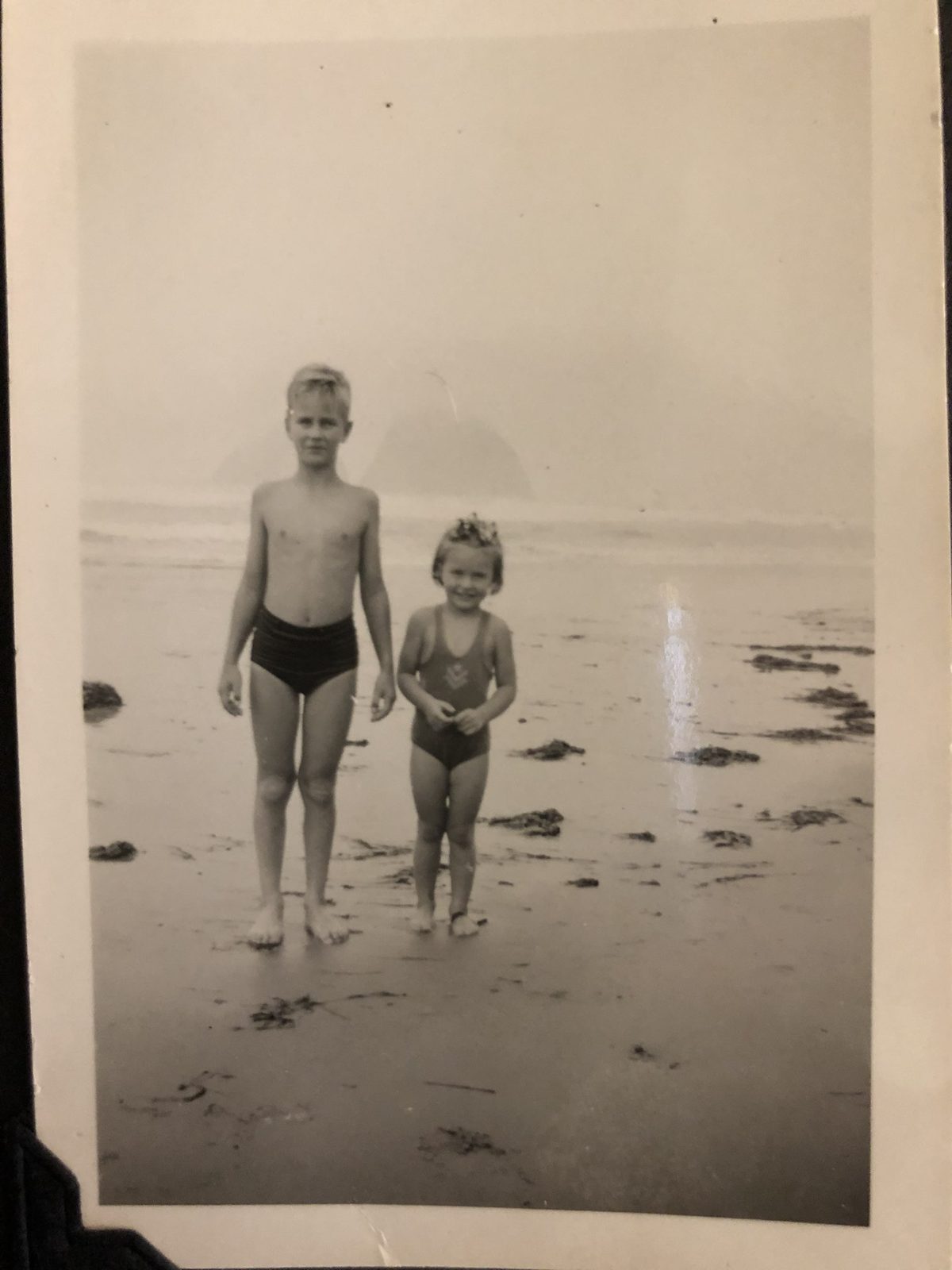
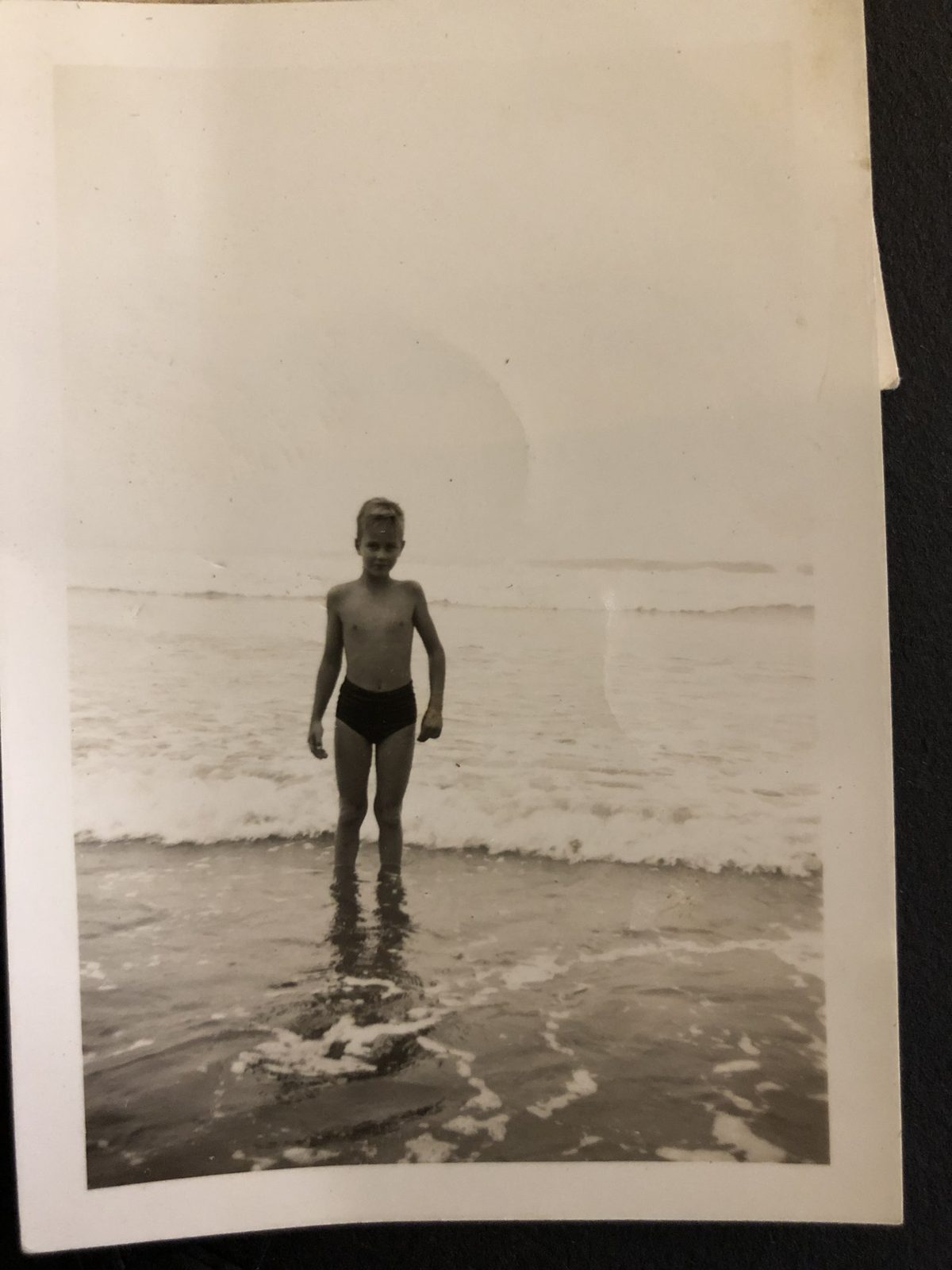
By 1944, on hot summer days, the Clackamas River near Gladstone called. I was never a strong swimmer, but I enjoyed the river. Most of the good swimming holes of 1945 have disappeared. High Rocks is one exception: still filled with teenagers just like 70 years ago. Lifeguards were added there in the late '80s, and there are fewer drownings now. Another popular Clackamas adventure was floating from Barton Park to Gladstone. We used inner tubes rather than today's kayaks and rafts; the six-mile trip was relatively safe, with just enough rapids to make it interesting. Chris and I (plus Pierre) made the trip in 1999.
Being the number-one babysitter for Donna Jean, four years younger than me, had its rewards. Gramma did not have a car, but Bessie and Bud had a 1937 Chevy in near-perfect condition, and I often got to travel with them on short one- or two-day trips. I was always excited when they came to our house.
Work in the fields
Before 1950, child labor laws did not exist in Oregon (or were ignored). Summer for kids under sixteen was harvest time: strawberries in early June, hops in September. I picked strawberries for one day and quit — I was so bad at it that Gramma let me skip it. Filberts and beans were my favorites. I was one of the fastest filbert pickers in Clackamas County, and at beans, on Bolie's farm near the Clackamas River, very few kids picked more than me. I once raced a gal named Anita Hinkel, a very fast bean picker. She won.
Gramma understood the dangers of idle time for young teenagers. Each fall, just before school started, she and other ladies of the community (Mrs. Stricker, Maud Glass, Mrs. McKee) dragged the kids off to the hop yard — a large area bordered by McLoughlin Blvd. on the west and Park Place on the east. Those memories are as clear as any. "Wire down!" yelled the pickers as they stripped the long hop vines and made their way down the rows. The work was tough, like most manual harvesting, but hop picking was more than work; it was also a social outing. Kids learned to work and earned enough money for school shopping. I have a hop plant in my backyard today that grows some 20 feet high, up the neighboring walnut tree. When I pick the hops, my mind goes back 60-plus years; the odors are a perfect replica of the hop yard. (I tried a batch of beer once. Not good.)
The 4-H Clubs were popular during the war years. I belonged to a club that did beginning woodworking projects, led by Mr. Weber. After a few months I started a business making end tables: three shelves of tight-grained 1x12s, carefully arced on one end. Most relatives bought one whether they wanted it or not.
Reva and Bill
My mother, Reva, married Bill Miller in 1939. Bill, a super carpenter, built a small one-bedroom house on two acres on Highway 213, about five miles south of Oregon City (close to the newer golf course). There were never plans for me to live there, but during my young teens I spent a few weekends with them, helping Reva with their chickens; cleaning the roosts was not a pleasant job. I always went to school in Park Place and considered my home to be with Gramma.
One outstanding memory is the black cap (black raspberry) fields near Reva's home, where she and I picked berries for the owners, Grant and Jones. This was probably my first real experience of a "day's work." Reva wanted to teach me what it was like to put in eight hours in the hot sun. Fortunately, about 1:30 each day she would say "enough is enough," and we would head for the house. She had a large dog named Prince who raised hell in the black cap patch; he ate berries right off the vines, and the farmers did not like Prince. I must mention that my first love, Janice Sonoske, popped up on one of these 1945 black cap adventures.
Junior High, High School and First Jobs
Junior high
Junior high school (1945–1947) changed the daily routine. No cow, no fire building at the church, no walks to and from school — buses took us from Park Place to Oregon City. Gramma's wood box and her big lawn were jobs I couldn't shake, though. I didn't like lawn mowing, and Gramma knew all the old ladies in Park Place with large lawns. I scoffed, but the lawns got mowed.
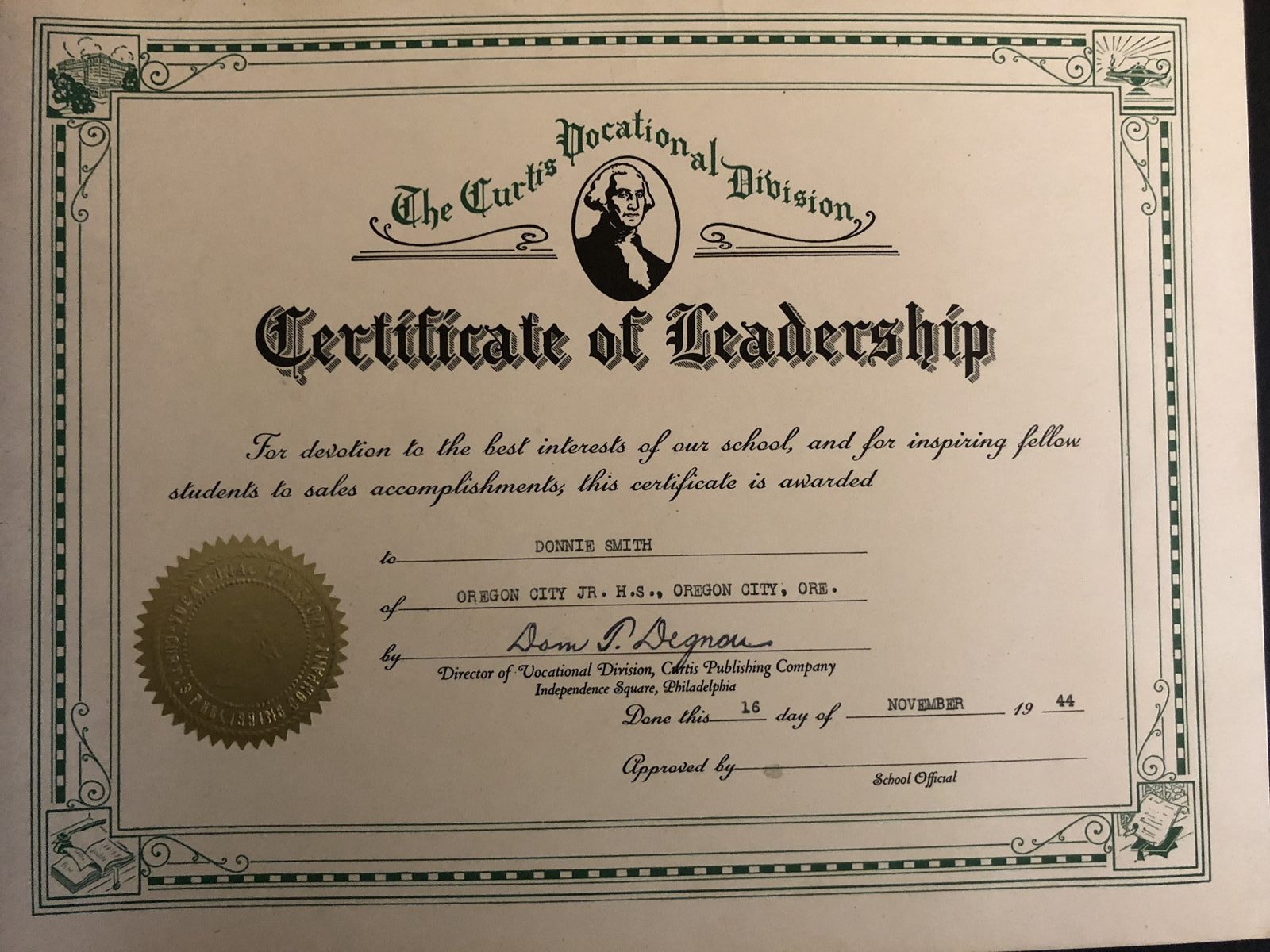
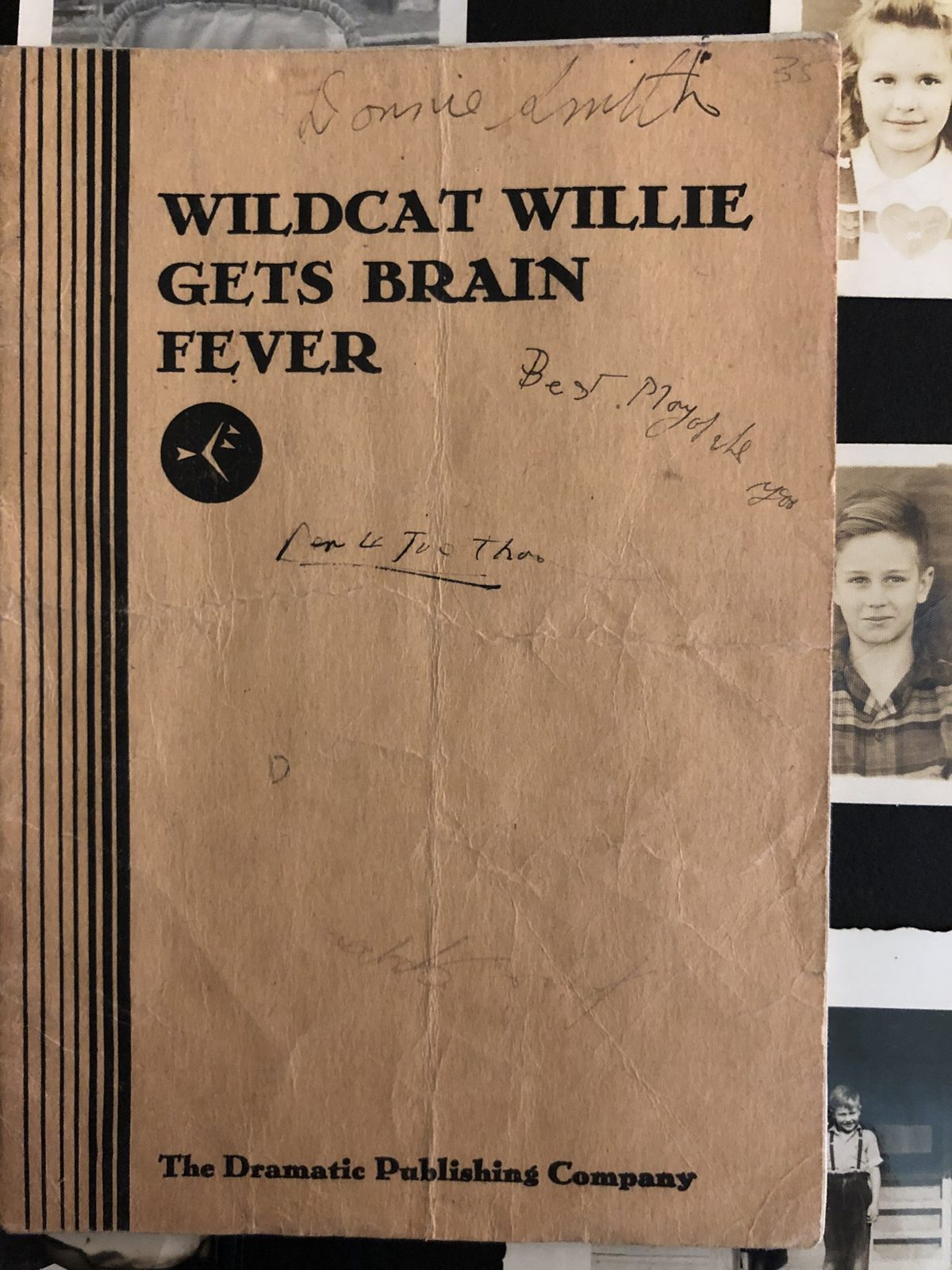
After the war (1945), Delbert lived at home again and Elbert was married. Most of my memories from then on center on work. Junior high was a busy, fun time. I was not a good student, but the teachers liked me; they broke the rules and put me in the Honor Society — wow, what a mistake. I played basketball in the eighth grade and was in a couple of plays. My leading role in "Wildcat Willie Gets Brain Fever" was the beginning and the end of my acting career; in several scenes Wildcat pranced around the stage in pajamas while 300 teenage girls screamed.
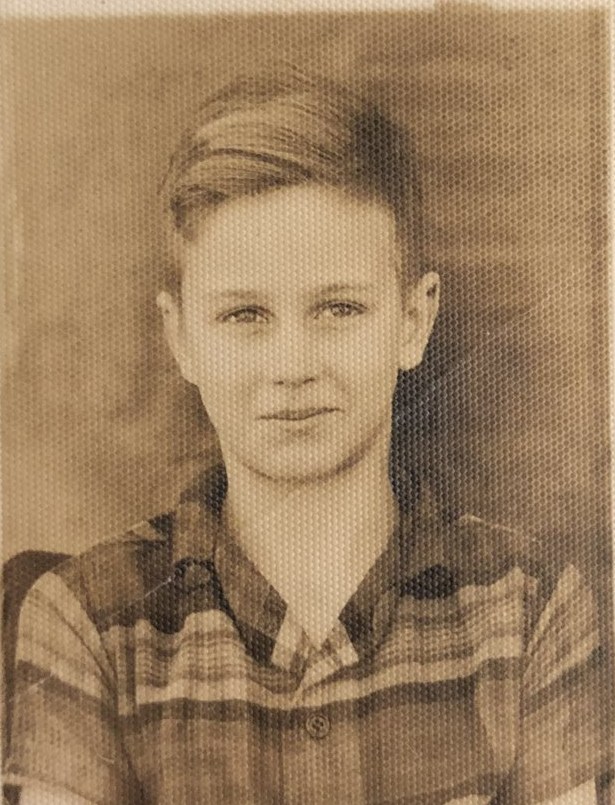
It was during these years that I began a relationship with my mother. After school I would spend an hour at a recreation hall for junior high students near 7th Street — jukebox, bowling alley, ping-pong and girls — and then around 4 p.m. meander down 7th Street to Howell's, where Reva worked. She always had time to make me a chocolate malt (she kept me fat with milkshakes) and took an interest in my school activities. I shared virtually all of my most interesting activities with her — some of which should have stayed on the QT. Since Gramma and I had no car or phone, I would often bum around Oregon City until 5 p.m. and get a ride home with Bessie and Bud. Like some of my grandkids, I did not like the bus ride home.
After the first grading period I did not do well. The principal, Luther King, called me to his office and told me I would be changing homerooms. I didn't pay much attention. Years later I got the story: Reva had raised hell at the school. My grades instantly went up, though my crowd did not change. After about a year, Reva's visit was forgotten, and Donnie's grades tumbled again.
I had many friends in junior high, and many of them are still here in Oregon City. Our class (Class of 1950) has annual picnics and monthly lunches. (Terrill calls these friends "the fat ladies" and avoids the gatherings.) These years are best remembered for the many friends at school and in Park Place; the Housing Project had so many kids my age. In many ways the years before 1947 were special. It was during this period that the strong bond with Gramma took hold.
The move — and Uncle Roscoe
In 1947, at age 14, there were major changes to Donnie's lifestyle. Now it was Don, no longer Donnie. Gramma sold the little chicken house, and she and her brother Roscoe (also called Uncle Bud) jointly bought Auntie Kruger's house, half a block north on Harley — the house most of you remember, with the big oak tree. It had some perks: a phone, a refrigerator, automatic oil heat, a bigger bedroom, and a bathroom with a tub and hot water. Deb and I shared the upstairs. Not so good was the addition of Uncle Roscoe, who now shared ownership of my new home. I had to start sharing Gramma with her brother.
Along with Don, Roscoe got Don's piano and his two years of musical skills. I did well with "The Bells of St. Mary's" in the key of C, a piece with some measures of increased volume, and I played it as loudly as possible. The piano and Roscoe's chair were in the same small living room, and I have vivid memories of the stern frown on that unique Morris face. For Uncle Bud, all was well except my piano practice. When things got too sticky between Roscoe and me, Reva and Bill's house in the country was a great emergency place to sleep.
In retrospect, these years were unsettling, but I managed to stay busy. Donna Jean and I had a firecracker stand in her front yard on Holcomb; I remember a bucket full of change, and after the stand closed I would spend hours counting the money.
Perhaps a one-day job with a builder named Dunmire in Gladstone best describes these years. My close friend Edgar McKee (two years older) and I were hired as laborers on new homes. The morning went fine: we cleaned up lumber scraps. After lunch, Dunmire told us to get into his truck, and the three of us drove to Oregon City, where a boxcar of 96-pound bags of cement was parked. Our job was to transfer the cement from the boxcar to the truck. We loaded and emptied several truckloads, and the job was done after sunset. The last few hundred yards of the mile walk home were almost too much for this 15-year-old. Reva happened to be at Gramma's and saw that I was about done in. She instantly called the local union, and Dunmire's construction stopped for a day.
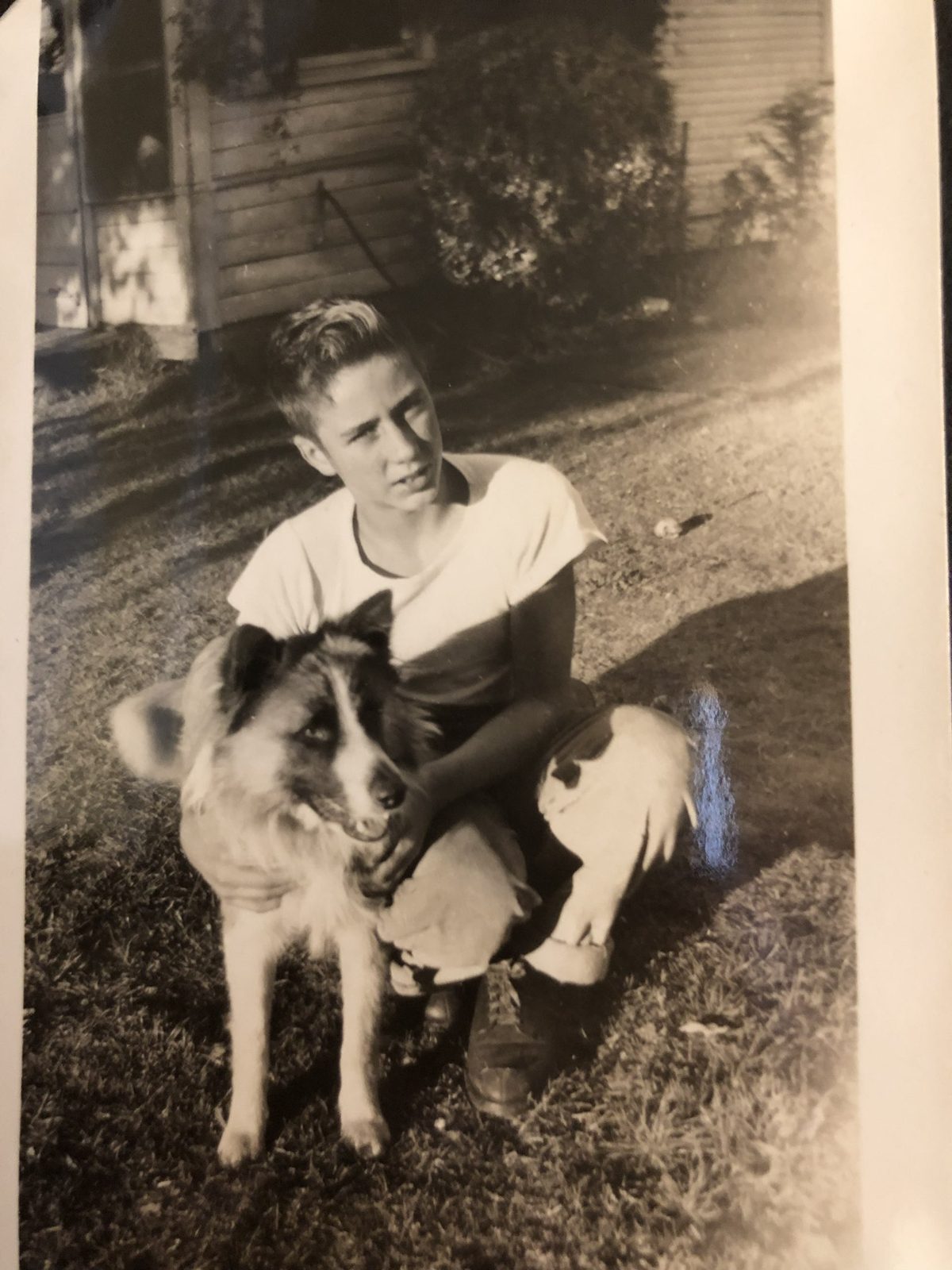
Bill Miller, my stepfather
My stepfather, Bill, was a unique character — not someone a fourteen-year-old boy would bond with quickly. He was a small man of very few words. Our relationship was positive, but it took me several years to understand him. Virtually all our time together was weekend work on their new, larger house, and that is where I learned basic carpentry. His teaching method was different. A sample comment, early in my learning: "Damn, don't just stand there — do something, even if it's wrong." Funny now, but confusing in 1946.
I remember learning to use a try square and handsaw. In one session, Bill told me to cut a piece of shiplap about one foot long. I found a board and a sawhorse, pulled out my six-foot wooden folding rule, meticulously hooked it on the end of the board, found twelve inches, and marked the spot with an accurate pointed arrow. The try square, firmly fitted to the board and positioned on my arrow, guided my carpenter's pencil to a perfect ninety-degree line. Then the handsaw: I started the cut with the base of the saw, not the tip, and slid it gently without forcing it. A near-perfect square cut brings on a feeling of success.
WAIT, WAIT — Bill was watching, getting more pissed off by the minute. When I handed him my work of art, he threw it on the ground, mumbled some profanity, took my saw, found a board, and in three seconds had the piece. "God damn it, you're earning $4.75 an hour. Grab the damn try square like an ornery cowboy pulls out his revolver. Slap it on the board with your pencil ready to mark. It is not a work of art. Drag the board to the saw, bend your knee for a place to cut. That seven-inch board can be cut square enough in three to four seconds. Don't f— with it." A different teaching method — but to this day I do my carpentry with "$4.75 an hour" in mind. Those early lessons made me the youngest journeyman carpenter in Portland: 21 years old in 1953. Thanks, Bill.
Wheels and first jobs
By 1948 I was beginning to show more independence. I celebrated my 16th birthday with Gramma and Deb; I don't remember the gifts, but I do remember the slick 1928 Model A Ford (with 16-inch wheels) that I bought for $100. Finally I had wheels — no more two-mile walks from downtown Oregon City to Park Place. And with Reva's new house finished, if Uncle Bud or Deb gave me any guff, I had an alternate place to sleep.
Along with the wheels came my first "non-farm" job. Edgar McKee was about to quit his dishwashing job at the old West Linn Inn near the Crown Zellerbach paper mill, and I was hired. I remember the cook, Buzz York, a wannabe prize fighter. Buzz had my attention the day I found a butcher knife in the bottom of the sink used to wash pots. (My notes also mention a dishwashing stint at the Chicken in the Rough — each job lasted only a few months.)
After returning from my first adventure away from home (see One Night in Antelope) in early summer 1948, I began my second job, at Dixon's Bakery on Main Street in Oregon City. My workday began at 4:30 a.m., which left lots of time for afternoon swims at High Rocks. This job was special. At first I was responsible for most of the daily cleaning plus a Saturday mopping; I had learned to work fast without sacrificing a good job, and the bakers, Carl and Floyd, had a winner. By Christmas I was using the ovens. One Saturday morning the bakers left for coffee and told me to bake six large pans of Santa Claus cookies. I felt so proud… next thing, Carl and Floyd came running down Main Street. The odor of burning Santa Claus cookies had their attention.
After about a year, I became very efficient at my main job: cleaning the large 2-by-4-foot cookie sheets. I mastered the fastest way to clean them, but my method was noisy, and the sweet older lady, Grace, who waited on customers did not like the noise. Carl and Floyd took action. They were golfing buddies of the Safeway manager, George Reynold, and they got me a job at Safeway in the fall of 1949.
Safeway
The first Safeway job was definitely for an ambitious kid. When a checker yelled "CARRY OUT!", I grabbed two full bags, one under each arm, and followed the family down a block-long alley to a parking lot. I worked after school and Saturdays, though Friday nights in the fall were saved for high school football games. After several months at the "old store," a new Safeway opened on the north end of Main Street in 1950 and became the heartbeat of downtown Oregon City. On Saturdays the sidewalks were crowded with shoppers. The carry-out crew was made up of star high school athletes and sons of city officials and bankers (two were sons of bank presidents, three were sons of high school coaches). They were hired, and if they could work like a horse, they were permanent. I was part of this select group and performed better than most. Most importantly, I knew how to work fast and relate to customers in a positive way. I soon became a journeyman grocery clerk and continued to work part time for Safeway for fourteen years.
High school
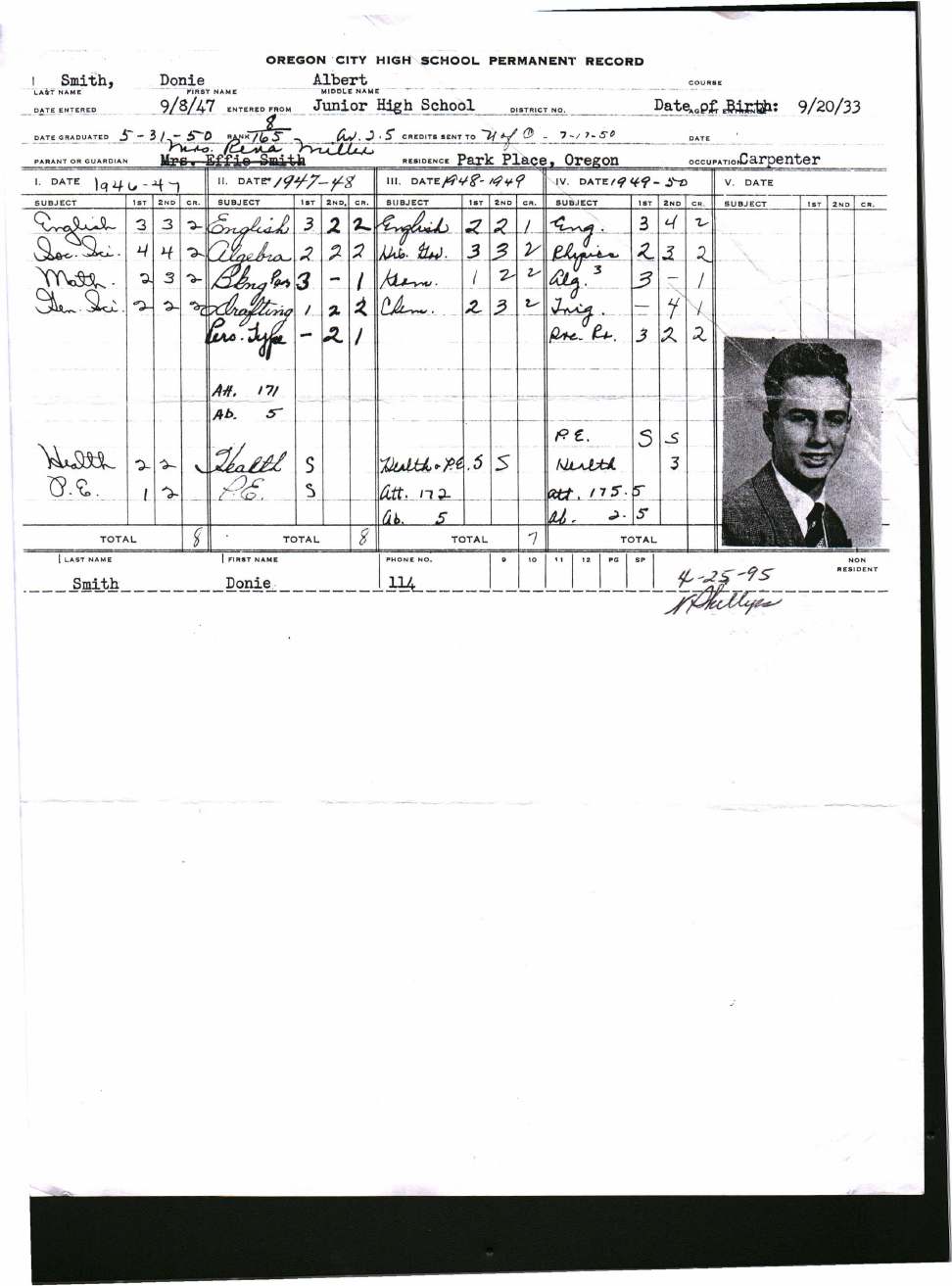
By 1948, high school was split into two parts for me: math/science, and all other courses. I did not read or write well (I remember writing one short story, which I plagiarized, titled "Flying Spikes"). Afternoon classes such as social studies and English had to compete with nine holes at the Oregon City Golf Course for 75 cents. Physics and math before golf were great, and I enjoyed both. I did OK in math and science but seldom got a top grade. Old school records show that my favorite teacher, Mr. Baur, was concerned about my weak academic work and recommended that I work less at Safeway; Wayne Bower, the math teacher, also noted that my grades were being hurt by too much Safeway. No one paid heed. I soon became known as the working kid. After eight hours at Safeway, I usually headed for Park Place, too tired for any social life. This kept me out of trouble, but my academic progress was not good. I did not date.
In my sophomore year I went out for track. The team had one good miler and one fair 440 sprinter; I was the only 880 runner. Training was poorly organized, and our track, around the practice football field, was a sixth of a mile. I raced twice in Elbert's old spikes and finished in the top half, but promptly got violently sick right after crossing the finish line. I quit.
A few other high school memories, from my notes: close friends Don Stanley, Wayne Stienenger (now known as Hoss), Bob Broady and Ed McKee (two years older), all of Park Place. Cars: the 1928 Model A, then a 1937 Chevy. I had a 1932 Indian motorcycle for three days before Gramma made me get rid of it. Elbert and Roberta took me to Mt. Hood, where I learned to ski; the school bus made four trips to Timberline, and we skied down to Government Camp. I learned golf with Bob Broady and his dad. With money in my pocket I played the horses at Portland Meadows, and I got into Lonnie Logston's illegal crap game at the Castle and lost $20 quickly. The hassle with Uncle Bud, and Reva wanting to mother me, led me to spend more time at her house in Carus, just beyond the golf course. Bill had finished the new, very modern home and I had my own bedroom, but looking back, I was seldom content there.
I graduated without honors in 1950. Surprisingly — perhaps out of ignorance — I graduated with a positive outlook toward more schooling. College plans, though not well defined, became clear after three months of construction work topped off with Friday nights, Saturdays and Sundays at Safeway.
Editor's note: Don's school record (see Photos) shows his rank written as "8 / 165".
College
Formal classroom work beyond high school was a major part of my life for 22 years. As in high school, my interests favored technical subjects. The schools I attended were liberal arts colleges, so my technical courses were mainly math, physics and some chemistry. By 1968 I had ten years of engineering experience, and in the workplace my formal background, although lacking specific engineering training, was more than adequate.
"Make a spot for him"
The start of college really began one busy Saturday afternoon in August 1950. Customers were lined up at my check stand, each with a large basket of stuff, and I was in the middle of a big order when the manager, George Reynold, did something very out of the ordinary. "Don, come here. Joe will take over your check stand." Somewhat confused, I slipped out of the stand and wound my way through the customers to George, who was standing by the public phone near the big display of Mrs. Wright's bread. George said nothing to me. He dialed a number and began a conversation I was intended to hear:
"Hi Bev, this is George in Oregon City. I have a kid here who is starting at the University of Oregon next month. He is fast, honest and has mastered most of the demanding weekend Safeway clerking jobs. He's the best… make a spot for him on your part-time weekend crew. He'll be in Eugene the weekend before freshman orientation." (A fifteen-second pause.) "Thanks, Bev. Goodbye."
Then George said to me, "Get back to your check stand." He didn't say another word. I guess this was the reward for being a star Safeway clerk.
Several weeks later I arrived in Eugene on a Greyhound bus with two large suitcases. I asked a bystander, "Where is Safeway?" He gave me directions to two stores. I chose the nearest, grabbed my bags, and headed south on Willamette Street. Exhausted, I entered the busy store, set my bags on the floor and asked for Bev, the manager. Out of the crowd came a small, thin man with straight black hair and a serious half-frown that seemed frozen on his face. "Are you Don Miller?" I answered yes. Bev continued with a short command: "Get an apron and open up check stand #6." Four hours later I trekked to the campus, found my room and collapsed.
Bonehead English
Entering freshmen had to submit a 1,000-word paper, used to excuse the top 1% from further English and to send the bottom 10% back to retake high school English ("bonehead" English). I promptly failed. I was required to meet with the head of the English Department to confirm my bonehead status. I have vivid memories of entering his office. His eyes were scanning my bloody, red-marked paper. His first words were, "Are you sure you belong here at U of O?" He continued to flip through my paper in disbelief. I finally began a humble plea: I am sure I can do better. I don't remember the details, but it worked; I was allowed into the English class for the other 90% of freshmen.
The rest of the story is interesting. The instructor was a Safeway customer. He always came to my check stand, and he loved fresh produce; his basket was always loaded to the brim. Meanwhile, my weekly papers came back with the expected red glow. In 1950, produce was priced by weight on a scale read only by the checker. For some strange reason, my eyes focused to the left (less weight) when weighing his lettuce, celery, carrots, apples, etc. I passed English 101.
C's, D's and the draft
After two years at U of O and one year at Lewis & Clark, my transcript read like an alphabet with three letters: mostly C's and D's, with a few F's. One administrative whopper added five more F's: I quit Vanport after two weeks (spring 1952) and didn't bother to tell the registrar. In the fall of 1953 I started my senior year at Lewis & Clark. After one month, the draft board (and President Harry Truman) sent me a letter. Bye-bye L&C, hello Fort Ord, California.
Sixty years later, I have some understanding of this poor academic performance. One factor is genetics: on my biological father's side (the Nutts) there were few scholars. One cousin, Jerry Nutt, was the exception — he studied at Reed College and received a PhD in physics from MIT. My mother, Reva, was a good student, but I was the first member of my immediate family to graduate from college. My difficulty grasping concepts, or following directions from printed material, was real — not unlike high school. Also, before I was drafted, I spent Friday nights, Saturdays and Sundays doing what I did best: Safeway. During summers I replaced class time with 40-hour weeks of carpentry. This heavy work schedule was more than a source of money; it was what I did best. Working less and studying more was never seriously considered.
Lewis & Clark, and beyond
After twenty months in the Army I returned to Lewis & Clark (1955) and continued with math and physics. My performance was better: I was one of five students who took every math and physics course offered. Dr. Norris (physics) and Dr. Fredrikson (math) led each of us over the hurdles toward graduation in June 1957. My spirits were high. Now a family man with one child and another on the way, I opted for more college: U of O graduate school, here I come.
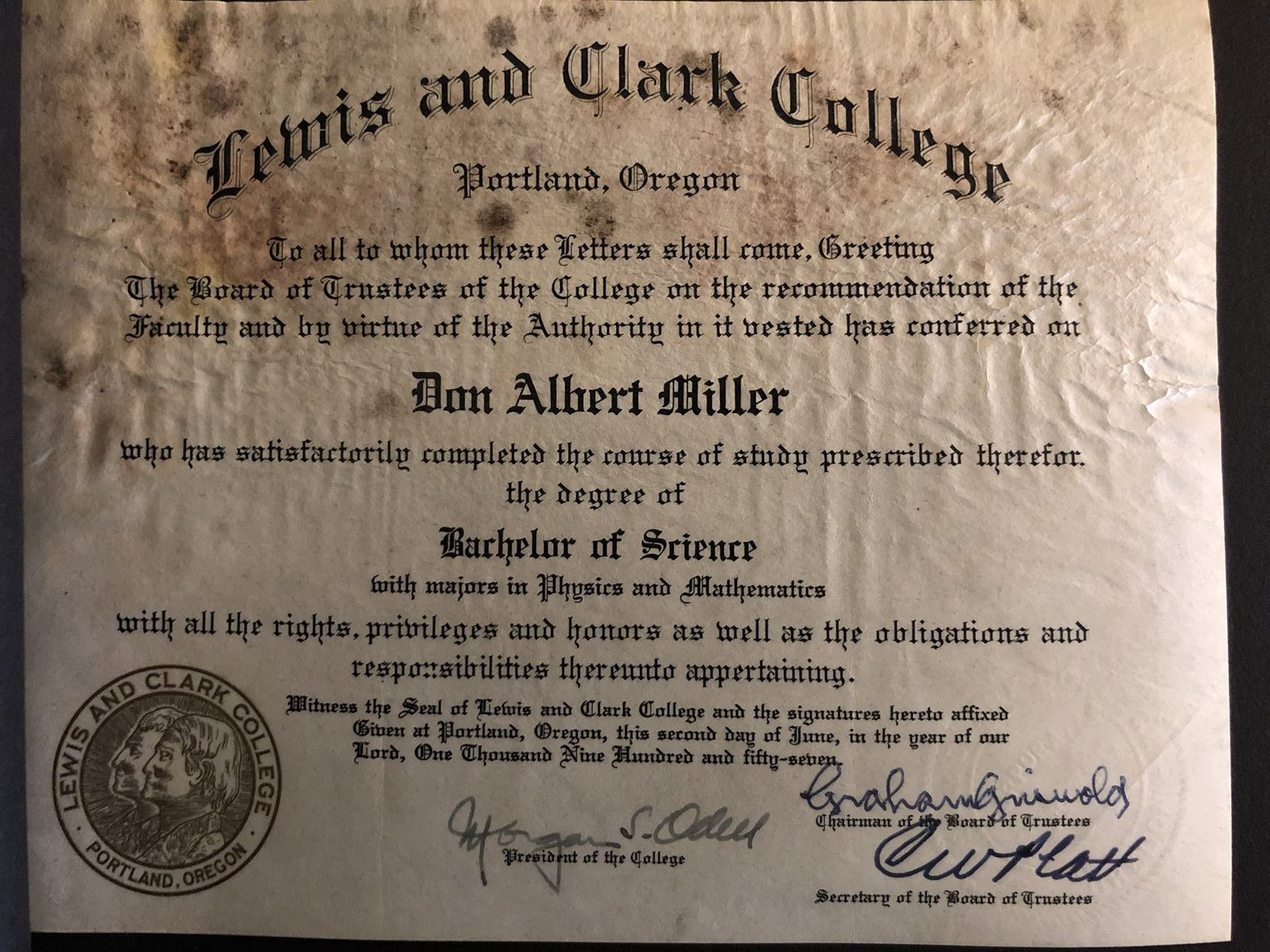
Atomic physics, optics and vector calculus were ambitious for a Park Place kid. Two B's and a C in atomic physics was the scorecard in December 1957. Sputnik, the first Soviet satellite, beeped overhead every 90 minutes. I turned chicken, quit the graduate program, and caught a train to Los Angeles, where my first aerospace engineering job at North American Aviation (NAA) began.
Most aerospace companies encouraged engineers to take advanced courses. At NAA, UCLA offered night classes, and two of us new engineers took advantage; I took several courses, including advanced calculus (out of Taylor). In 1960, shortly after arriving at Boeing in Seattle, I enrolled at Seattle University for several courses including complex variables, and in the early '60s David MacLean and I took calculus of variations at the University of Washington.
The last school I attended was the University of Redlands in California (1968–1972), whose graduate program was designed for working students, most of whom had attended engineering colleges. Work at TRW was ideal for it: TRW paid the tuition and allowed much of the coursework to be done during office hours, and both TRW engineers and Air Force personnel took part. With the help of TRW co-workers and my close friend David MacLean, I took five classes and completed an MS in Applied Mathematics, which gave my aerospace career a robust background. I also learned to write computer code in BASIC in this program, a skill that let me attack a wide range of engineering problems — problems overlooked by most engineers in my age bracket. In 1972 I graduated from the University of Redlands, ran my first marathon, and returned to the "clear blue skies of Seattle" with six young girls, three dogs and one beautiful new wife.
Work: Safeway and Construction
When a Depression baby comes of age with a sound work ethic and some accumulated skill, there will be gas in the old car and new shoes for the next generation. Jobs were more than "8 to 5" drudgery; rather, daylight to dark, with each day rekindling the awareness of pleasing those you work for.
There were some tough days. In 1952, my second year at U of O, I worked at a Safeway several blocks from the old football stadium. After a touchdown, the cheering made its way to the store. I would stop for a moment, feel sorry for myself, look at the clock, count the hours until 10 p.m., and then go back to sprucing up the carrots, lettuce, apples and bananas. Sometimes I grabbed a juicy peach or a cracked watermelon and disappeared for a minute.
Summer construction jobs had no clock-watching and no time for boredom. The high pay — nearly twice that of grocery clerking (about $3.75 an hour) — demanded that I use everything my mentor and stepfather, Bill Miller, had taught me: not only how to use each hand tool, but how to use it fast. Construction jobs weren't always perfect, either. Pulling on carpenter's overalls on a cold, wet morning, still soaked from the day before, was an attention-getter.
On the first few days of a construction job after nine months in a classroom, my arms would be fatigued before 4:30. This showed the day an old, stubborn Swede and I were building forms for a retaining wall, with three-foot 2x4 stakes for support. The Swede held the stakes, and I swung the eight-pound sledgehammer. By about 4:15 my arms were like wet noodles. I suggested we switch jobs, but since holding the stake required some finesse, he opted to continue. I missed the stake and got his thumb. He frowned, but we continued. As I recall, he showed up for work the next day but didn't hold any stakes when I had the hammer.
In 1953 I worked on the Fern Ridge dam, above the Three Lynx hydro power plant about 20 miles east of Estacada. One memorable task was building a "ladies' restroom" — many of the workers lived in a camp that employed women for cooking and running the dining hall. The off-color jokes flew, and it got a little raunchy when we carved out the seat.
On most of my construction jobs I worked with an older, more experienced carpenter. At twenty-one I was the youngest journeyman in the Portland area; my lack of experience was offset by speedy work and the endurance common to twenty-one-year-olds. Summer jobs included the Eastham Grade School, an upgrade to the Crown sawmill in West Linn, and a couple of short house remodels in Portland. In 1953 I landed a job at journeyman scale on a large water reservoir 23 miles up the Clackamas River. Most of that summer I stayed in a camp near the job site, and those memories are crystal clear: ten-hour days, sharing large four-man tents, and working with older blue-collar types, a positive experience.
I used Bill Miller's homemade craps table (about 2 by 5 feet, with Las Vegas green felt) for my first mini-casino. By summer's end I was a few hundred dollars ahead. That, plus the high pay ($4.00 an hour), got me a 1949 Chevy convertible. Several of my older friends could not believe that Donnie owned such a slick set of wheels, with loud, deep pipes.
Other jobs in 1956 and 1957 were Woodrow Wilson High School and the dam at Estacada. Note that the Safeway job in Oregon City was always there. After my last construction job in 1957, I kept working weekends at Safeway, first in Los Angeles and then in Seattle, until 1962. Out-of-town travel for Boeing plus five kids was a good excuse to give up Safeway.
Aerospace
From January 1958 to June 1995 I worked for three companies (with three separate stints at Boeing) over 37 years:
- 1958–1960: North American Aviation (NAA), Los Angeles, California
- 1960–1967: Boeing, Seattle, Washington
- 1967–1968: Boeing, Houston, Texas
- 1968–1972: TRW, San Bernardino, California
- 1972–1995: Boeing, Seattle, Washington
North American Aviation, 1958–1959
The Cold War that started around 1955 had picked up steam by January 1958, and there was big demand for technical engineering workers. In late December 1957, after one term of graduate school, I became an aerospace systems engineer (note that I finally learned to spell it correctly). The badge I wore at NAA nicely matched the casual attire of the new young engineers. No apron, no bananas, no wet overalls, no tools — only a pencil, a desk and a chair. The bottom drawer of my desk was filled with my old textbooks as backup; I didn't want to get caught differentiating under an integral sign when it wasn't allowed. There were six new engineers and four old-timers. This was my first experience of an office environment. I was handed Volume I of the twenty-volume MIT radar series and some background literature on aerodynamics.
This first job was perfect for me. In 1958 the Cold War led to "Mach 3 at 70,000 feet." Two weapon systems were in research and development at NAA: the F-108 fighter and the B-70 bomber. NAA and Hughes were doing preliminary design of the GAR-9 air-to-air missile to be launched from the Mach 3 F-108. Hughes, with all their smart UCLA professors, had "textbook" analytical models of the launch phase. The ten-foot missile was given a pitching moment as well as a rotational moment at launch, and 300 pounds of liquid fuel accelerated this monster from Mach 3 to Mach 6 in 0.3 seconds. That is where NAA's analog simulation began, and I was very fortunate to be part of the work.
The heart of the simulation was, of course, F = ma. Newton refuses to be ignored. The second-order differential equations came from several disciplines — particularly the aerodynamicists, who jazzed up Newton's rule with function generators. Three degrees of freedom gave trajectories of the Mach 6 missile from launch to an approaching low-altitude Soviet bomber. A 1958 analog computer was banks of servos, pots, amplifiers, function generators and an X-Y plotter surrounding a maze of wires (the patch board), connected directly according to the expanded F = ma. I spent much of my two years at NAA with my hands and face buried in patch-board wiring.
I spent many hours in the analog computer facility. Other problems studied there included the X-15, flown by my friend Scott Crossfield (who later died in a small-plane crash). Jimmy Doolittle of World War II fame toured the facility, and I got to shake his hand. In December 1959, F-108 funding was terminated. Lockheed's super-secret "spy in the sky" camera work at the Skunk Works in Burbank had priority and took funding from several programs, and the B-70 was scaled back too. Ninety percent of NAA's engineering workforce was laid off. I was part of the 10% who stayed, but 25-year-old new engineers get jumpy in turmoil, and most of us left within weeks. I chose Boeing in Seattle, where the "skies are always blue."
Editor's notes: Don mentions a sketch of the analog computer ("Fig. 1") that is not included in the scanned draft. Scott Crossfield actually died in 2006; Don's draft says "1970 (to be checked)."
Boeing and the Minuteman, 1960
After a few months at Boeing (summer 1960) I had familiarized myself with the Minuteman ICBM program. My boss, Ralph Caldwell, wanted some information on the C89 test complex, a pricey electronic test lab used to isolate failures within the missile's guidance and control (G&C) module; there was some issue about cable lengths. I got the information quickly, but I was confused about the overall usefulness of the C89. The concept was to have one C89 at each of the six Air Force bases across the northern middle of the United States. Each wing had 150 missiles in silos, some 80 to 100 miles from their base. When a failure occurred, the faulty G&C was to be tested at the C89 complex, the problem isolated to a sub-module, and the sub-module removed and replaced. The G&C under test was then…
Editor's note: the Aerospace story stops here, mid-sentence, in the draft. Don's notes to himself list topics he still planned to add: a dark, wet first morning in Seattle at Boeing's 9-101 building in January 1960; "cost-effective spares"; several one-month assignments in Philadelphia and Huntsville; papers and presentations (see Presentations in New York and Hawaii); and his later work at Boeing Houston, TRW and Boeing again. His running, climbing and computer stories from these years are under Special Events.
Special Events
These are the adventures that didn't fit neatly anywhere else, in order by year. Several were written more than once in the draft; the versions are combined here.
1948 — One Night in Antelope
High school was out, and the excitement of summer was high. Gilbert MacLean and I decided Oregon City was too boring. One of Gramma's close friends, Mrs. Stricker, had a sister in Antelope, Oregon, a small wheat-growing community. Our adventure was to visit Antelope first, then continue to Milton-Freewater and make a bunch of easy money in the pea harvest. Out went our thumbs. In 1948 hitchhiking was sort of safe, and getting a long ride to new places had all the excitement we needed.
After several hours we made it to the ghost town of Shaniko (three old buildings and one gas station). Antelope was some 30 miles farther east. No cars. For three hours we entertained ourselves by throwing rocks at a telephone pole. Just as the sun began to set, a farmer gave us a badly needed ride. He was going through Antelope and 10 miles farther east, and we opted to stay with him rather than stop in Antelope. Darkness set in a few minutes after our ride ended. We walked and walked along the pitch-black road, surrounded by wheat fields. The temperature dropped, and so did our high spirits.
One dim light could be seen far off, maybe two miles away. No cars in either direction. The light brightened as we approached the farmhouse. Knock! Knock! "Hello, my name is Don and my friend is Gilbert. We're hitchhiking to Milton-Freewater and traffic out here is sparse." "OK boys, you can sleep in my bunkhouse." It was a cold night on bare bedsprings, but we survived and moved on early at sunrise.
I don't remember the next several rides. However, at about 6 p.m. we checked into a hotel room in Milton-Freewater. Across the street were large buildings; the hotel clerk told us that was where the peas were processed. We lasted one day. After a short stroll through town, Gil and I looked at each other and instantly knew that the quicker we got back to Oregon City, the better. We gathered our bags, stuck out our thumbs, and got the best ride of all — all the way to downtown Portland, in time to catch the last streetcar to Gladstone. I was comfy in my bed by 2 a.m.
1951 — Hitchhiking to Las Vegas
During spring term at the end of my freshman year at U of O, I became friends with Herb Cook. Herb was a year ahead of me and also from Oregon City. He played some baseball at U of O and was an all-around pleasant guy, and his personality got him into the Sigma Chi fraternity. But the cost of belonging was a little stiff for Herb, and he ended up working at Safeway in Eugene to cover it. We became good friends and both returned to Oregon City after spring term.
Meanwhile, Bill Miller had exciting stories about his recent trip to Las Vegas (I think he lost $10,000) and even better stories about his uncle, Earl Berdine, a bellhop at the old Desert Inn. These stories resonated with both Herb and me. Believe it or not, we decided to hitchhike to Vegas. I don't recall any serious opposition from Reva, Bill or Gramma; I guess by then (I was eighteen) they figured I was mature enough. Herb and I both had clean records, with virtually zero mischievous teenage behavior. With bright, clean U of O jackets and small luggage, we hit 99E south, deciding to go to Reno first.
I don't remember the details of the many rides, but there were very few delays between them. In those days students could hitchhike without getting murdered. We spent one night in Reno, counted our small winnings, and hit the road south. Our last ride was with a trucker who drove all night.
In Vegas, the two travelers found a room near "old town." Our first few days included dinner with Earl and his wife, Donna. Bellhop Earl was the most charming older guy I had ever met. His hobby (and extra source of income) was betting on horses. In the morning he would have all the day's racing forms spread across his living room floor, crawling across the carpet on hands and knees in search of the best bet of the day. He would consider several dozen races; of course, he knew all the nags. The story was that after finding the best race and best horse, he reported his daily picks to several doctors in San Francisco, for a fee. After several years as a bellhop at the Desert Inn (he knew Howard Hughes), Earl became bell captain at the new Stardust. When I visited Vegas in 1958, I looked Earl up while he was on duty, and he gave me a front-row seat to the show.
After a few days I was broke and had to take a dishwashing job at the Horseshoe. Herb continued to earn 10 cents on $2.00 bets on the horses. I did play dice at the old Golden Nugget — and guess who was playing at the other end of the table…
BETTY GRABLE, with the hottest legs in town!
After about two weeks we packed our bags, stuck out our thumbs, and returned to Oregon City. I put on my Safeway apron and my carpenter's duds and got ready for fall term at U of O.
1962 — Presentations in New York and Hawaii
By 1962 my work on "Optimizing Minuteman Maintenance" had been well received by Boeing management and by the Air Force. Harold Jacobson and I decided to submit an abstract to the annual Operations Research symposium at the Astor Hotel in New York City (no longer there). Our paper was accepted, and I prepared a briefing. In those days, briefing charts were engraved on three-inch glass plates. I had traveled for Boeing to Los Angeles several times, but never to the East Coast. Going to New York City alone, with a box of glass plates, to tell about our Boeing work was a big deal for me.
I recall the social hour the evening before my presentation. Mingling in the large crowd of engineers, I ran into a friend from Lewis & Clark College. He was with Lockheed, presenting work on intercepting Soviet ICBMs in space — a bit more exciting than my paper, which only determined the best number of trucks, spares and people needed to support our Minuteman ICBMs. Before turning in that night, I checked out the auditorium and stage for my talk. It was huge.
The auditorium was full. The lights were dim. My name and paper title were announced. As I walked to the center of the stage, I peeked at the audience. I was a little nervous. Once the glass slides were projected on the big screen, my pointer went to work and I told our story. It went well. Afterward I explored Manhattan and indulged in a $5.00 hamburger (Seattle prices were about 80 cents).
The New York presentation was so much fun that a year later Harold and I submitted a second paper, filled with the operations research lingo of the day — lots of e−λt. Again the abstract was accepted. This time, travel had to be approved by Boeing upper management. I remember Dan Downey frowning as he signed my travel authorization. He grunted and said, "Why ain't I going to Hawaii?"
This annual meeting was held at the Queen's Hotel in Waikiki. Again, a large crowd: there must have been over 500 engineers at the opening address. About ten papers were given at a time over three days, so you'd expect about 50 people at each. Not so. Many papers were presented to 5 engineers rather than 50. Where was the crowd? They had bugged out and flown to TAHITI! I gave my paper to a small group, scurried off to the warm local beach, and cooled my heels for four days. As I recall, this was the last annual Operations Research meeting for several years.
Editor's note: one version dates the glass slides to 1964 rather than 1962. The "e" formula appears in the draft as "e(-LxT)".
1965 — Mt. St. Helens
During a monthly "Friday Night Downtown" Lancers wine outing, several members of the inner circle flexed their imaginations and became mountaineers. Eric Giese, a personal friend of Jim Whittaker, suggested we explore the top of Mt. St. Helens (14 years before she blew). We ordered another round of Lancers (four bottles, one each), and everything went downhill from there.
The following weekend, with a babysitter minding the kids and our backpacks loaded with boots, goggles, ropes and a camera, we were off to the mountain for a long one-day adventure. After one coffee stop we arrived at the base of Mt. St. Helens just in time to see the sunrise — and Harry Truman loading weekend guests into his small boat, bound for his unique Spirit Lake cabin community.
With pack adjustments made, we found the trailhead pointing south toward the peak. Conditions were good for a safe but serious long hike, though some fog banks were close by. For the first mile the trail was favorable; loose rock made for poor footing, but all was well and spirits were high. Higher up, the trail disappeared and the hike became a climb up a snowfield. Although the difficulty was steady, we did rope up, and trudged upward toward the peak for another hour. Visibility dropped to a few yards. After reviewing the situation, we figured we were within a few hundred yards of the summit and decided to continue.
Without warning, Eric stepped into a shallow crevasse. Our rope system worked well, and within a few minutes Eric was safely out — but now the situation was marginal. The four of us gathered our thoughts and moved slowly to our left some 20 yards while keeping the same elevation, to get away from other hidden crevasses. The decision to end our summit attempt was easy. We headed down, straight down, just as most of the route up had been — no switchbacks. Getting off the snowfield and out of the fog was crucial.
After another hour, the slope flattened out, but we had not reached the loose-rock part of the trail near the parking lot. We were "off" the mountain, but no van or parking lot could be found in the thick fog — just a large flat snowfield. Now the normally high-spirited four Boeing engineers were confused. No jokes, no bantering; rather, "What do we do now?" The snow was soft and more than five feet deep. Moving several hundred yards away from the mountain, we found fir trees with only their top six feet of branches above the snow, and a small stream that dropped quickly into a raging, unfriendly torrent through large rocks and a maze of undergrowth.
Some fool in the group suggested we follow the stream out. Instantly my mind went to the six kids and the babysitter at home. Spending the night crawling through brush and belaying down waterfalls did not sit well with this engineer. I voted an adamant NO. The other three were quiet. My mind was spinning. I figured that if I traversed around the base of the mountain, I would intersect the parking lot. I knew what I was going to do and was less concerned about the others. I picked up my pack and headed back toward the mountain while my three hiking buddies stood there watching me disappear into the fog. I found a tree and stashed some weight (camera and ropes) in its branches, noting the other trees nearby, figuring I would get out of this mess and come back later for my belongings. My next problem was which way to go, left or right (facing the mountain). I chose left and began trudging through the deep, soft snow.
I hiked perhaps a mile. The sun was about to drop from the sky. Suddenly I was free of the fog and found myself on a high cliff with an eagle's view of the Yakima Valley stretching for miles. I knew then that the parking lot was to my right, not my left. I turned and backtracked toward (hopefully) the parking lot. I did not see a parking lot; rather, a 500-foot ridge. After finding a well-marked trail, I wasted no time going up the ridge and down the other side. YES, there was the parking lot! I was elated. No van! After a mile walk on the paved highway, the other mountaineers met me in the van. They had turned right, not left, and solved the mystery. The rangers were called off, and all four mountain men headed for Seattle.
Two weeks later I returned to what is called the Plains of Abraham to recover my pack. Unfortunately, all the trees had grown by six feet (that is, the snow had melted). Today my camera and ropes are safely buried in ash, as is Harry Truman.
Editor's note: the draft has two versions of this story; one is marked "rewrite next para see hard copy." Don calls it an "11,000 ft mountain"; before the 1980 eruption Mt. St. Helens was about 9,677 feet.
1966 — Mt. Rainier
A few weeks after the failed ascent of Mt. St. Helens, the Boeing engineers — "wannabe" mountain climbers — planned an unguided assault on majestic Mt. Rainier. The group included the St. Helens crew plus two more: Eric Giese, Jim Sherman, Charley Clark, Chuck Pell, David MacLean and me. The six of us, with ropes, crampons, sleeping bags, packs, ice axes and a ton of other stuff, stood in the Paradise Lodge parking lot under the close scrutiny of park rangers. They were satisfied with our gear and our stories of previous climbs (most of which were borderline lies). As with St. Helens, the group was in excellent shape from long-distance running and trail hiking. Eric had made the climb some 20 years earlier with a professional guide, and he chose the route: the Fuhrer Finger, the most direct route to the summit. He was NOT a guide, but it's fair to picture Eric as our leader. At about midday we began.
The first couple of miles were well-defined trail without much snow. The route soon took us over and under large house-sized ice formations, and the rate of climb became steep. Our physical condition seemed perfect for it. Even at 9,000 feet the thinner air didn't seem to bother these animal-like engineers. At 11,000 feet we still had sunlight and high spirits, so we continued. At 12,000 feet the trail became steep for about 100 feet and then crossed a ledge roughly 20 feet long and 6 feet wide — plenty of room for sleeping bags. We were tired. While we were setting up for the night, Charley Clark's sleeping bag fell over the cliff and landed about 100 feet below the ledge. No one wanted to share a bag with Charley. My close friend David MacLean saved the day and recovered it.
I remember the next few hours well. My head throbbed. There was very little chatter. In my case the misery was so bad that I never dug through my pack for aspirin. Our running fitness had done us in: we soon realized the illness came from zero acclimation to the altitude. If we had settled for perhaps 10,000 feet, the story would likely have been different. Rocks fell and winds howled, but there was no moisture in the air, and we stayed dry. At sunrise the group was quiet. Each of us repacked and, without debate, we scurried down the mountain. The headaches vanished, and Paradise Lodge was a welcome sight. Our group enjoyed some refreshments. As I recall, Jim Sherman and I had some extra "refreshments" and had to bum a ride back to Seattle in the wee hours.
1972 — First Marathon
While I was at TRW at Norton Air Force Base in San Bernardino, my running hobby gained momentum. Hilly five-mile evening runs plus three-mile lunch runs at Norton turned this 40-year-old jogger into a real running addict. An ex-UCLA track man, John Doe, who also worked for TRW, joined me for lunch runs. Dessert was several 440 intervals after our three-mile warm-up. John, an 880 man, reminded me that at UCLA ten intervals under 60 seconds each was part of daily training. I managed four under 80 seconds (with two-minute breathers). John and I joined a small group of TRW and Air Force runners for a three-mile race; of course John won, and this 39-year-old came second in 18:50. Now we were tuned up for a March of Dimes 20-mile trek in San Bernardino. Of interest, John didn't finish, and I did OK. The Palos Verdes Marathon was next.
In 1972 the marathon was just becoming a popular event. Several hundred runners milling around the start at Palos Verdes High School included one famous guy: John Wooden. John Doe knew Wooden from his UCLA track days and introduced me. Wooden, who was 65 years old at the time, started in the same part of the crowd as I did. For the first five miles, when spirits are high, Wooden and I swapped running stories. We were so engrossed in chit-chat that we forgot our pace (too fast). Wooden faded. My TRW friend was out of sight. At 20 miles (the well-known wall), teenage runners were in tears. I held my tears back. At 24 miles, dependable TG handed me a quart of orange juice… I downed it all and kept it down for about a mile. A little mess on the street. I finished in about four hours. John Doe, the UCLA 880 man, didn't finish. Not sure about my famous running friend, John Wooden.
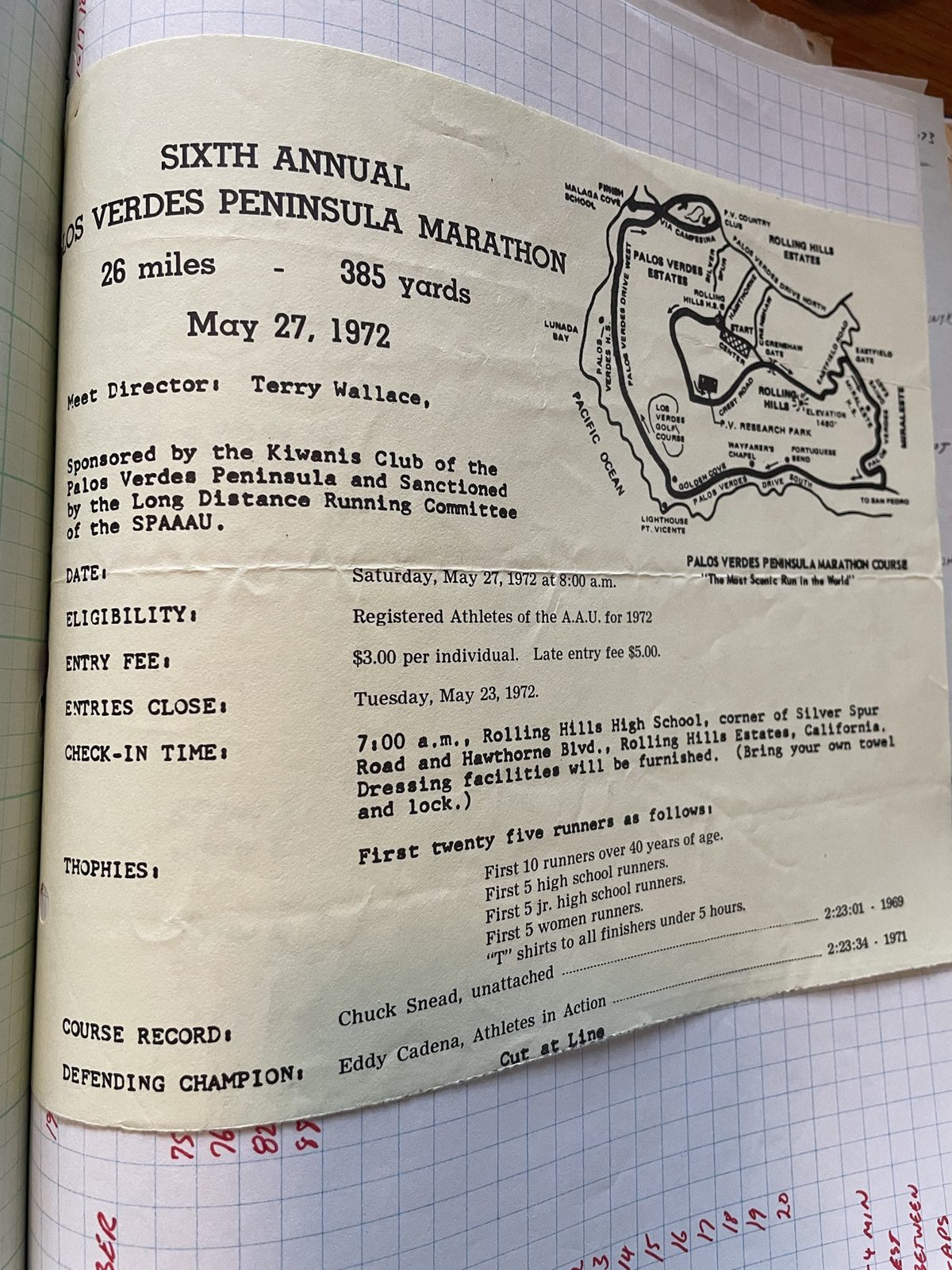
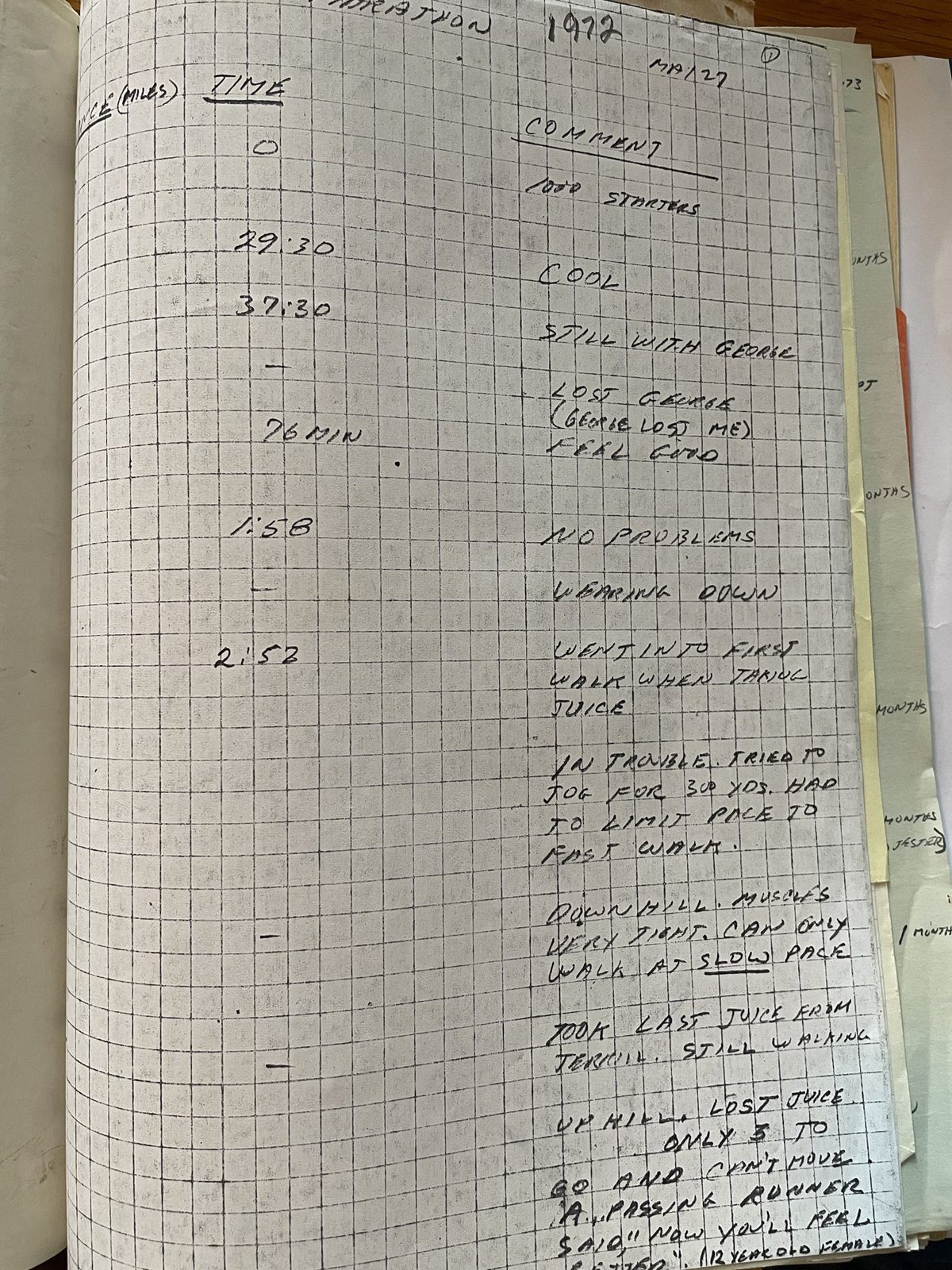
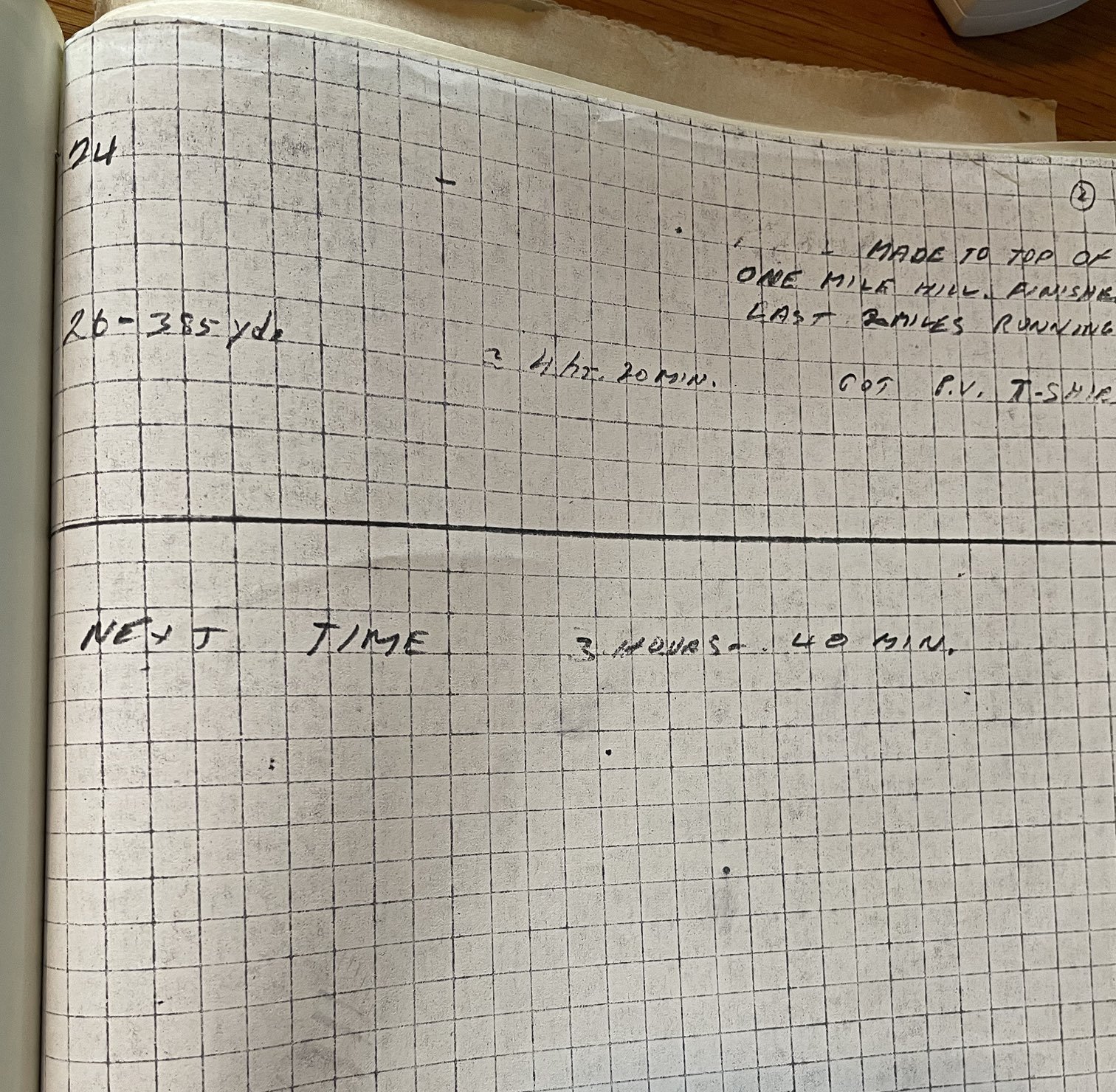
Don's race log, as written (P.V. Marathon, May 27, 1972):
| Mile | Time and comment |
|---|---|
| 0 | 1,000 starters |
| 4 | 29:30 — Cool |
| 5 | 37:30 |
| 7 | Still with George |
| 10 | 76 min — Lost George (George lost me). Feel good |
| 15 | 1:58 — No problems |
| 18 | Wearing down |
| 20 | 2:52 — Went into first walk when taking juice. In trouble. Tried to jog for 300 yds; had to limit pace to fast walk |
| 21 | Downhill. Muscles very tight. Can only walk at slow pace |
| 22 | Took last juice from Terrill. Still walking |
| 23 | Uphill. Lost juice. Only 3 to go and can't move. A passing runner said, "Now you'll feel better" (12-year-old female) |
| 24 | Made it to top of one-mile hill. Finished last 2 miles running |
| 26 mi 385 yd | About 4 hr 20 min. Got P.V. T-shirt |
| Next time | 3 hours 40 min |
Editor's note: the log gives his finish as about 4 hours 20 minutes (the memoir says "about four hours") and names his running partner for the first ten miles as George.
Editor's note: the draft says Wooden "lived to about 2000"; John Wooden was born in 1910 (so about 61 in 1972) and died in 2010. The 18:50 time appears in only one version.
1973 — The Great Northern Loop and the Wonderland Trail
After we moved back to Seattle, the Miller family endeavor — obsession, really — was running. The two girls with fewer running skills (Julie and Theresa) found themselves at family outings surrounded by hot long-distance runners and an old marathoning 40-year-old Daddy. As a break from daily five-mile track and road training, we decided to backpack around Mt. Rainier. Although we had little overnight experience and outdated equipment, high spirits and the endurance of a herd of wild mountain goats made a long backpack seem credible.
At Carbon River Campground we reviewed the maps and donned packs stuffed with trail food and two old, heavy tents. Our route, "The Great Northern Loop," was about 25 miles long and met the Wonderland Trail near Mystic Lake, about 15 miles from Carbon River. I don't remember the details of the plan (perhaps there was none), but it looked like two long days with one night out. We gave little thought to the reality of two 20-mile days for seven tough but inexperienced backpackers.
The six gals, with fire in their steps, took the first set of switchbacks almost like the von Trapp family. Most of the first leg went well. Every few hundred yards a peekaboo view of the mountain appeared, like a slide show, each view different — some with mountain goats perched high on Rainier's rocky base, one with a small herd of grazing elk. By mid-afternoon the slide show was interrupted by whines and complaints. Theresa began to panic over thirst, and Jackie (the best runner) did not take well to the discomforts of backpacking. We came upon a stream and a spot for camp. Theresa got a fresh drink, and Jackie's famous smile returned. We soaked tired feet, enjoyed a campfire, and cuddled up in our sleeping bags for a well-deserved rest.
After a late start, the Miller-Trapp family headed for the Wonderland Trail, about 10 miles from camp. Details of this part escape me; I suspect what happened after we arrived has masked other memories. It was about 5:30 p.m. when we reached Mystic Lake: a beautiful place with only one problem. Mosquitoes everywhere, and our repellent didn't help much. Someone suggested we continue on the Wonderland Trail 10 more miles back to Carbon River and then home to Seattle. We did not hesitate.
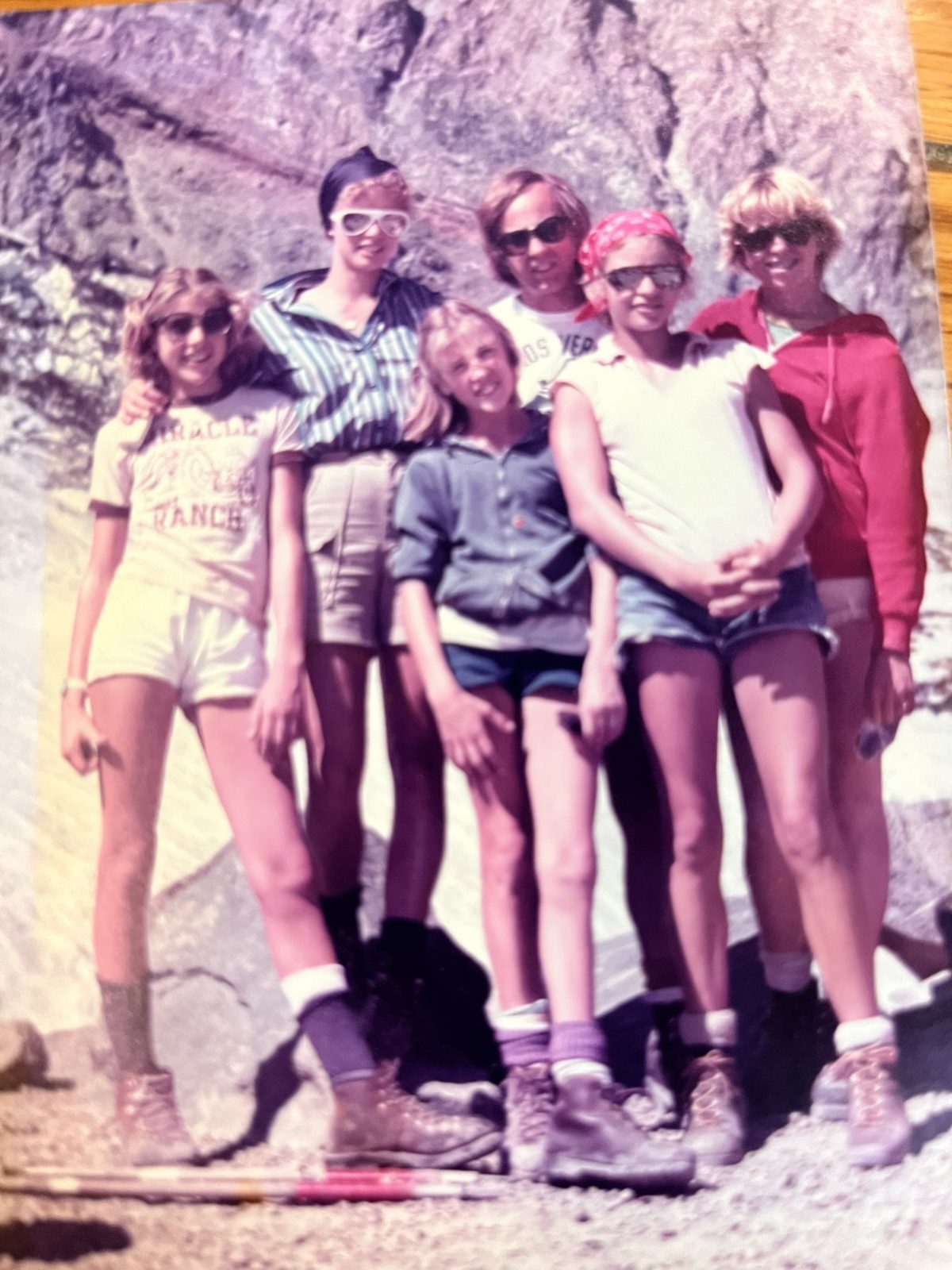
Carolyn led, followed by Susie, Jackie, Daddy, Nancy, Theresa and Julie, plodding along. No laughing, no squabbling and very few tears. I was like an old mother hen, keeping an eye on those behind me. I turned to check, and there was Julie without her pack! "Where is your pack, Julie?" Her unforgettable response: "On that bridge back there." Time for a rest. I recovered her pack and carried it a few miles. At 11 p.m. we said goodbye to Mt. Rainier.
1974 — The Pacific Crest Trail Trek
During the early '70s, the youngest three Miller girls were beginning to flex their running skills. Nancy held out until the Issaquah Gliders coach, Mark Nakameche, found out that Jackie and Susie had a younger sister. The running Millers grew from four to five (Carolyn, the oldest, ran the mile for Issaquah High School). With me into marathons and four running kids, we had skills that took us beyond cross-country and track: backpacking in the beautiful Cascades. After several one-day trips to Camp Muir (the 11,000-foot level on Mt. Rainier) and the two-day Wonderland Trail hike, our thirst for a longer, endurance-busting outing grew. How about a three-day, 70-mile hike on the Pacific Crest Trail from Stevens Pass to Snoqualmie Pass?
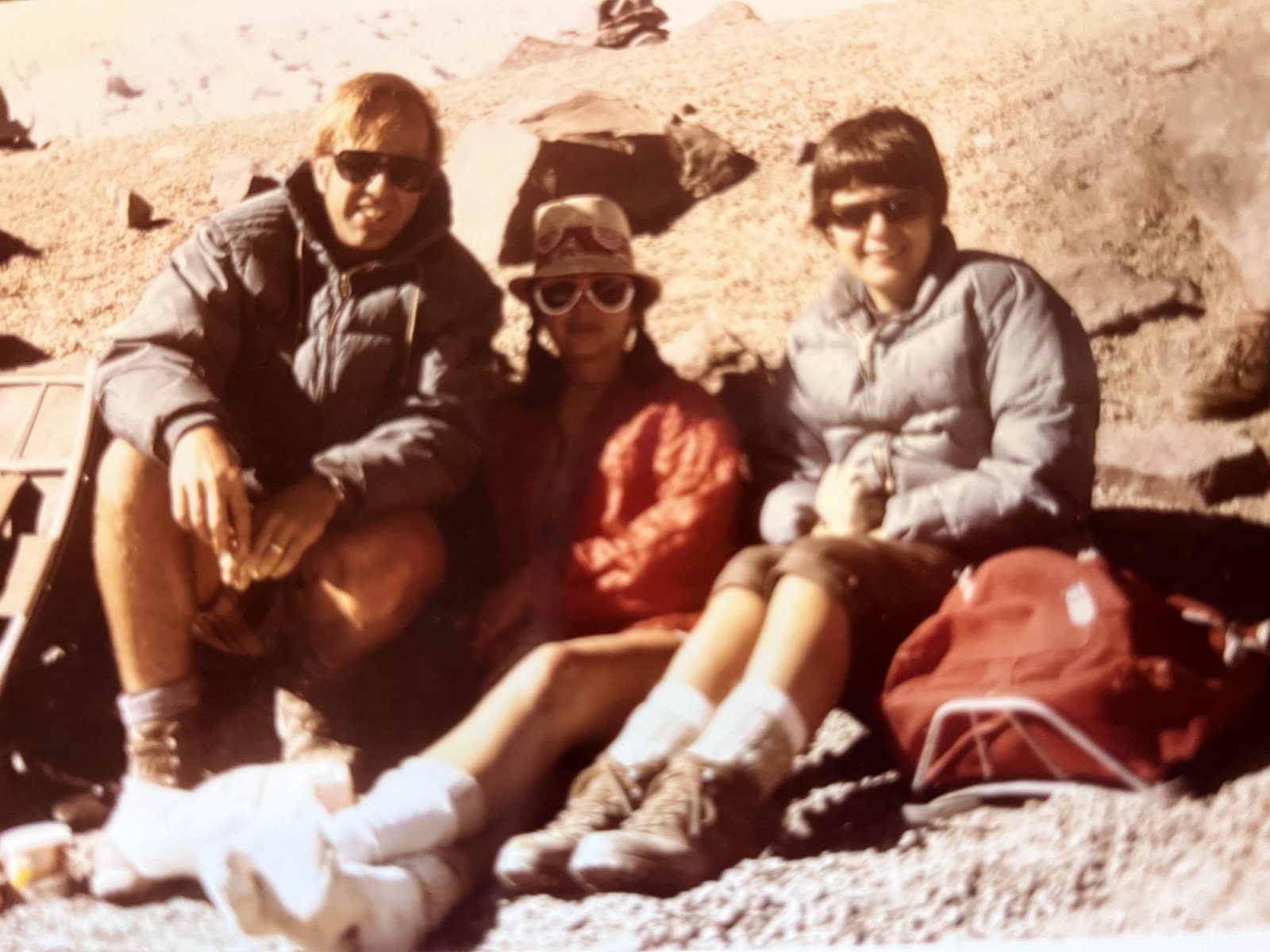
Trip planning was relatively thorough: proper maps, clothing and food. I focused on what I thought was the critical issue: how to cover 23 miles in 36 hours of daylight on this popular trail. My attention went to the weight of hiking boots versus running shoes, and I opted for running shoes. I figured a fast walk on the level and downhill stretches would be enough to finish in three days, and lighter shoes would be a plus for the three girls and for the old man (about 41).
Terrill drove the four hikers to Stevens Pass. At an early hour we attacked the first set of switchbacks heading south on the PCT. The sun rose just as we reached the crest of the first hill. Spirits were high. We slipped off our packs for a short rest, and I noticed Nancy's pack: she had snuck in two extra pairs of jeans! I was tempted to leave them on the trail, but didn't. I remember most of that first day: mostly small changes in elevation, without steep ups or downs. Spirits were very high, everyone enjoying the Cascades at 5,000 feet. Near sunset the tired hikers found a spot by a creek and enjoyed a fun meal around the campfire.
Another hiker, a 22-year-old, was camped about 30 yards from us, and the girls quickly made a friend. His story was impressive: he had started in Southern California earlier that summer. He told of deer following him for miles. Not so pleasant was his story of falling and tearing a boot; he planned to have it repaired at Stevens Pass before continuing to the Canadian border.
Up at sunrise, breakfast, and smartly on to our second day. The pace was similar to the first. About 11 a.m. I noticed we had slowed, and by noon we stopped to share our aches and pains. Nancy, Jackie and I had the same problem: feet. Susie's feet were in less pain. We checked our map and found a trail leading to Salmon La Sac, about 12 miles east. We took a vote: exit 3, continue 1.
We soon realized our mistake. Small pebbles in the trail were pressing into our feet — a problem hiking boots would have avoided. The next four hours were not pleasant. The party of four strung out over several hundred yards: Susie in the lead, followed by me, then Jackie, then Nancy. We found that hiking in this loose formation meant less whining and fewer tears. Finally, Salmon La Sac. A quick call to our private ambulance (Terrill Ann) ended our hike. The bloody feet took several days to heal. As I recall, that was our last long-distance trail hike.
Editor's note: Camp Muir is actually at about 10,100 feet.
1977 — Bit by Bit
In 1977 three Boeing engineers were excited about the first personal computers: John Miller, Jim Shurman and yours truly. With about $5,000 we formed a start-up company called BIT by BIT. The money bought a Radio Shack Model 1 computer (32K of internal RAM). We had a room full of computer gear: a printer, three external floppy drives and a 5-megabyte external hard drive.
Our first customer, who had twenty salesmen and distributed electronic hardware, asked for a simple program to keep standard names, addresses and phone numbers. After we were briefed on his operation and immediate needs, John promptly wrote the code and tested it within 24 hours. I recall a meeting of the three of us at Little Black Sambo's in Bellevue to decide on a price. Nothing had been said to the customer about price. I started the discussion with a suggested price of $75, and John, who wrote the code, agreed; the program was very simple. Then Jim said, "Wait, you dummies. We are quickly providing him with what he needs right now, it works, and it's likely to be error-free because it's so simple. The fact that it only took an hour to write is irrelevant." Jim suggested $750. John and I were confused but went along with Jim's rationale. We delivered the code, the customer was pleased — and he began describing a second problem.
His second problem was maintaining three lists of electronic products: items initially requested, items on contract but not yet delivered, and items delivered and paid in full. The idea was to keep these lists on a computer (he also had a Radio Shack Model 1); with them properly maintained, banks offered attractive lending terms, which was the main reason for the software. With only one computer, progress was limited to a third of our total capability. Jim and I shared the machine for about six months; Jim developed the critical sort/merge routines, and I had to make the product work. After months of work — many nights in the customer's office on his machine — I made good progress, but a few bugs prevented final delivery. I was exhausted, and Jim and John had lost some interest. Finally I wrote the customer a letter saying that we were unable to deliver the software, there would be no charge, and all work on the project would stop.
I bought John and Jim out, and I still have the Model 1 stored in the attic of my shop. One box, titled "interface box," has been lost. However, I would guess there is some antique value. Good luck, next generation.
The Garden Party
During the summer of 1985, our house on Highwood Drive in Issaquah was nearing the end of its useful life as home for six girls, one baby boy and three dogs. Carolyn had a nest in Park Place, Julie lived in Seattle, Theresa in Bellingham, and Susie, Jackie and Nancy were in and out with summer jobs, nearing the end of their college days. Penny, the last dog, had passed.
As the story is now told, my secretary at Boeing was shopping for a power boat big enough to live on. Somehow this ignited a wild boat imagination. For several weeks TG, Chris and I found ourselves at Shilshole, looking and dreaming about boats — big sailboats. We looked at several 50-foot ketches, including a pricey Lord Nelson. Meanwhile the Highwood house was getting a new cedar roof and carpeting and was soon almost like new.
One Sunday afternoon while boat shopping (we were getting serious, but prices were high), we met Joe and Milly, old-time boat folks who introduced us to the Vagabond. We never boarded one, but Joe and Milly arranged a meeting with the owner of Blue Water Yachts, a builder in Taipei, Taiwan. About ten months later the remodeled Issaquah house was sold, and the Garden Party was perched on the bow of a large freighter bound for Seattle.
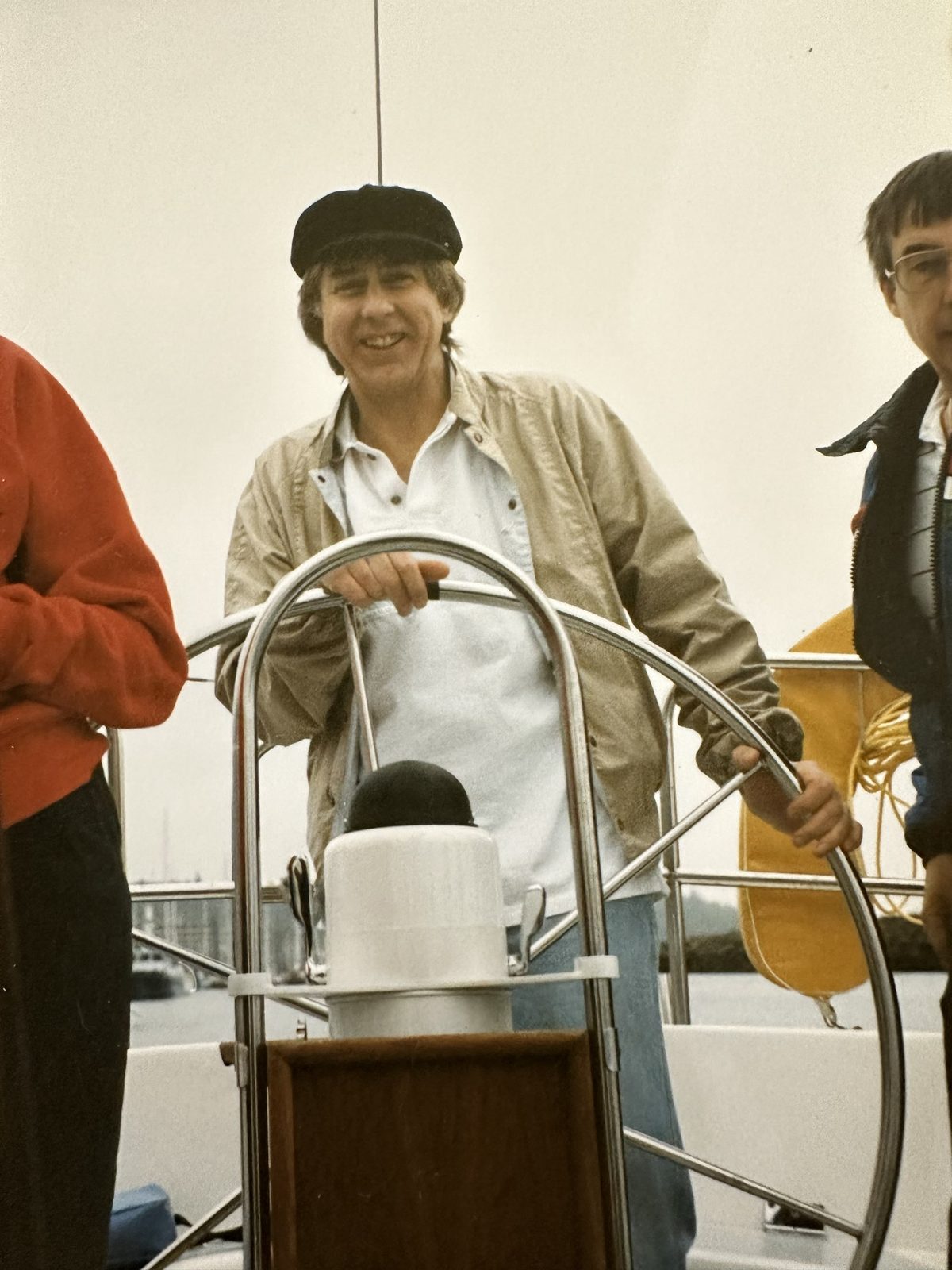
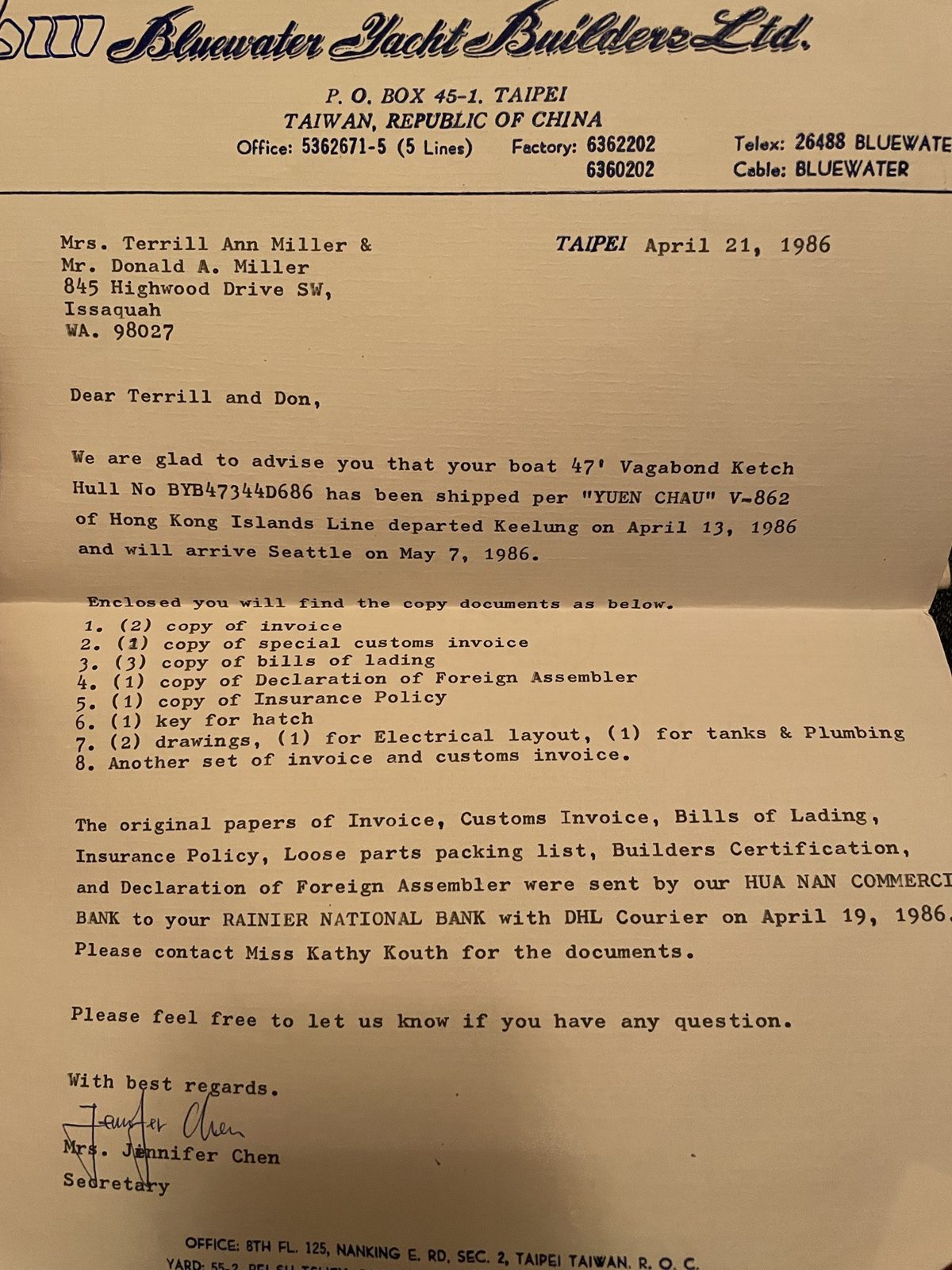
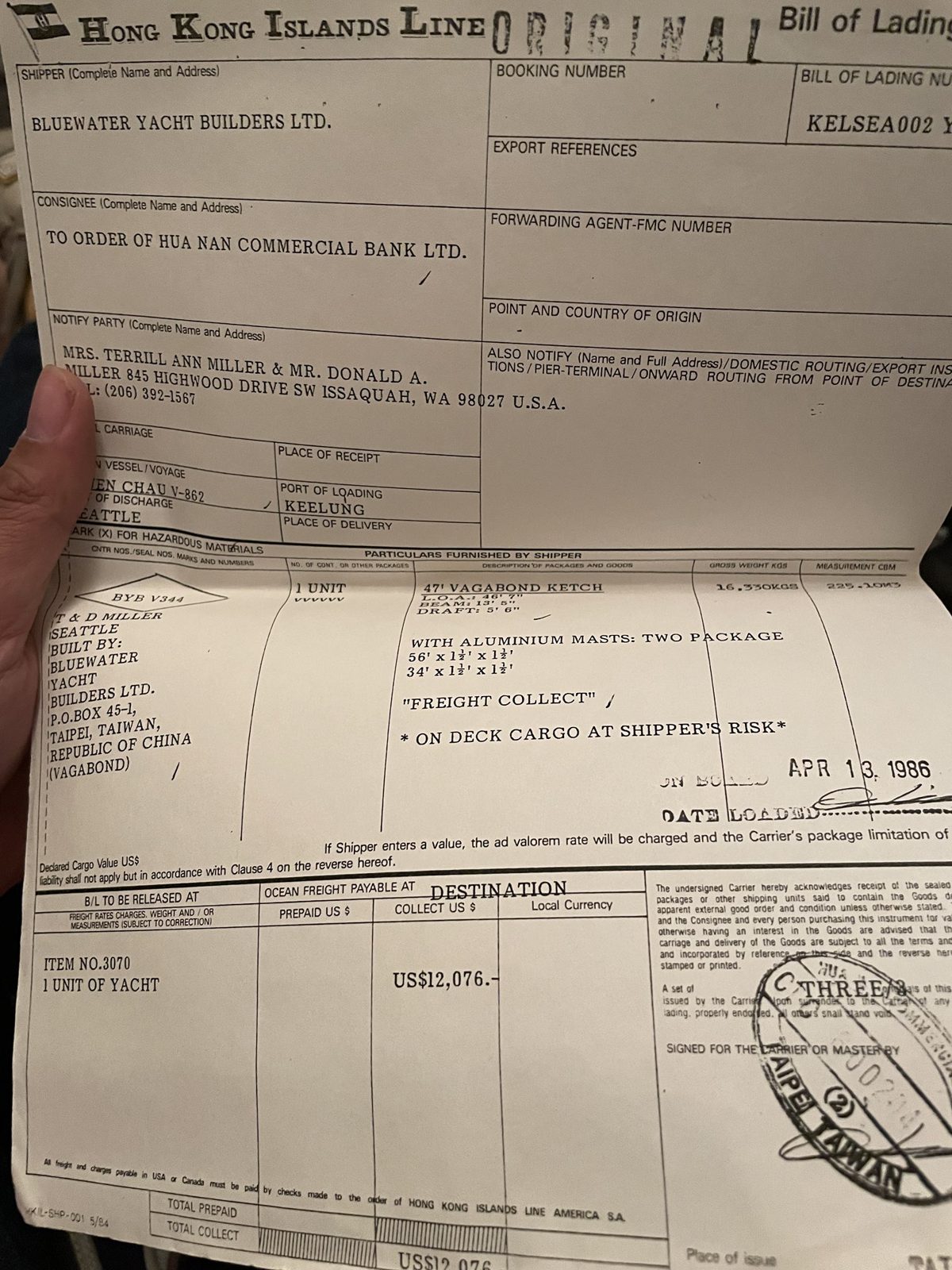
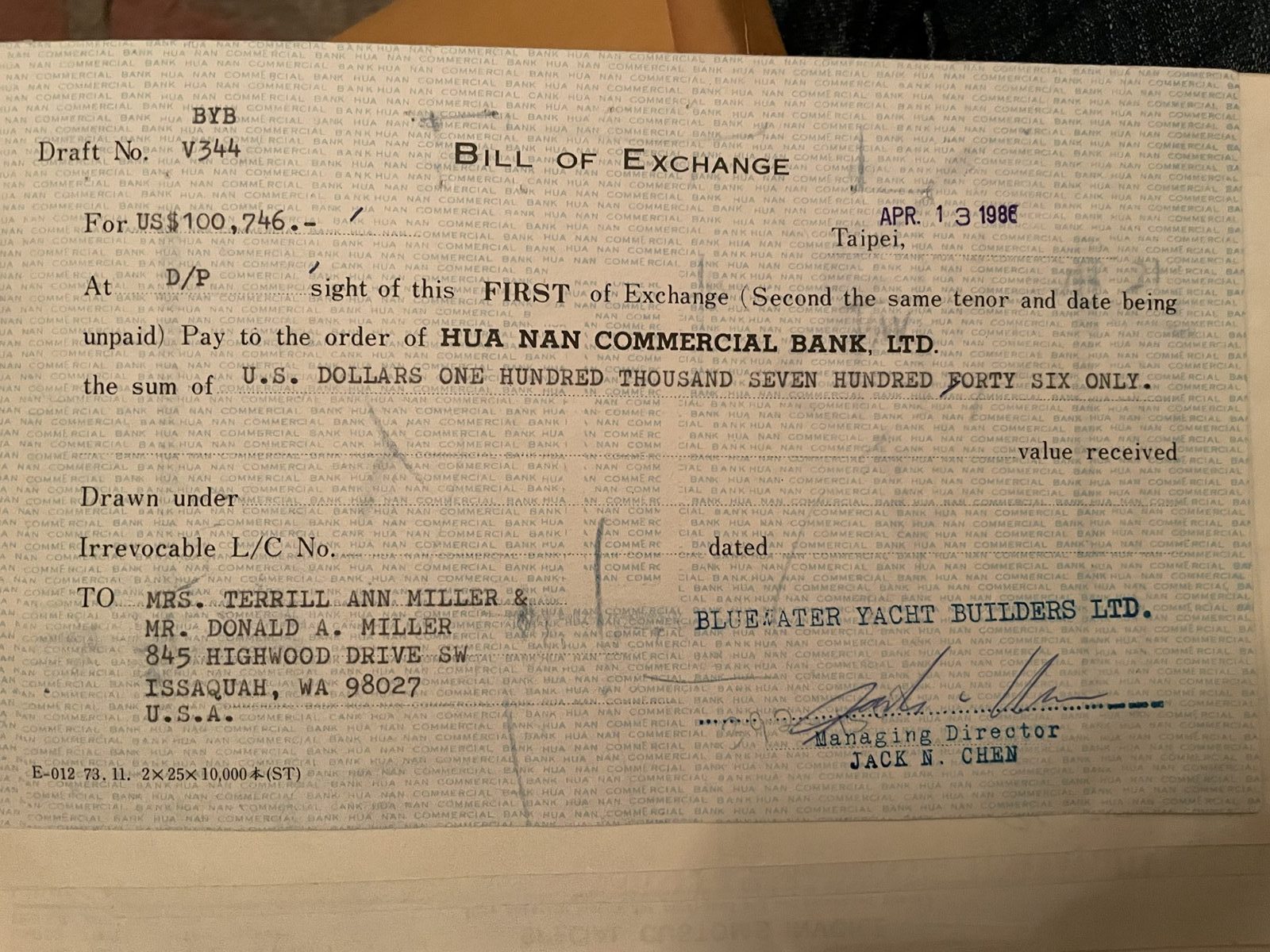
TG, Chris and I arrived at the Port of Seattle (Harbor Island) just in time to see the freighter inching up to the dock. Our pirate ship at last, sans the Lafitte brothers. My heart pounded as the cranes eased the 50-foot ketch from the freighter to the dock… DON'T DROP THE 20 TONS OF FIBERGLASS! After a couple of days of world finance (the Boeing Credit Union and a bank in Taipei), Garden Party was moved to a boatyard in Ballard and outfitted with a main and a mizzen, running lights, a depth finder and a radio. We powered her from Ballard to Park Shore Marina near the south end of Lake Washington, where she was moored for ten years.
1995 — The Voyage from Seattle to Portland
After two pricey months at the Ballard boatyard, the voyage from Seattle to Portland was an exciting new adventure. Crew selected, bow polished, engine tuned and bottom refurbished, the huge mobile boatyard crane gently lowered Garden Party into the Montlake Cut. With First Mate Paul Retka's bags neatly stuffed into the forward berth and TG's Nordstrom-like main cabin shipshape, we were ready. My mind spun with excitement. Eyes fixed on the Ballard Locks, hands on the wheel and following commands from the lock crew, I gently maneuvered into position.
Editor's note: one draft breaks off here with "WAIT DEAR READER!!! The following memories are in two parts: Part I is that of the Captain. Part II is that of my humble crew, Paul Retka. Enjoy!!!" — followed only by "Part I … to be cont. Part II." Paul's part was never included.
Day I
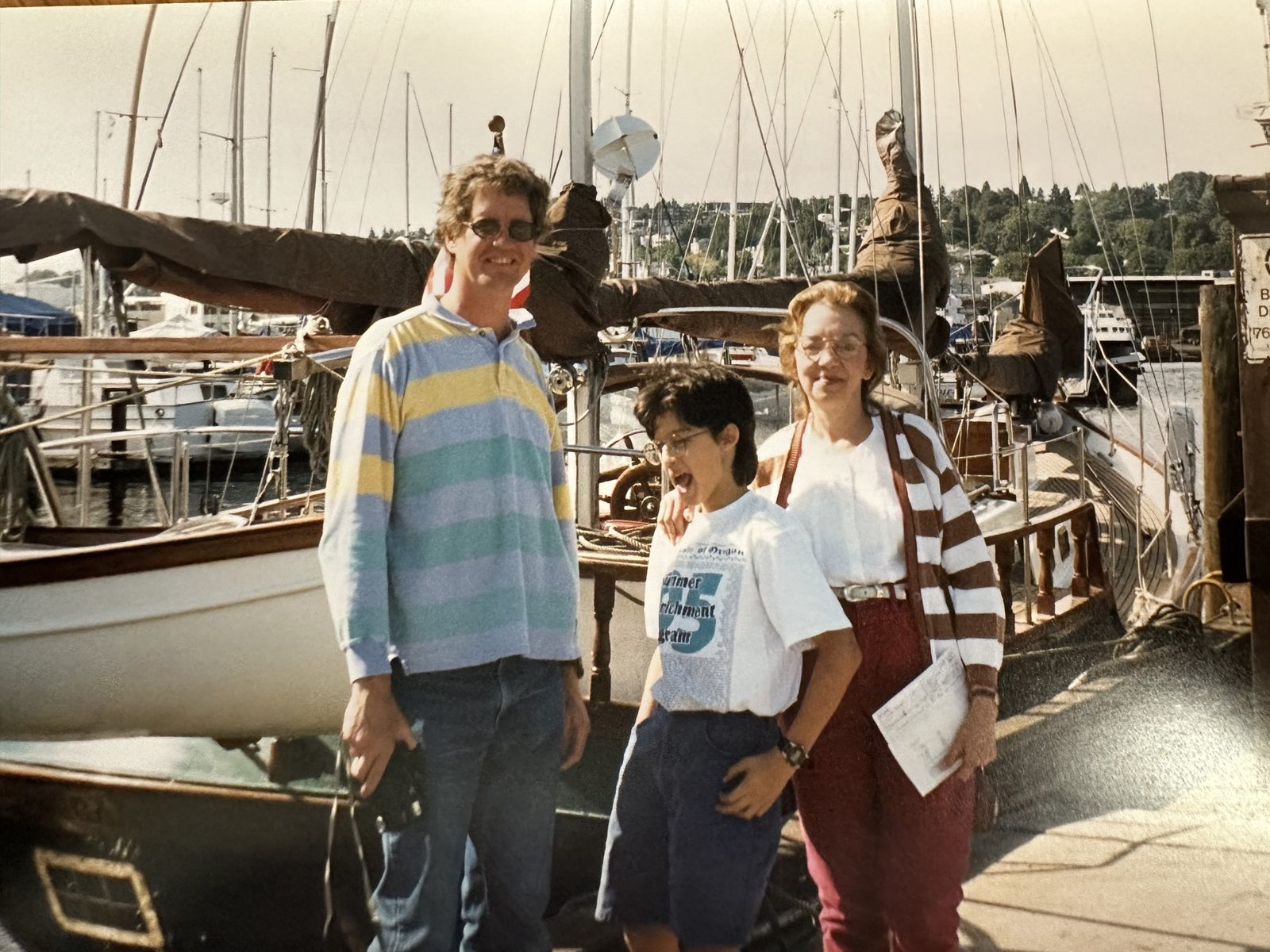
A September sunset over the Olympics was imminent. Last-minute checks of the engine's fuel system made for a late start. The lack of redundancy in the fuel-line filters had my attention. Mechanics tried to add a redundant line, but the pump would not keep a proper continuous flow with it, so we settled for the single filter. Ballard Locks behind us, we headed for our first anchorage at Port Ludlow.
Within a few minutes of sunset, the scenic shoreline turned into a bank of lights. No moonlight. Before we got oriented in the dark, our course had drifted northwest, close to the shipping lanes for large freighters. Then: FIVE LOUD BLASTS. Paul, stationed in the bow, yelled, "TURN! TURN!" Another five blasts. This time we could see a freighter moving at about 30 knots and getting closer. I laid into the wheel and pushed our speed to the maximum (8 knots); slowly the freighter and Garden Party began to separate. Yes, five blasts is the signal for a collision course.
An hour later our anchor was set, heartbeats back to normal, and through the stateroom hatch moonbeams peeked around the mainmast. Goodnight, Paul. Goodnight, Don.
Day II
At 2,500 rpm we raced around Port Townsend and headed northwest in the Strait of Juan de Fuca. No wind, favorable tides. Hour after hour we ground our way along at near our top speed of eight knots in smooth water. Small dolphins played tag with the bow while the pod leaped and splashed some 100 yards off the port side. Neah Bay, our destination, got closer — but at eight knots, don't hold your breath. Remember, in a 50-foot, 20-ton ketch it's not about getting there; it's about the excitement of going. As the sun began to set we tied up near the shore at Neah Bay, at the remnant of a moorage, but stayed aboard and spent several hours planning our third day: our first encounter with the Pacific Ocean.
Day III
Many stories have been told about this day. Before pulling anchor we saw that morning fog would limit our visibility. No radar — but we did have a depth finder and, of course, a knot meter. Our plan looked sound. We calculated the time needed to pass distant Tatoosh Island, where we would make a 90-degree turn south into the mighty Pacific. Twenty minutes would be enough and would keep us a safe distance from the rocky island.
Fog limited visibility to less than 50 yards. The clock ticked. First Mate Paul manned the bow; Captain Don had the wheel. We turned and headed south. At 20 tons Garden Party is like a battleship; she does not turn on a dime. Several minutes later Paul yelled, "ROCKS! ROCKS!" A frantic spin of the wheel, like a roulette wheel. Halfway through the desperate turn, knife-like, partly submerged rocks stared at me. We slowly moved a few yards into rock-free water. The next few minutes seemed like hours. Three-foot swells felt like ten-foot swells. Without some headway, our fiberglass ship would likely crash into the nearby rocks; on the other hand, the fog and the near-crash had left us unsure which direction was rock-free. Our maneuver was a back-and-forth attempt to keep a little headway without leaving the rock-free area. We faithfully executed that path for some 30 minutes… and the fog lifted. To our pleasant surprise, the house-sized Tatoosh Island was about 100 yards to port. Unknown currents had been in our favor.
"Paul, something is wrong with our diesel." Sputtering, the 100-hp engine refused to make more than a few hundred rpm. No wind. After a few minutes I reached for Channel 16 (the Coast Guard emergency channel). As if they were next door, they pinpointed our position by triangulation, and within an hour Garden Party was in the arms of a powerful tugboat manned by two young first responders, who towed us to La Push and moored us before sunset. Paul, my super first mate, knew precisely what had to be done. He carefully removed the screws from the fuel filter (dropping them into the bilge would not be good), and a quick, thorough cleaning solved our problem. In retrospect we understood the cause: two hours of three-foot swells around Tatoosh Island had stirred up ten years of sediment in the fuel tanks. After a couple of beers in this small Native American town, we bunked down for night number three.
Day IV
With a clean fuel filter and a refreshed crew, Garden Party headed south for her next stop, Westport, Washington. The 15-hour stop in La Push had let the fuel settle and the filter work properly. I must admit I remained skeptical of another blockage, but Paul, who had raced mid-size hydroplanes, seemed content with the engine's performance. Again no wind. Late in the afternoon we spotted Ocean Shores — just a few more miles to Westport.
Buoys directed us to the channel leading to the Westport docks, and we scooted over the bar without any issues. Sunset was upon us. We had Westport in view, but the channel markers were swallowed by darkness; within a few minutes the shoreline became a random array of lights and the markers disappeared. We continued east — not totally lost, but with no channel in sight. Another large boat was about 150 yards ahead, and following it seemed a reasonable way to at least avoid running aground. Then the large boat slowed, turned, and headed toward us. Over a loudspeaker came a not-so-friendly voice: "This is the Coast Guard. Are you lost? Are you the same vessel that was rescued yesterday and towed to La Push?" I answered with a feeble "Yes, yes." The next words from the Coast Guard will never be forgotten:
"YOU TWO BOYS ARE THE MENACE OF OUR WASHINGTON COAST. (Pause.) FOLLOW US. WE WILL TAKE YOU TO WESTPORT."
With Garden Party secured to the dock, the two "boys" regained their dignity and headed for the nearest bar. First Mate Paul, like a stand-up comic, shared our humiliating verbal lashing with the bar folks.
Day V
Grinding south with neither wind nor engine trouble, our thoughts turned to the infamous Columbia River Bar. Garden Party depended on her crew to arrive at the dangerous part of the bar precisely at ebb tide. Our plan was to moor in Astoria. First Mate Paul kept Captain Don well informed on our position, our speed and, most of all, periodic estimates of where we would be at ebb tide.
Early in the afternoon Long Beach, a well-known landmark, came into view. We identified the buoys as we slowly turned more to the east. Currents from the mighty Columbia were notable, but 20-ton Garden Party held steady. Our timing was near perfect: the treacherous bar was like a smooth pond. But don't delay — the tide was changing. Astoria was in sight, and Garden Party moved smartly up the river at her maximum of eight knots. But our progress grew slower and slower as the tidal current increased against us. For reasons still unclear 20 years later, the moorages and docks seemed well hidden from a newcomer, so we continued about a mile upriver to Tongue Point and found a favorable spot to anchor in a small bay, a safe distance from the shipping lanes. The tidal currents, however, were significant.
Our plans included meeting Elbert, Roberta, TG and Chris somewhere near Longview. The hills around our anchorage blocked telephone and radio contact, so I decided to take the dinghy ashore to call TG. Getting to shore was easy. But the shore was heavily fenced, with no access from the water. As I headed back toward Garden Party, the current had picked up. Oars flew. I made some headway toward the boat, some 150 yards away. My engineering arms tired. Next…
ONE OAR BROKE.
With one oar and a strong current, I could not close on the anchored Garden Party. First Mate Paul was ordered to raise anchor and rescue the one-oared dinghy and its exhausted Captain Don. (Lesson: ten years of weather will rot an oar, and the weakened section hides under the tight rubber sleeve where it meets the oarlock.)
Day VI
The mighty Columbia welcomed us with early morning fog, but with enough visibility to find our way upriver. Spirits were high. We reached TG by phone and made plans to meet the family in Kalama, some 80 miles from Astoria, where Elbert and Chris would board Garden Party for the final leg to Portland. A boat trip up the Columbia offers ever-changing scenery and simplifies most navigation. However, large ships moving over 20 knots tend to sneak up behind you, and the deep channel, not built for two ships side by side, forces small vessels into shallow water near the river's edge. We stirred up a little sand with our six-foot keel, but no trauma.
We arrived at Kalama about 6 p.m. The family was waiting, and Chris and Elbert came aboard. Our larger crew prepared for the last night of this never-ending trip. We were going to move the boat a few hundred yards downstream to avoid the big wakes of passing freighters. I started the engine while Paul pulled the dinghy closer. I noticed that the 30-foot dinghy line had slack and warned Paul to keep it taut; otherwise it would be vulnerable to our propeller, spinning about five feet below the surface of the icy Columbia. Paul pulled hard on the line. The 100-hp engine either stopped or made strange sounds. THE LINE WAS TANGLED AROUND THE PROP. I killed the engine. My response: "OK, crew, we'll get a diver in the morning and then continue to Portland."
Elbert, Chris and Captain Don were in awe as the honorable First Mate Paul put on his swimsuit and a battery-powered headlamp and held a razor-sharp six-inch knife in his teeth like a dog with a bone. Paul jumped into the cold water. Fifteen seconds later, like a skinny whale, he came up for air; a second 20-second dive; more air. After a third dive, Paul had the line free — without cutting it. One minute in the cold Columbia is forever. We cheered and helped Paul get warm, then settled for the Kalama moorage and the periodic freighter wakes.
Day VII
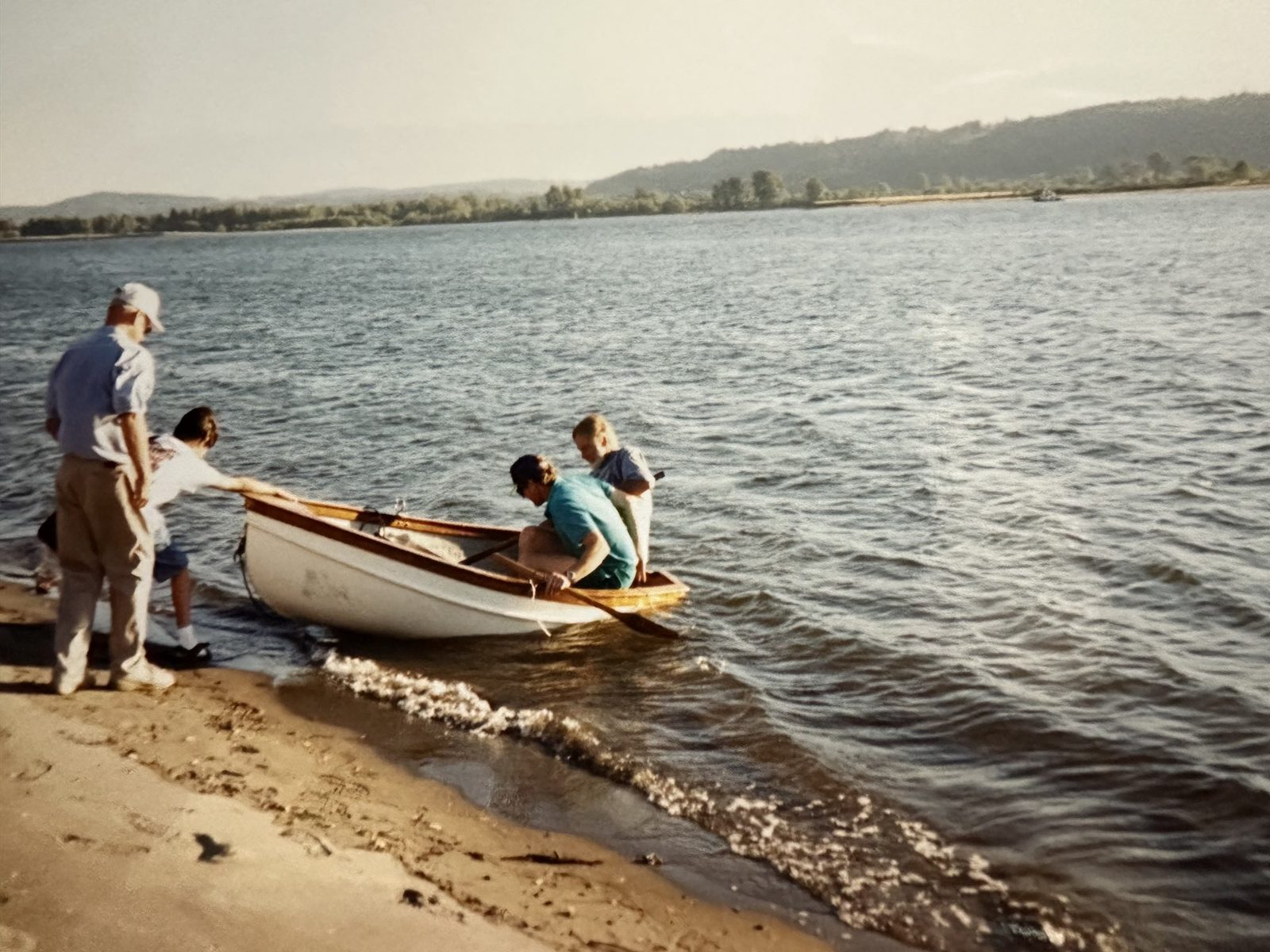
With Elbert aboard, navigation became simpler. He was familiar with this part of the Columbia as well as the Willamette River between Portland and Oregon City. His home was on the Willamette about seven miles upstream from Portland, an ideal spot for temporary moorage. As we entered the City of Bridges, our inexperience caused some stir with the bridge tenders. Seasoned sailors signal a bridge tender with a code of horn blasts, and one bridge had to be raised to clear our mainmast. We didn't know the proper code and got growled at by the tenders. With Elbert's knowledge of the Willamette, we passed the big rocks near Milwaukie without any panic, and Garden Party looked classy at Elbert's dock. Thanks, Elbert, Paul and Chris, for sharing this exciting voyage with me.
Retirement (1995–2016)
In 1995 Boeing offered a few hundred dollars a month extra to those retiring. After Reva passed in 1993, we had doctored up her 1896 Victorian on many weekend trips to Oregon City. Chris was also about to start a new school (junior high). TG and Chris moved from Garden Party to the house on Apperson Blvd., and I headed to the Ballard boatyard to tackle some overdue boat maintenance. A few weeks later my first mate, Paul Retka, and Captain Don set sail for Portland (see the Voyage).
The 1896 Victorian
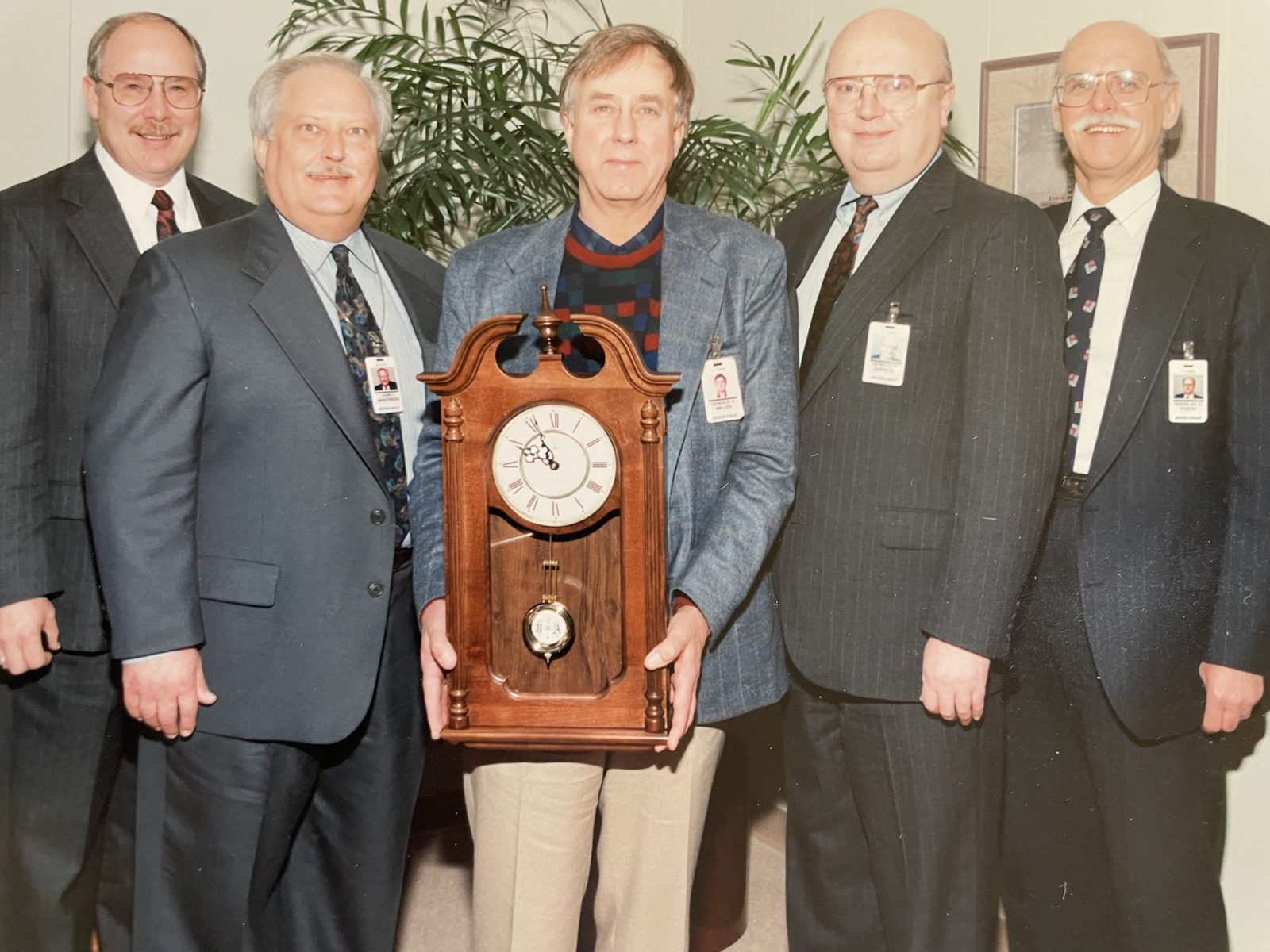
Several major additions were made to the Victorian house in 1996 and 1997. Elbert, Jim (a young hired friend) and I became overnight shinglers; Jim had never shingled but learned quickly. The two brick flues were rebuilt by a real mason. I hired a plumbing contractor to add a second upstairs bath; it was costly but done properly (unlike some of my house projects). Chris and I designed and laid the ceramic tile shower, and Chris picked the "rising sun" soup-dish pattern and the blue-and-white color scheme. A second contractor upgraded the 120-year-old lath and plaster: two tough Irish lads on stilts turned the downstairs bedroom into "new home" fashion. Again pricey, but it spares long-term guests the horrors of 1896 pioneer living. We added new wood windows and the French doors that separate the small living room from the open stairway.
On one shopping adventure in Beaverton we found the large desk. We were hooked: fine Texas oak plus a budding computer geek led to a quick purchase. Next I had to find space for this monster, which turned out to be the last place you would use a computer. With sledgehammer and crowbar I moved a couple of walls, and all was well. Chris never used the downstairs desk; he soon added a fancy modern glass-topped desk to his bedroom. I got stuck with the desk and its dozen worthless shelves and drawers that don't even make good junk collectors.
Outside, the old Victorian sits on a great 5/8 of an acre. For me, working outside was a much better hobby than working on the house, and that bias hasn't changed in twenty years. Major changes include removing Joe Gray's laurel hedge along the entire 125 feet of frontage; today we keep lilac bushes and a spring show of tulips. Joe's backyard patio is now a 10 x 14 x 4-foot pond (his hidden well under the back porch supplies continuous fresh water). The backyard and garden are separated by an attractive yellow iron fence. Several newer trees complement the 100-year-old apple and pear trees: we added fig, apricot and plum, as well as a variety of shrubs. The 200-foot south property line is lined with arborvitae, which provides privacy and hides a rather unattractive chain-link fence. About 1,000 square feet is now devoted to raised flower beds and a vegetable garden.
Chris and I attempted to build a 16-foot sailboat. Joe's large shop was ideal for this ambitious project. Good progress was made until we started grinding the 20 forms (a dirty, dusty job) and steaming and bending oak strips. On a good day our yield was one successfully fitted oak strip out of six attempts — lots of good firewood. Enthusiasm faded when Chris snuck off to college. I have saved the 17-foot spruce mainmast and the mahogany transom for the next wave of enthusiastic boat builders.
Chris
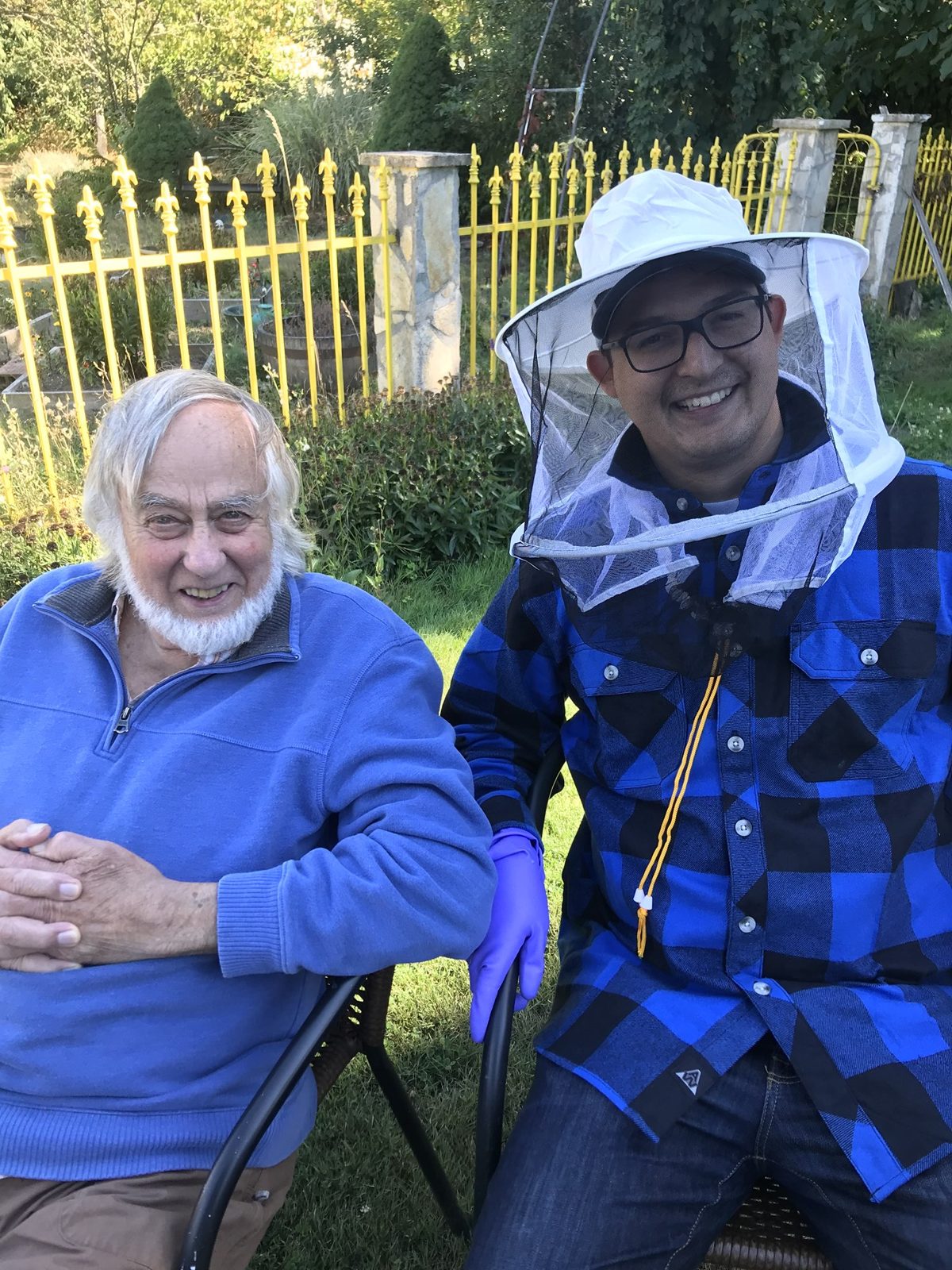
One highlight of retirement was sharing quality time with Chris. In his senior year (2000–2001), Chris decided to sacrifice his fall cross-country season and most high school activities for the opportunity to attend two local colleges, taking math and physics at both Lewis & Clark and Reed. I was his full-time private taxi: 8 a.m. calculus at L&C, followed by 10 a.m. physics at Reed. Chris did have time for one special project led by George Cashdollar (the high school biology teacher), studying several hundred photos of western painted turtles. Chris developed a scheme for identifying which photos showed the same turtle, which was important to the biologist who photographed them. Although the accuracy of the results was never confirmed, we did deliver documentation and working code to the biologist.
During his senior year Chris asked us to attend a special dinner at the high school. It turned out to be the annual awards banquet, and Chris spent most of the evening walking to the stage. He took home a bag full of awards, including the prestigious Marine Corps award. We began to understand that he had special academic skills. One day in April 2001, while I was pulling weeds in my garden, I heard Chris yelling at the top of his voice, "Gramps, Gramps, I made it… I got accepted into MIT!" He was also accepted at Harvey Mudd and Reed (but not Caltech). He chose MIT. In 2011 we were invited to Stanford for Chris's PhD dissertation defense. His dissertation was accepted. Now it's Dr. Chris.
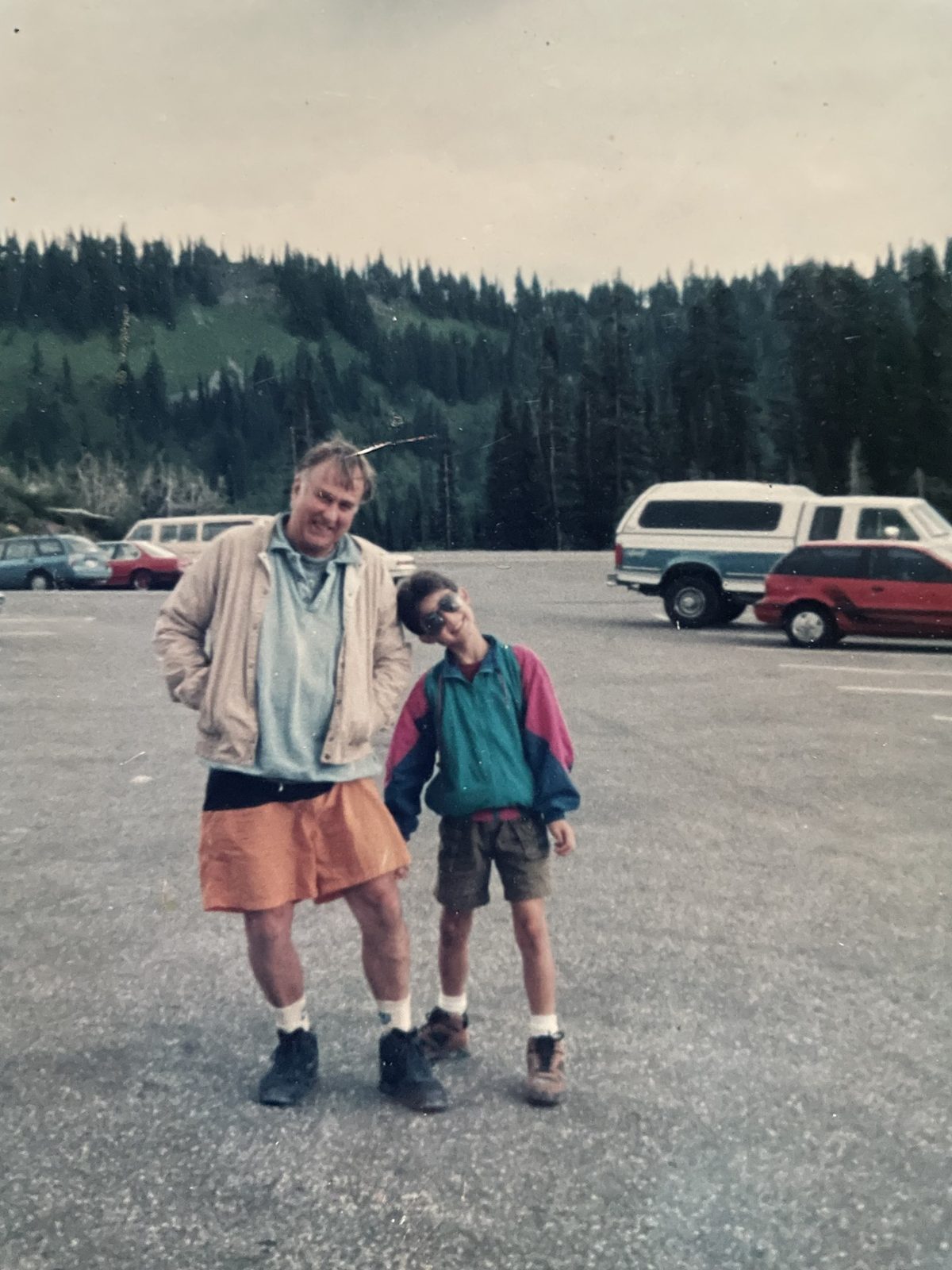
2013 — Emma
Time to reflect on the last few winter months. It does not take long to focus on the best part of 2013. Yes, it's Emma! A charming young Boston lady who brought the old shack and its duffers to life. Welcome, Emma! The holidays were filled with fun dining: Thanksgiving on Broadway in Portland and Christmas at Portland City Grill.
In the past few years, gifts for Christopher have not gone well. Gramps and Gram do poorly with duds for a 20-plus dude; we returned most gifts. This year, Terrill noted a new gadget — a Phantom drone. Instantly, off to Portland, and we did the drone plus a slick GoPro camera. This gift (for both Chris and Emma) turned out to be the cat's meow. Now we get exciting bird-like views of Boston from 1,000 feet, plus Chris at the controls and Emma dancing, jumping and waving at the big white Phantom. No more snapshots. Emma had better get to fly this hummer; otherwise next year Chris will get a bag of coal for Christmas.
Chris mentions places where he might live: San Francisco, Austin, and my favorite, Bellevue.
Editor's note: this piece is not in the scanned draft; it comes from a separate typed page (see "ID 024 page" above).
Math problems
My early retirement from aerospace engineering did not quench my thirst for math problems. There are many good ones on the internet — some too tough, a few too easy. The best scenario is to find a tough one, get lucky and find a valid solution, then immediately pass it on to my Boeing buddies with the intent of outdoing the other guys. Of course, when they send me a "not so easy" problem, I sharpen my pencil and hope for the best. Thumb drives stored with my documents hold several hundred short programs used to solve weekly internet math problems, along with several larger programs, including Jackie's Time Clock and a major effort titled Pull Tabs.
Fish Bowl — the Pull Tabs program
Two documents in Don's papers describe the Pull Tabs work. A one-page description dated October 24, 1992, signed "Don Miller," explains that the program (filename FISH.EXE), written in Microsoft QuickBASIC 4.5 during late 1992, does two things: it tracks the expected player winnings in each active pull-tab game as tickets are sold and prompts the operator (or tavern owner) when pulling the game will maximize profit; and it produces the periodic reports required by the state gambling commission. A 1994 sales flyer from "The Fish-Bowl Company, Specializing in Pull Tab Ticket Sales," of Kent, Washington, offers the system to establishments with pull tabs, noting that it had been in development for over three years and field-tested for over six months.
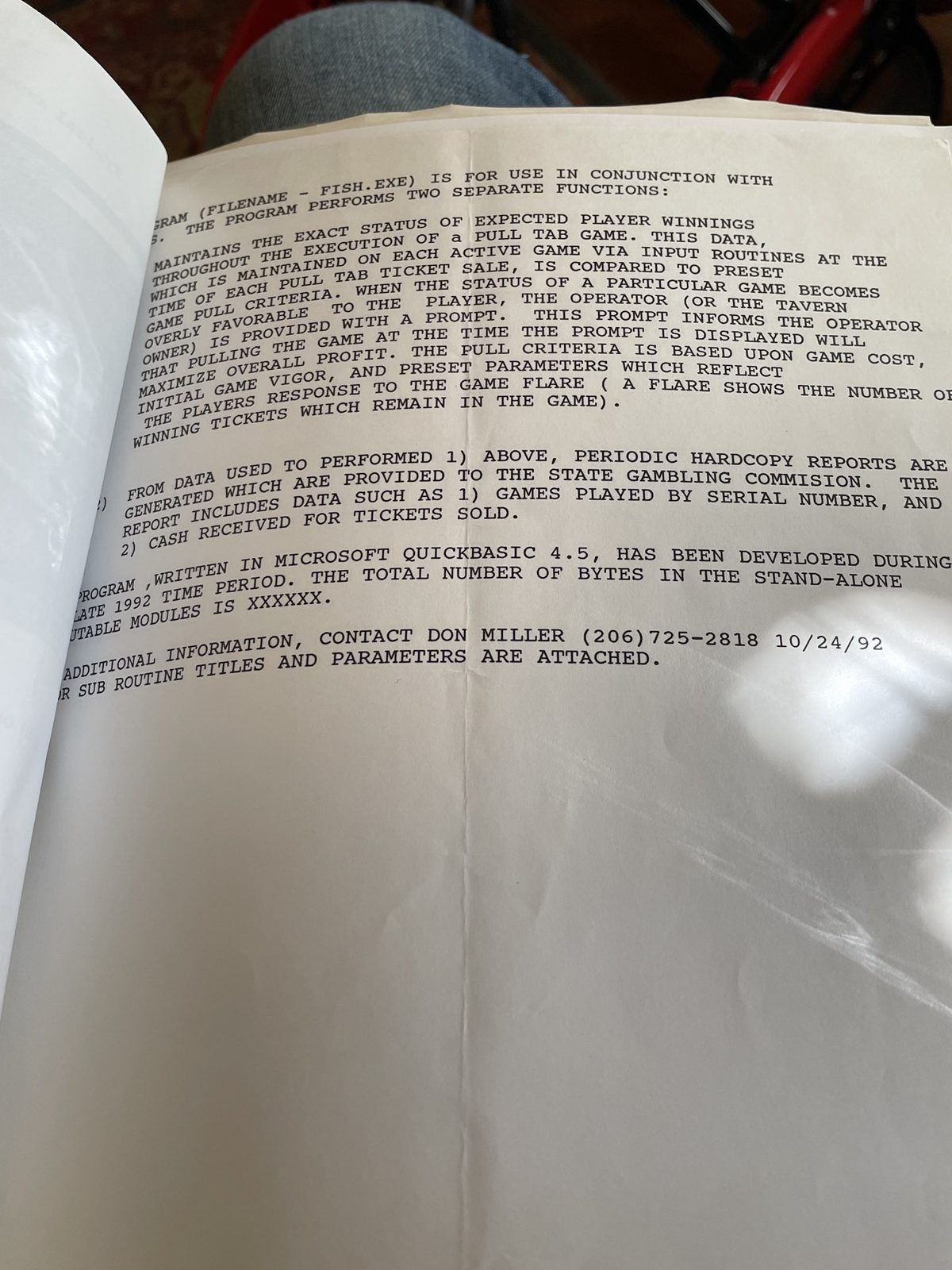
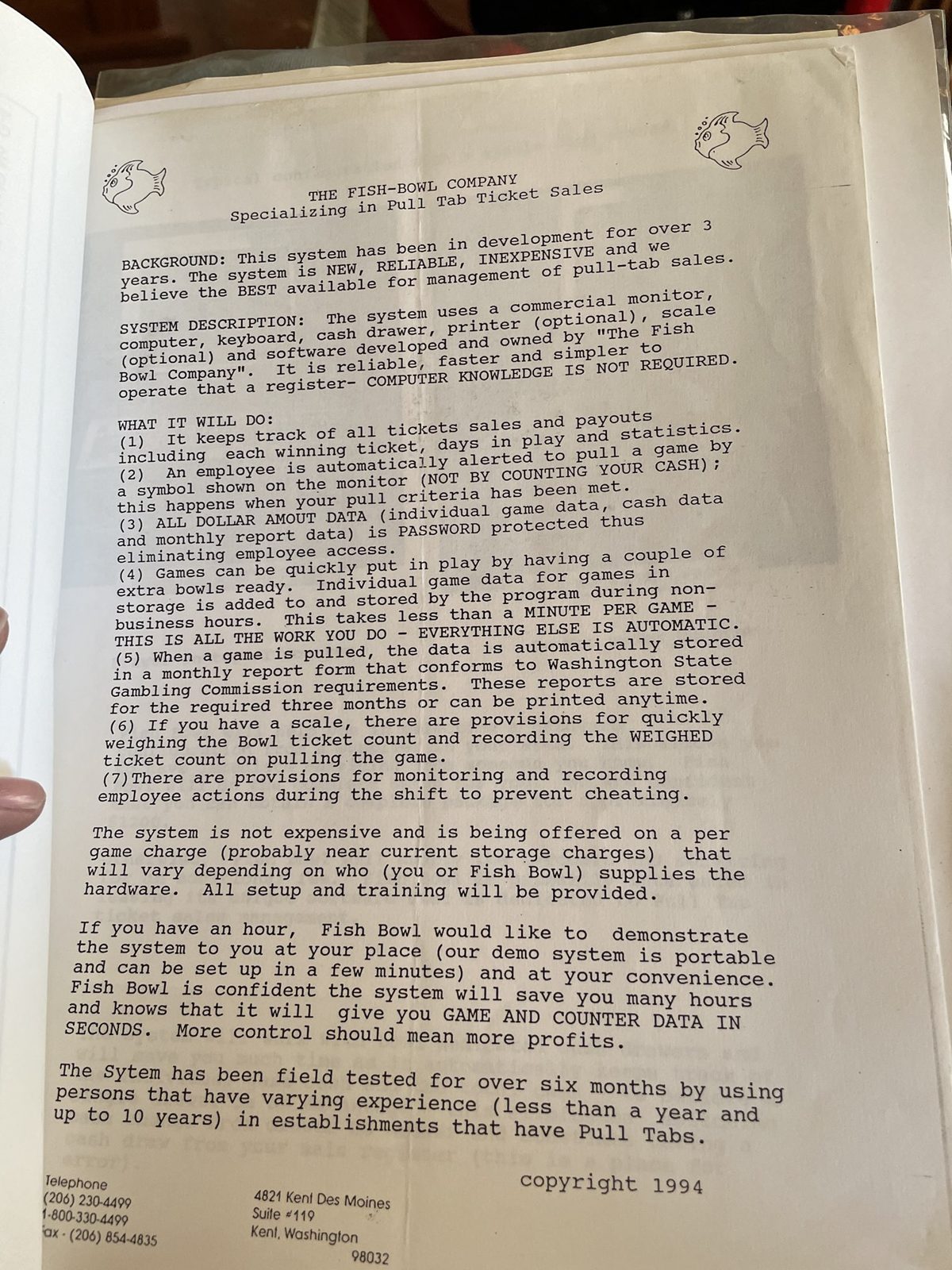
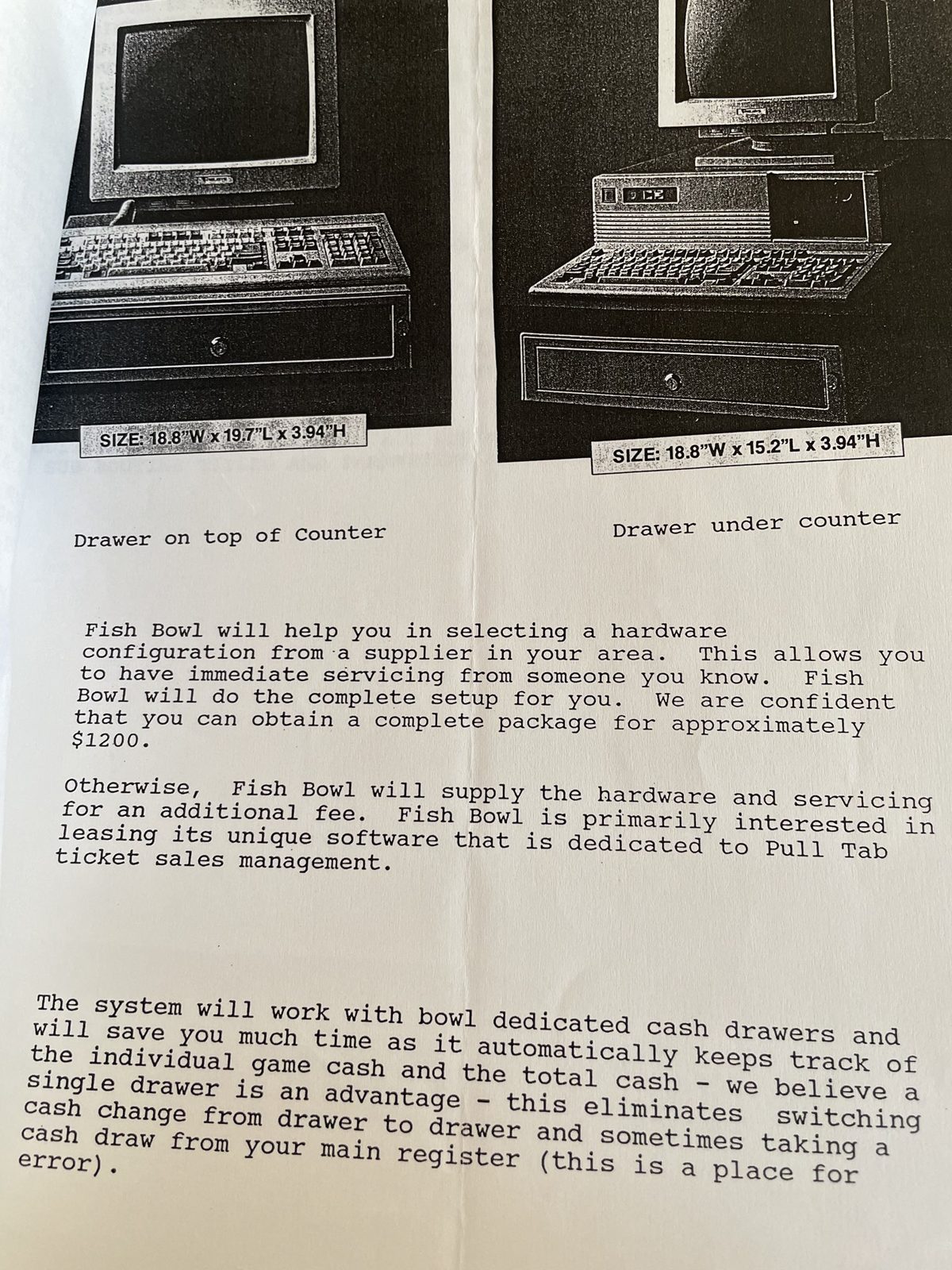
A lesson about Karl Gauss
Don wrote this math lesson for a visit to Chris's third-grade class. In it he tells the story of Karl Gauss, who as a nine-year-old fourth grader added all the numbers from 1 to 100 in under 30 seconds by pairing them: 1 + 100 = 101, 2 + 99 = 101, and so on, 50 pairs in all, so 50 × 101 = 5,050. "Now you can impress (and fool) your friend with your adding talent. Beware — be sure you can multiply. I know one fourth grader who slips occasionally."
Editor's note: Don planned an appendix with a couple of problems he solved and sample BASIC code ("3. Math Problems & Sample BASIC Code," scan p. 58), but it is only a title page in this draft.
Not finished
It is difficult to finish this retirement section. It sounds so final. Rather than "finish," let's just leave it open. In 2016, a presidential election year, TG is pulling for creepy Ted Cruz, and your humble writer has picked "The Donald." If Clinton wins, like other celebrities, we will sell the farm and move to Antarctica. Meanwhile, the following generations are well positioned to survive Hillary. We have carpenters, mechanics, teachers, research biologists, engineers, authors and several mathematicians. Great-great-grandfather Philemon Morriss and his wife Minerva would be proud.
Pierre (November 16, 1995 – January 25, 2008)
These words about our great dog were written in 2008. The photo below is the picture of "this massive beast" that Don included with the original.
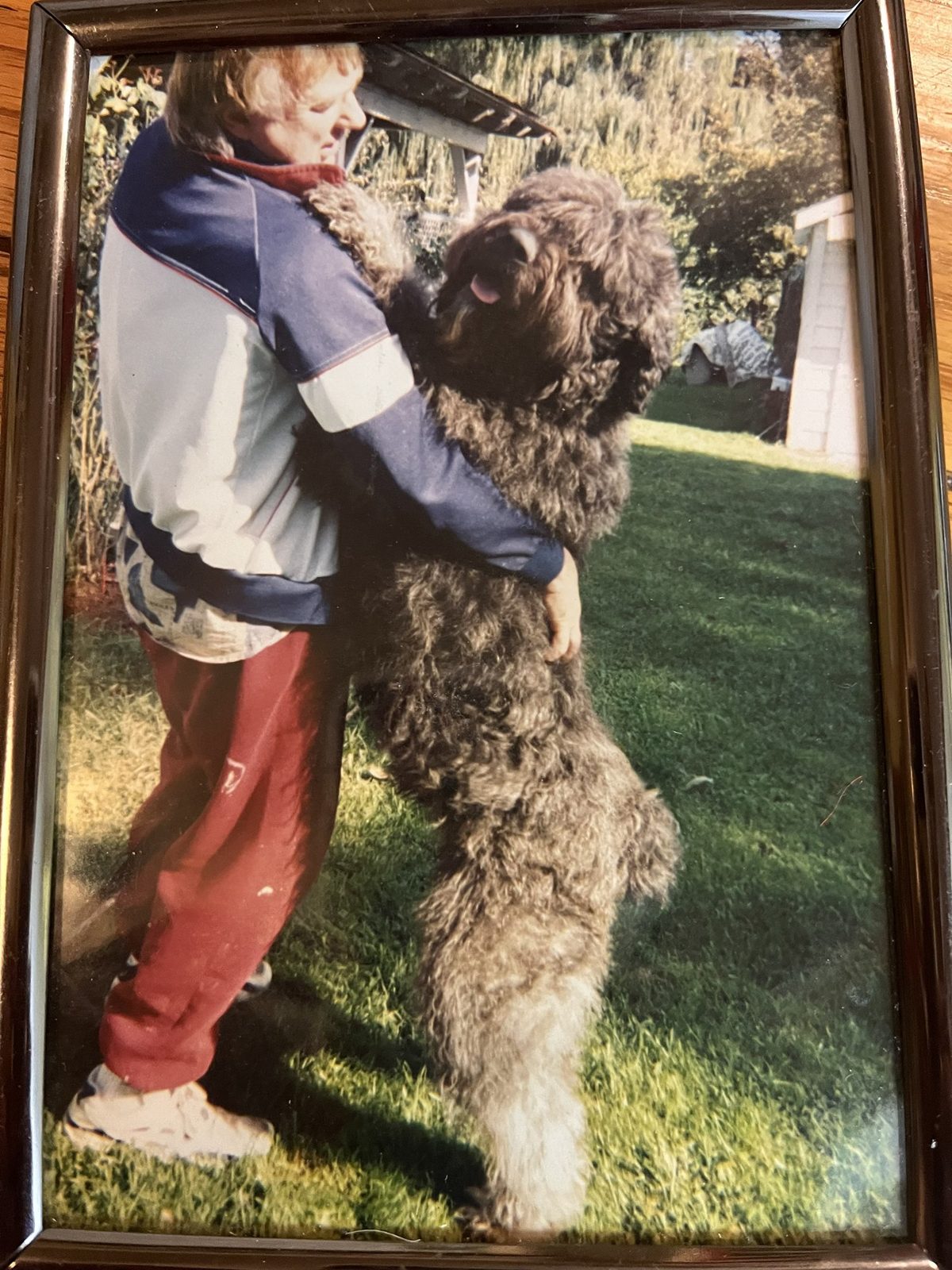
AKC registered name: "Beau Pierre Lafitte Bouvier." Breed: Bouvier des Flandres.
Pierre was born on November 16, 1995, on a ranch in eastern Oregon near Pilot Rock, south of Pendleton near the Blue Mountains. His parents, Holly and Kojak, were both very large for the breed. An ad in the Oregonian one January day in 1996 read: "Eight-week-old Bouvier des Flandres pup for sale… herding breed… WILL BE LARGE." Well, call we did, and we arranged to meet halfway, at the Dairy Queen in The Dalles in the Columbia River Gorge. Along with the puppy, the McKaques brought Holly, the mother — she was a giant. Chris, Terrill and Carmen (Terrill's mother) made the trip with me. At about two months old, Pierre was already a BIG PUPPY! He lived for twelve years. As I write this (January 2008), he has been gone a week, and I thought a few words about his life might be in order. Reflecting on him this way may also ease the pain of losing him.
Several articles in the dog books carry the title "A Bouvier Is Not for Everyone." After twelve years with Pierre, I understand the concern. First and foremost, Bouviers are smart, stubborn, loyal and protective of their family, and they demand much attention and daily grooming. For me, the attention was no problem — in fact, he may have been perturbed by all the attention he got. Since the breed is a herding dog, I let him look like a working dog: not much grooming, just daily brushing, one leg at a time. Without serious training a Bouvier will test you at every turn, and as you might expect, my training was spotty.
During the puppy years he left his mark on several people: a nip on Aunt Roberta's thigh, and a dozen small scars on my arms from those sharp baby teeth. Pierre met strangers without baring his teeth but enjoyed "herding" them with gentle pushes of his massive shoulders. Chris's daily arrival home from school was always a thriller: Pierre met him at the gate jumping, nipping and pushing, and Chris survived by sprinting across the backyard and leaping onto the pond wall. The nipping finally stopped when he outgrew his puppy stage, but he never outgrew his herding instinct. On trips to the river he would herd all the kids out of the water onto the bank. He thought he was saving them.
Much of the bond between Pierre and me came from our (literally) daily walks in and around Park Place. We started when he was less than a year old. We had many routes, all over two miles long; some took us downtown to say hello to a favorite classmate, Esther Keller, then up the long set of steps and on the two-mile trek back to Park Place. He learned to walk on a leash, but his hunting instincts were a problem. If a cat, squirrel or rabbit got his attention… hang on! Many times he yanked the leash and took off after who knows what, through the neighbors' yards and around their houses, running all out with me chasing him. I guess people said, "Oh, here comes Pierre… and here's Don bringing up the rear!" I should note that he never caught anything on these walks (more on that later). One solution was to let him walk free, but then he insisted on staying about 100 yards ahead of me. When the neighbors saw Pierre coming, they knew I wasn't far behind.
After years of walks in Park Place, we expanded to Mary S. Young State Park in West Linn, where we could swim in the Willamette and socialize with other dogs in the off-leash area. Pierre, at 130 pounds, couldn't run as fast as most of the other dogs, and chasing balls their owners kept throwing? "Well," he thought, "that is just stupid! If you keep throwing that ball, go get it yourself… I'll wait right here!" The walk we both enjoyed most was along the Clackamas River, with clean, cold water for a swim. Pierre did much better retrieving sticks in the water than balls in the park. One five-mile walk on a hot summer day pushed him to the point where he decided to head for the water — straight over a steep cliff down to the river. All was fine until he tried to climb back up. I pushed, he dug his big front paws into the loose soil, and we finally got back to the trail. I should add that we walked almost every day for over ten years — on crutches, with gout, no excuses. When it was time to walk, Pierre would bark, jump up and down, and off we'd go.
Another thing Pierre enjoyed was the high jump. I would give him a "sit" command, followed a few seconds later by "go," and he could clear a four-foot bar. And, as I promised a few paragraphs back: he used those jumping skills once when he spotted a large 15-pound cat in our basement. He leaped from the yard through the basement door… end of cat… end of story!
A few final thoughts before Terrill takes over. Pierre was not exclusively an outdoor dog. He hung out with either me or the cook, usually snoozing where he could keep an eye on both of us. He slept right by my bed, and during his last few years he made two trips outside each night — one for the bladder and the second to retrieve an old bone. In those last couple of years our long walks were replaced by walks in our garden. Pierre enjoyed walking up and down the vegetable rows eating peas, beans, potatoes, blueberries, strawberries — whatever looked good that day. But his favorites were the pears that fell from the trees as he lay snoozing in the yard. Like many large dogs, his knees and hips became a problem. When we walked up the steps together, he and I would joke about who was going to wince first. I usually lost.
He was a good dog.
Terrill's memories
Terrill had a special relationship with Pierre; I'll let her take over now.
Along with Don's memories of Pierre, I have many special memories of my own. Some of you have probably heard these stories before, but I'll repeat them here because they are some of the more humorous ones.
For example… once, when Pierre was a puppy, I locked him in the kennel so he could be outside but safely locked up while I went shopping. When I returned, he had climbed over the six-foot fence and met me in the driveway smiling like a Cheshire cat!
Also when he was a puppy, while we were playing he knocked me down by accident and I jammed a finger on my right hand. I had to go to the clinic for an x-ray; luckily it wasn't broken. A few years later a similar accident happened, and again I went to the clinic for an x-ray. The technician asked if I'd ever been there before; I said, "Yes, but I don't remember why, it's been a while." She then asked what I had done to my left hand. I told her my dog had knocked me down by accident while playing. She said, "Well, the last time you were here your dog had knocked you down and you jammed a finger on your right hand… what kind of dog do you have, anyway???"
And then there was the New White Shirt Fiasco. One day I came home from shopping with a K-Mart bag holding a brand-spanking-new white shirt I planned to wear that night. You-Know-Who came trotting over to the car to welcome me home — or so I thought (silly me). After a pat on the head and a few kind words, Pierre decided the bag in my hand was too intriguing. He grabbed it in his teeth and took off like an Olympic sprinter, through the garden and around the shop, then back toward me, where he put the bag down and dared me to come get it. Of course I fell for his trick: when I reached for the bag, he grabbed it and was off again. Needless to say, this time the shirt came out of the bag and he dragged the whole mess through the mud. End of shirt! And of course we can't forget Pierre stealing our neighbor Mama Pig's slippers from the deck by her hot tub, and digging up her rose bushes and bringing them home right after she had planted them. Don replanted them in her yard.
Another memory from Pierre's first months in 1996 is his puppy training class. He was in a class of six puppies — only problem, the other five were all German shepherds from the same litter. To say the least, the shepherds did not like this strange-sounding French dog in their class, and they let him know it! But Pierre, true to form, let them all know at the last class what he thought of them, the trainer and the stupid training classes: he walked to the center of the workout area and went to the bathroom.
And like the Energizer Bunny, he kept on going and going and going! In his last few years Pierre began to suffer pain and loss of mobility in his hips and knees. The vet gave him medication, which we tapered to the bare minimum after a while because it could cause liver damage. I fed Pierre his breakfast in the morning, and if I wasn't home at his dinnertime he would wait patiently outside until I drove up, then follow me inside, barking and staring at his empty bowl. If Don had a glass of milk before bed, Pierre insisted on sharing it, and if there was dessert, ice cream or the like, he had to have a bite. One night I left a cup of coffee on the kitchen table and stepped out of the room for a moment; when I came back, Pierre was standing in the middle of the table slurping the coffee right out of the cup. He didn't spill a drop!
In the last few months of his life Pierre learned to open the kitchen cabinets looking for something to eat. He also learned to open the oven door and steal whatever goodies I'd hidden there. The medication for his joints must have stimulated his appetite, because he would steal any food not nailed down. He stole raw salmon that was ready to go into the oven, a loaf of bread, a carton of butter, broccoli, etc., etc. Right before Christmas he stole Aunt Carole's two-pound fruitcake, which had just arrived in the mail. I had put it, unopened, on top of the stove all the way at the back, thinking we'd open it when we got home from Christmas shopping. Well, lo and behold, when we came home and walked into the kitchen there was chewed-up cardboard on the floor, and around the corner was the dented, mangled, empty can and NO FRUITCAKE! He had chewed through the box and the can and eaten the whole damn thing! Chris and I almost cried.
The last few weeks of Pierre's life were difficult for all of us, especially the last few days. So I won't dwell on that time. We'll just remember what a wonderful member of this pack he was. We have so many heartwarming and funny memories of our precious Bouvier. He'll remain in our hearts forever. 'Til we meet again, little brown eyes!
Conclusion
The stories included here are, for the most part, those with a happy, positive ring. Some detailed descriptions of my surroundings as a young child are included simply because those memories are like yesterday and are free of any "not so happy times." Although my situation lacked the "normal" mother-and-father arrangement, family support was always positive. If I missed anything in the early years, it would be discipline. Laborious summer work, and fear of the Oregon City paper mills, kept me in school. Somehow I was blessed with perseverance and a powerful intuition — key traits that led to a successful engineering career.
Now, with refreshed memories, I have a clearer understanding of my 80-plus years. My advice to any younger readers is simple: if you are a bricklayer, save your hands and fingers after age fifty. If you are a nuclear physicist and have caught your neutrino, take up three-cushion billiards.
Appendix 1 — Family Overview Before 1932
| Year | Key characters and events |
|---|---|
| 1860 | Grandfather's ("Dad") birth year |
| 1864 | Dad arrives in Park Place, Oregon |
| 1885 | Grandmother's (Gramma Effie) birth year |
| 1896 | Dad marries Jeanie May (Gramma's aunt) |
| 1897 | Archie Nutt's (biological father) birth year |
| 1898 | Gramma migrates from Mehama to Park Place |
| 1900 | Lake adopted by Dad and Aunt Jeanie |
| 1908 | Dad and Aunt Jeanie divorced |
| 1908 | Bill Miller's (stepfather) birth year |
| 1911 | Dad marries Gramma |
| 1912 | Reva's (my mother) birth year |
| 1913 | Bessie's birth year |
| 1918 | Delbert's birth year |
| 1922 | Elbert's birth year |
| 1923 | House fire |
| 1932 | My birth year |
Editor's note: some dates differ from the stories (Dad's arrival is 1865 in the text; the marriage 1912; the fire about 1920; Donna's letter gives Bessie's birth as July 25, 1915). The table is shown as Don wrote it.
Appendix 2 — Correspondence with Donna Jean
Donna's letter — January 15, 2016
Dear Don and Terri,
Bessie was born July 25, 1915, in Mehama, OR, at the home of her grandparents (Emma & Albert Morris). Reva was also born there, after Grandma & Bill (Dad) returned from Canada, where Bill was working on construction of a paper mill.
After graduation from Park Place (8th grade), she [Bessie] was allowed to go to Uncle Bert's house in Lyons, where she was hired to clean his house, do laundry and some cooking. Reva was working for Aunt Lou on the ranch in Mehama, feeding the harvest crew and scraping hair off the butchered pigs. Reva always said it was damn hard work. She never said how much she earned. Mother earned enough to buy a coat and shoes; however, she did not have enough to pay for school, so Aunt Mary helped her with the cost. So she attended Girls Poly in Portland and took the streetcar to Portland every morning. After one year she transferred to West Linn with Reva, then transferred to Oregon City High, where she graduated in 1933.
I would guess that Reva graduated from West Linn or Oregon City. I have your birth at Sept. 20, 1932, in Park Place in the little house. Elbert said he remembers your birth because he was sent to stay with Kenneth and Ruth, who were living in a tent on the upper corner where the "old big house" had been.
I don't know where Reva worked after your birth. But Mother got a job at the old Park Place baby home doing laundry and changing sheets on the beds. It was during this time that she met Daddy (Bud). Gennie Hemler was going out with Gordon Hadsell (Bud's brother). Mother called these years her "courting days."
Mom & Daddy were married Sept. 29, 1935, at Stevenson, Washington. They rented the front apartment (upstairs) in a home at 314 Washington Street in Oregon City. Bud purchased a new suit for the wedding — the reason I'm telling you this is that Deb and four of his friends all borrowed the suit jacket to have pictures taken for their graduation. I think Elbert wore it to his graduation too. You may have some vague memories of this house, because Mom had stopped working when they married, and Daddy had traded in his "hoopie" (car) and bought a 1928 Hupmobile sedan. You may remember or have some thoughts about spending time with Mother. She always thought you were the sweetest baby and would often take care of you. They purchased this house after the war — later sold it, then repurchased it. Sold it, got it back, etc. Collecting rent, repairing, plumbing, painting apartments, etc. They still owned it when Daddy died. In fact, do you remember when Lake became ill and lived a short time with Gramma? He shot a hole in the bedroom ceiling, and the 4 kids said "enough" and kicked him out. Mom and Dad let him live in the little back downstairs apartment.
Mom sold it again — the woman who bought it stopped making payments. Guy & Tracy finally helped Mom get it back after several years. Sorry I'm getting carried away with this old house — it was the bad penny that kept coming back.
In 1936 Mom and Dad purchased the little house on Holcomb Rd. with a rustic old barn in back; outside plumbing, water from a well and a small wood stove for heat. The first thing Bud did was bring plumbing into the house and add a little back porch so Mom could do laundry inside. I was born Nov. 9, 1936. Mom said they had a comfortable little home by then.
Bessie got a cat, Bud got a chow dog, and together they got a milk cow. Grandma Smith had to give Bud milking lessons because the old cow liked to kick over the bucket. It was about this time that Deb and some of his friends painted a blue saddle on the cow, then painted the cow's legs and horns. They laughed for years about people who stopped to look at the blue paint on that cow. You probably saw this blue cow. I only remember the stories about the cow and how everyone laughed about it.
Another story they used to tell was when you were little and Daddy was building a sidewalk from the front door to the road. You came over to help him — I'm not sure how much help you were, because they tell that you got upset, saying "back up, back up, all the time back up," and stomped off. This was probably about the same time Elbert and Don Balcom stole Mr. Balcom's car and drove it to California.
You can probably tell my brain is a little scrambled, but I'm jumping back to 1935, when Mom and Dad were married and you were little. The Oregon City Enterprise newspaper of Nov. 15, 1935, had a Piggly Wiggly grocery store advertisement: coffee, 27 cents a pound; catsup, 10 cents a bottle; potatoes, $2.00 for a 100-lb. bag; Sunkist oranges, 25 cents for 2 dozen; Wesson oil, 39 cents a bottle. S&N Men's Shop advertised men's suits between $19.50 and $29.50. Times have changed, and fast. Today oranges are 99 cents a pound, and $1.69 a pound if they are "organic." Potatoes are $1.00 a pound and apples $2.79 a pound.
Do you remember when I was little and used to beg you to lift me up to reach that church bell so I could ring it? You were a big boy and could reach the bell rope, and I think that may have been part of your church job.
Do you remember going to Bandon with us? Do you remember going with us to take Deb to Detroit, where he was working cutting trees?
Do you remember when Deb went to war? Do you remember WWII ration books, and the little flags people hung in windows when they had a son in the service, and the black one if a son was lost?
Do you remember Paul & Hettel Georgi, who lived across the street, being interned in a war camp? Do you remember Deb coming home from the war?
Do you remember your bike? Do you remember Daddy building an igloo in the snow? Do you remember the firecracker stand? Of course you do — you said Jerry Lafarge would steal firecrackers from me (he probably did), but you never told about all the fireworks you used to give Beno that were never paid for, and some guy named Edgar. You were always nice to me until those big guys were around, and then you played "big shot."
Of course you remember when Grandma and Uncle Bud (Roscoe) bought the house down the alley on Harley St. Uncle Bud remodeled the kitchen, lowered the ceiling, changed the stairs, added hot & cold water, and enclosed an area so Gramma had an inside laundry. He also built a garage. I think you probably helped him a lot with these changes. Uncle Bud had a car that he prized (I can't remember the kind), but you probably do.
Hey, I have a question! Besides Vera being your friend, what was the great draw to the Munger house? Their house, and the one next to it where the grandmother or aunt lived, always smelled so bad. I never could understand why you and Lois always wanted to hang out down there.
You probably have a memory of Dad (Bill). I don't. He is just a shadow sitting in a chair in the corner of the front room. I do remember Grandma asking me to take slippers to him once. And my first clear memory of Elbert was his and Roberta's wedding, when the wedding was delayed because Elbert had forgotten the marriage license and my dad had to take him home to get it. And I remember Roberta's blue velvet dress. It was so soft — I kept touching it.
I had hoped you & Terri could have gotten over for a few days this summer. I know it is winter now, but I hope you plan to come over this early spring. Call me if you have questions.
Note: I have not met Connie, but I think she is probably a descendant of Annis Lorenda Morriss, who was born 12/07/1850 in Polk Co., Iowa. She married Isaac Farr on 08/09/1868. When Emma became ill, Minerva was moved to Oregon City to live with Annis Farr. Minerva, who died March 21, 1899, is buried in the Farr family plot. Her headstone reads "MOTHER." This is in the Mt. View Cemetery. I think Annis and Isaac Farr had nine children.
Sorry to take so long to answer your note. Hope you are both well.
My love to you,
Donna
Don's reply — Thursday, January 15, 2016
Hi Donna,
We just picked up the mail, drove to one of our morning coffee hangouts, and enjoyed your wealth of information on the family.
The memoirs being written on this end will now be more complete. In fact, with your permission, I may include your letter, as written, in the Appendix section. The status of this writing is not clear. I have written some sections three times. I have approached my stories with a focus on the characters as I viewed them. Less attention is given to accurate dates and, of course, the stories may not always be accurate. I have warned any reader of these limitations.
I am about 80% done. The remaining stories are about my immediate family (six girls, Margaret, and the early days when TG took over). I find it difficult to write about the "not so good days," learning to live with Margaret's health issues.
A couple of questions about your letter: we visited the Pioneer Cemetery in Oregon City a couple of years ago, and there is a headstone for Minerva next to Philemon. If I understood your notes correctly, you had her elsewhere.
Your story about your mother clears up some questions. I suspect that both Reva and Bessie spent as much time as possible away from the little house (as mid-teenagers). There was limited space. Elbert and Delbert were grade-school age. One small bedroom plus the famous porch. I do have very clear images of "Dad": crutches, rocking chair, urine-stained pants held up with black suspenders. Some of the older kids teased him (Elbert would pretend to be an Indian, holding a bow and arrow in the window), and Dad would slam his crutches on the floor and get very upset. I suspect his senility started around the time he fell and broke his hip (never set). I'm not sure of the year, but Elbert's stories suggest it was about 1927. A BUSY TIME FOR GRAMMA!
I will send excerpts from what I have written. TG has edited only portions. You will have to use your imagination when reading: add missing "ed"s and "s"es, bad grammar, weak paragraphs, etc. Please make a list of anything not worth telling, or any major oversights.
We will see you in early spring. Thanks for the great letter.
Donnie
Photos and Documents
These pages were at the end of the scanned draft. Captions are the editor's; handwriting on the photo backs is quoted.
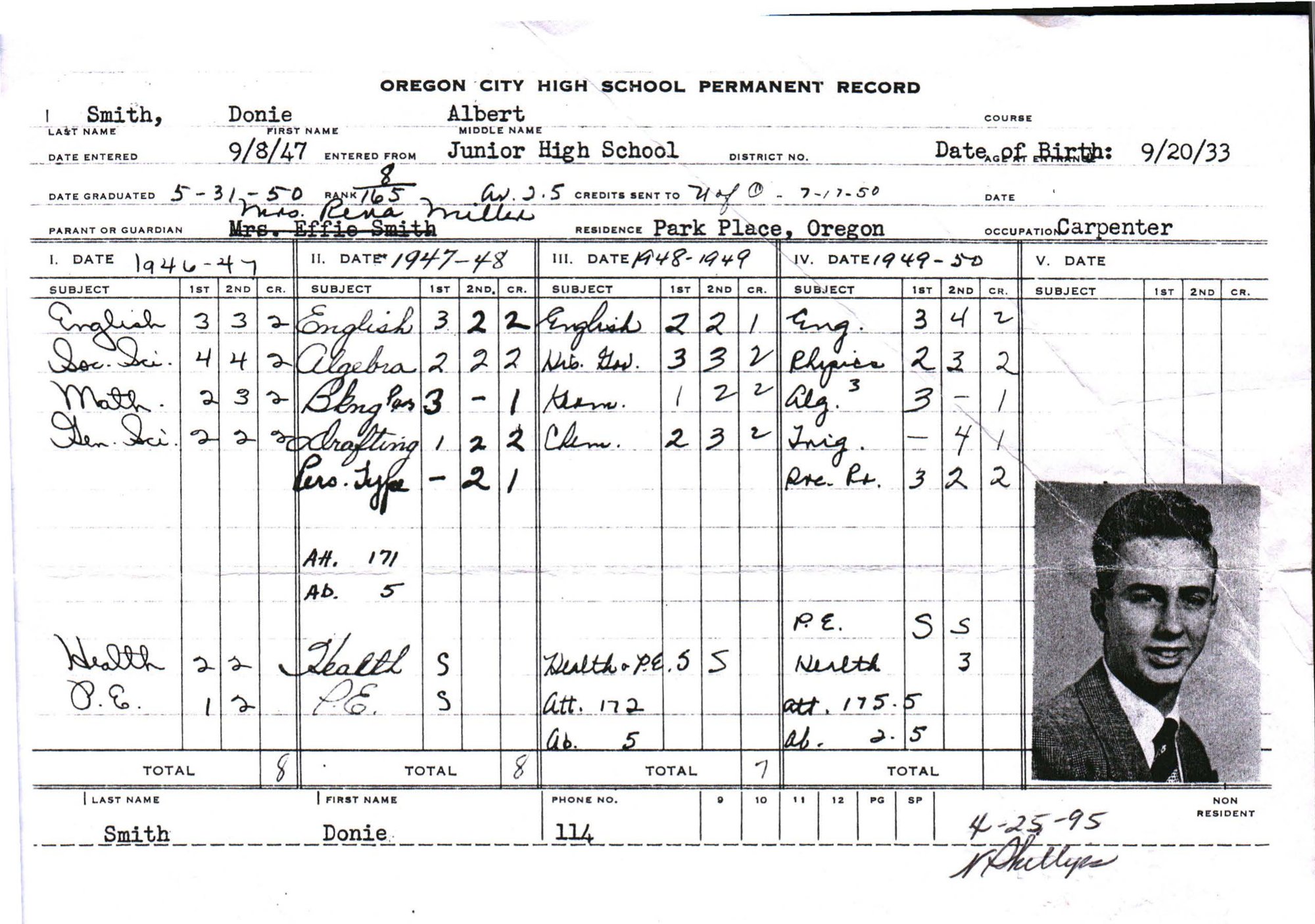
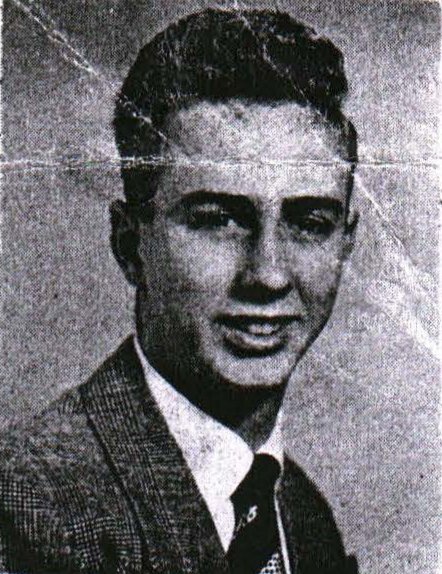
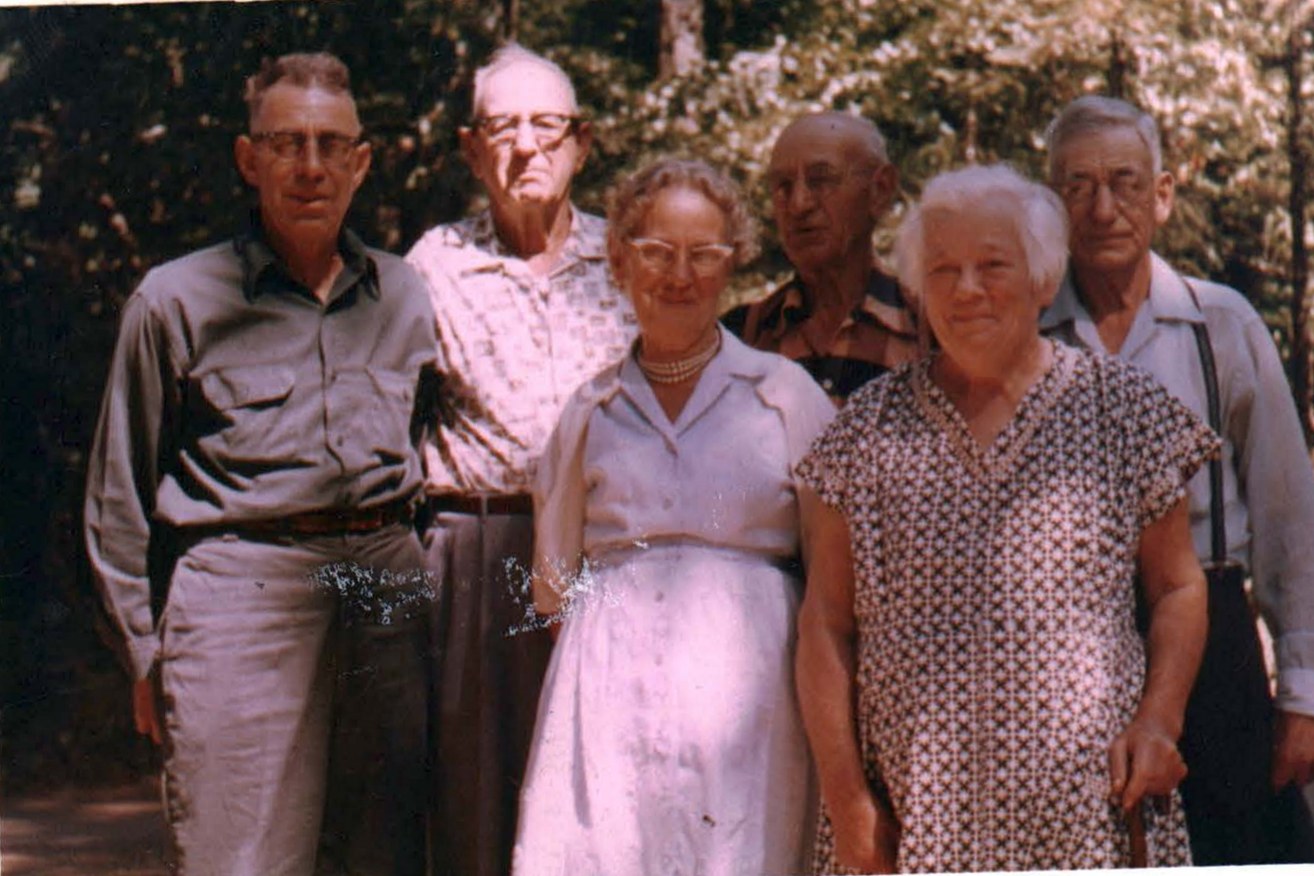
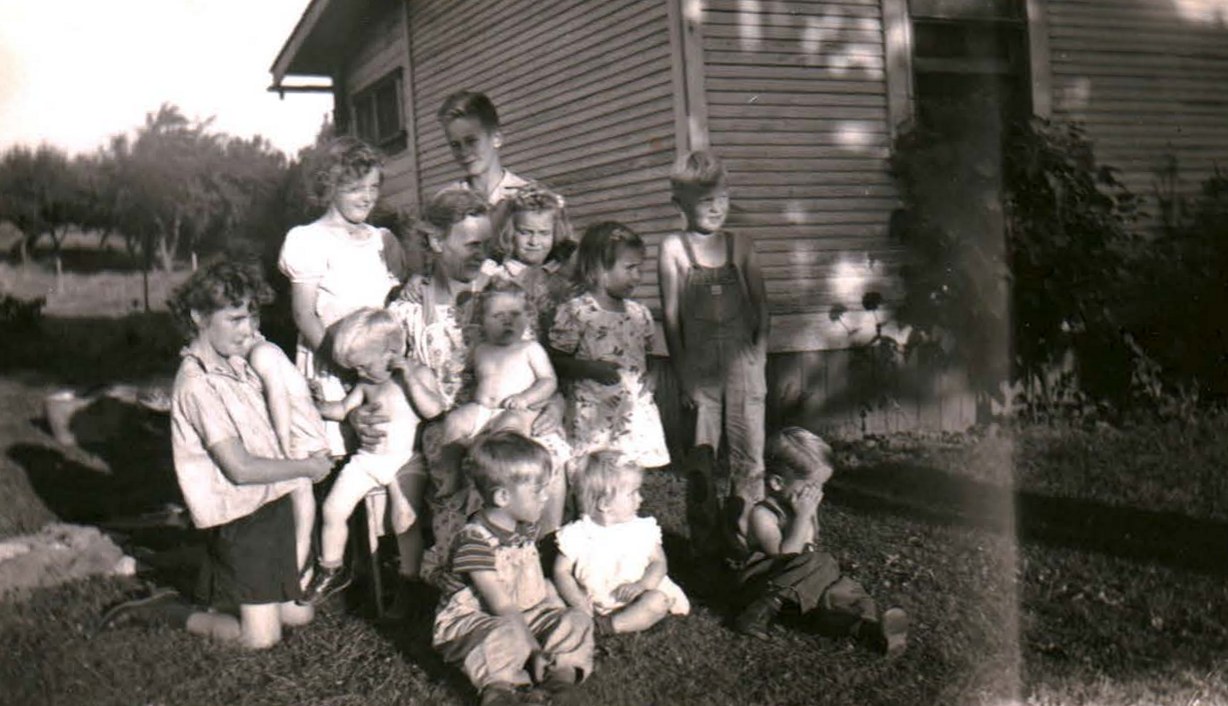
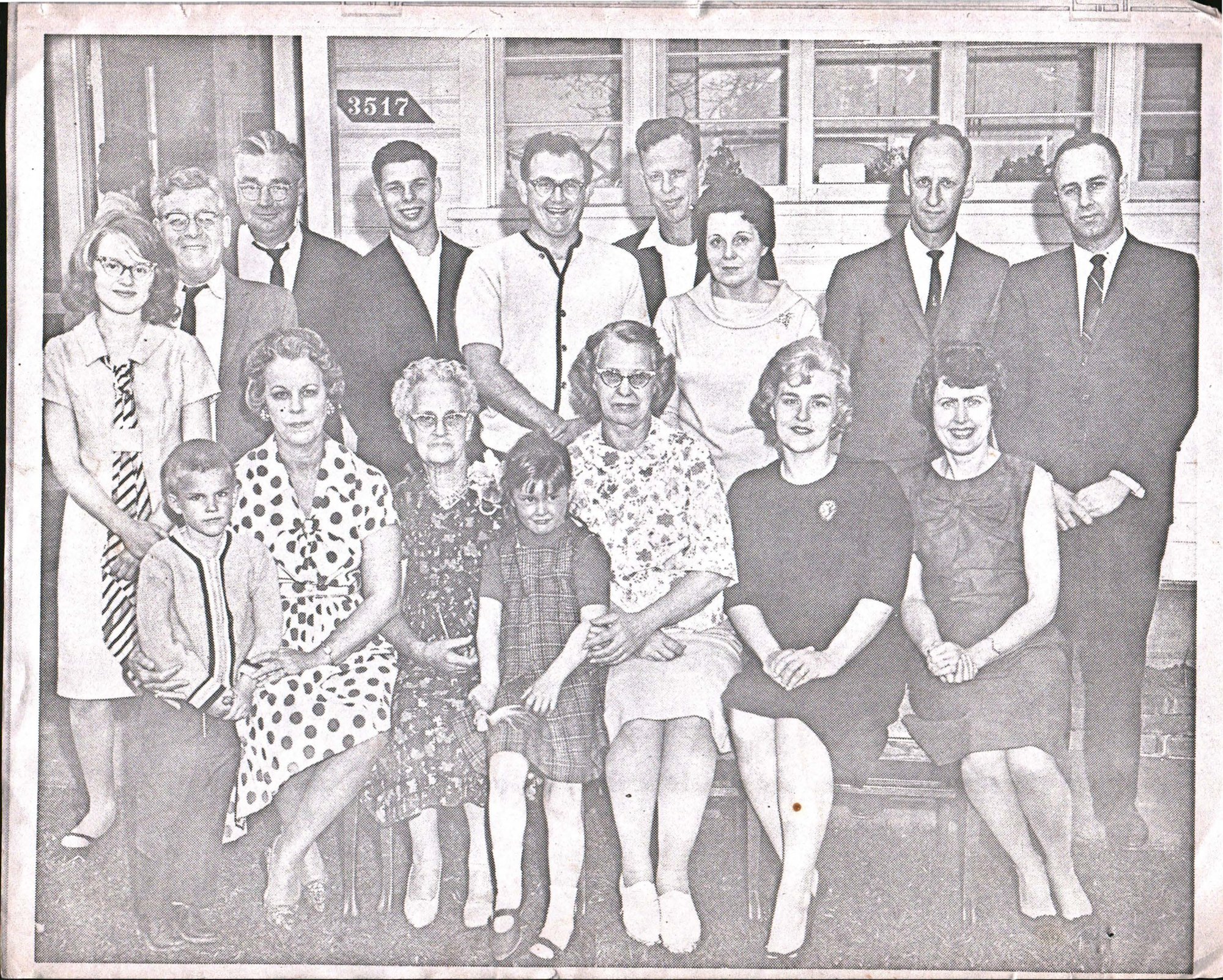
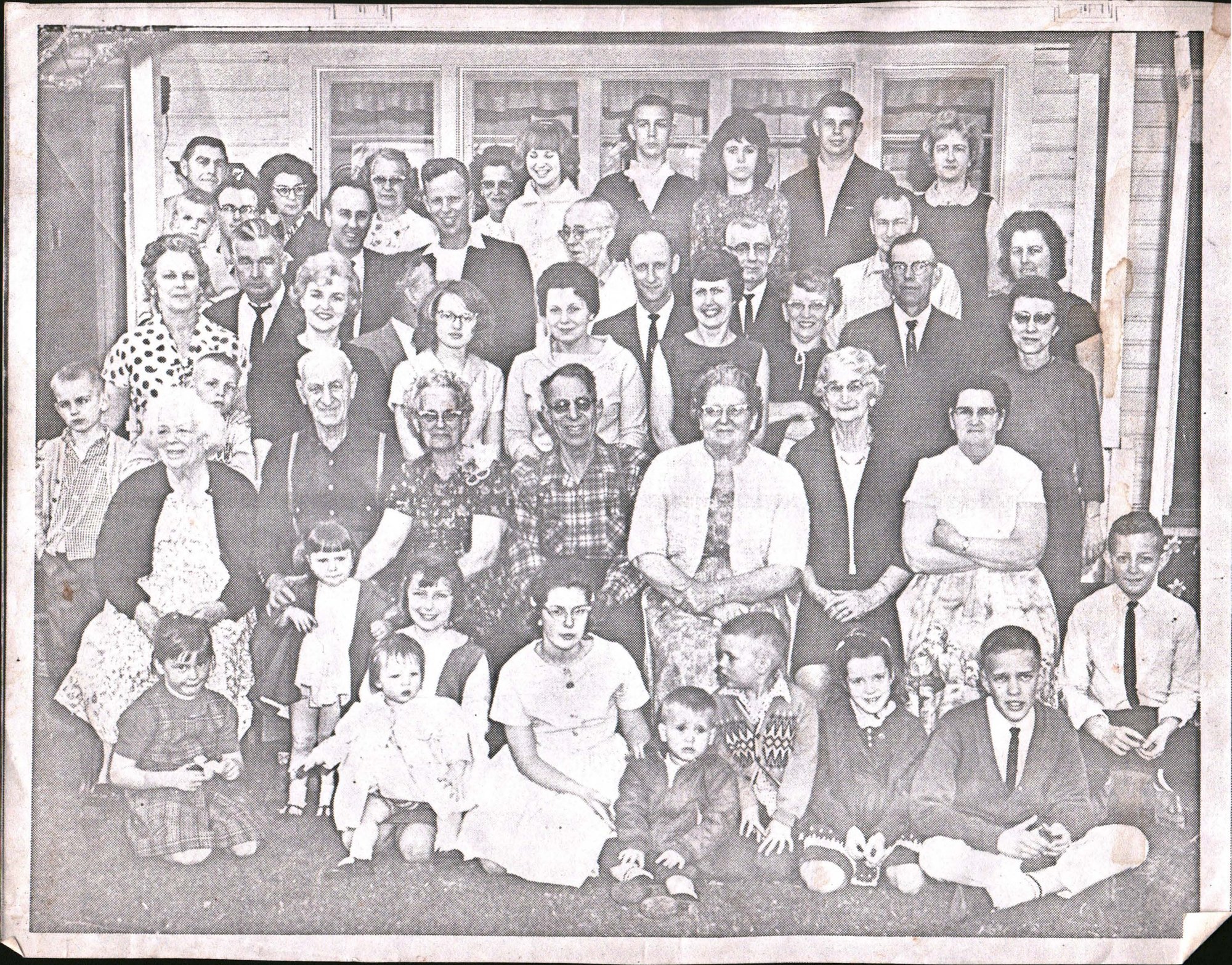
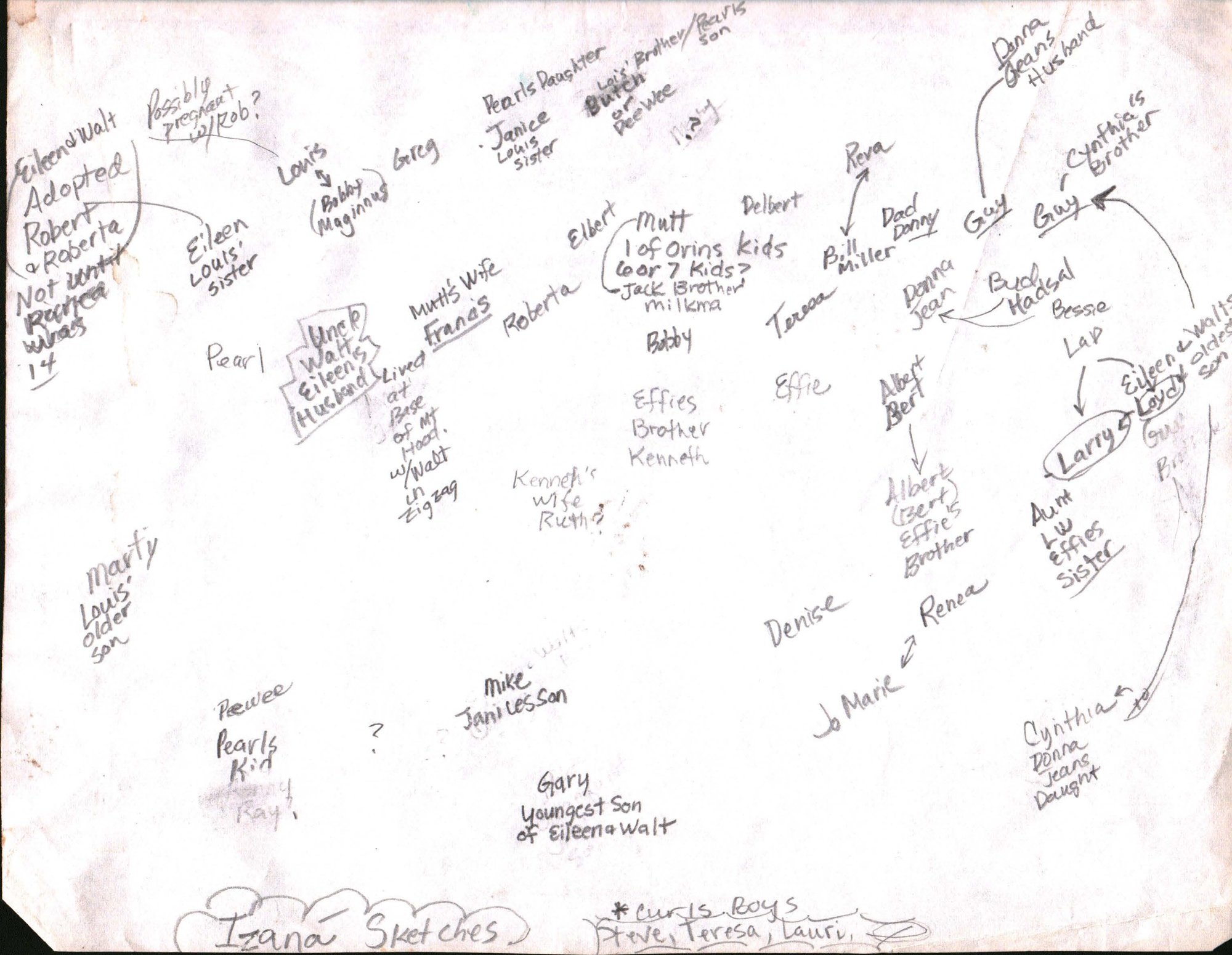
The backs of the three snapshots: children · Effie's brothers & sister · mother & baby.
About This Edition
This is an edited version of Don Miller's unedited typed draft, marked "COMPLETE DRAFT Aug 18, 2016" on its cover (72 scanned pages). It aims to read the way Don asked for — "hopefully good editors will make these stories readable" — while keeping his voice.
- Spelling and grammar were corrected (for example Rainier, Los Angeles, Willamette, Clackamas), and run-on notes were turned into sentences.
- Duplicate stories were merged. The draft contains two or three versions of many sections (the Elbert stories, the little house, Antelope, Las Vegas, the presentations, Mt. St. Helens, the marathon, the PCT trek and the Garden Party). Details found in only one version were kept.
- Stories were regrouped to follow Don's own table of contents. Topics he listed but never wrote ("Military," "1968 – TG," "1969 – Rattlesnake Creek," "Math Problems & Sample Basic Code," Paul Retka's half of the voyage) are flagged where they would go.
- Facts were not changed. Where versions disagree, or a date looks off, the text follows Don and an editor's note points out the difference.
- Every section links to its source. The "Original" page numbers under each heading open the scanned pages so anyone can check the primary source. Page numbers are scan positions (1–72); Don's handwritten page numbers run one lower.
Don's notes to himself that were left out of the story text: "Note Jan 21: review para that fit into '1920 – Great Depression,' i.e. not Elbert, Parkplace & earlier friends, or WW-II; some may also be added to 'Pioneers.' Jan 19 and Jan 21 (thumb drive) same file" (scan p. 3); "Aerospace work (95%) should fit into main first draft on PC" (scan p. 32); "check earlier writing: Aerospace – Boeing, TRW, Boeing next" (scan p. 31); "(insert pic gramma, dad and me" (scan p. 6); and "(move to end of ELBERT STORIES) delete" (scan p. 13). Scan pages 65–66 are an outline of section titles.
The Original Scans
All 72 pages of the typed draft as scanned, plus his separate typed page about Emma (ID 024). Tap a page to open it; use the arrows to page through. Don's handwritten page numbers run one lower than these.